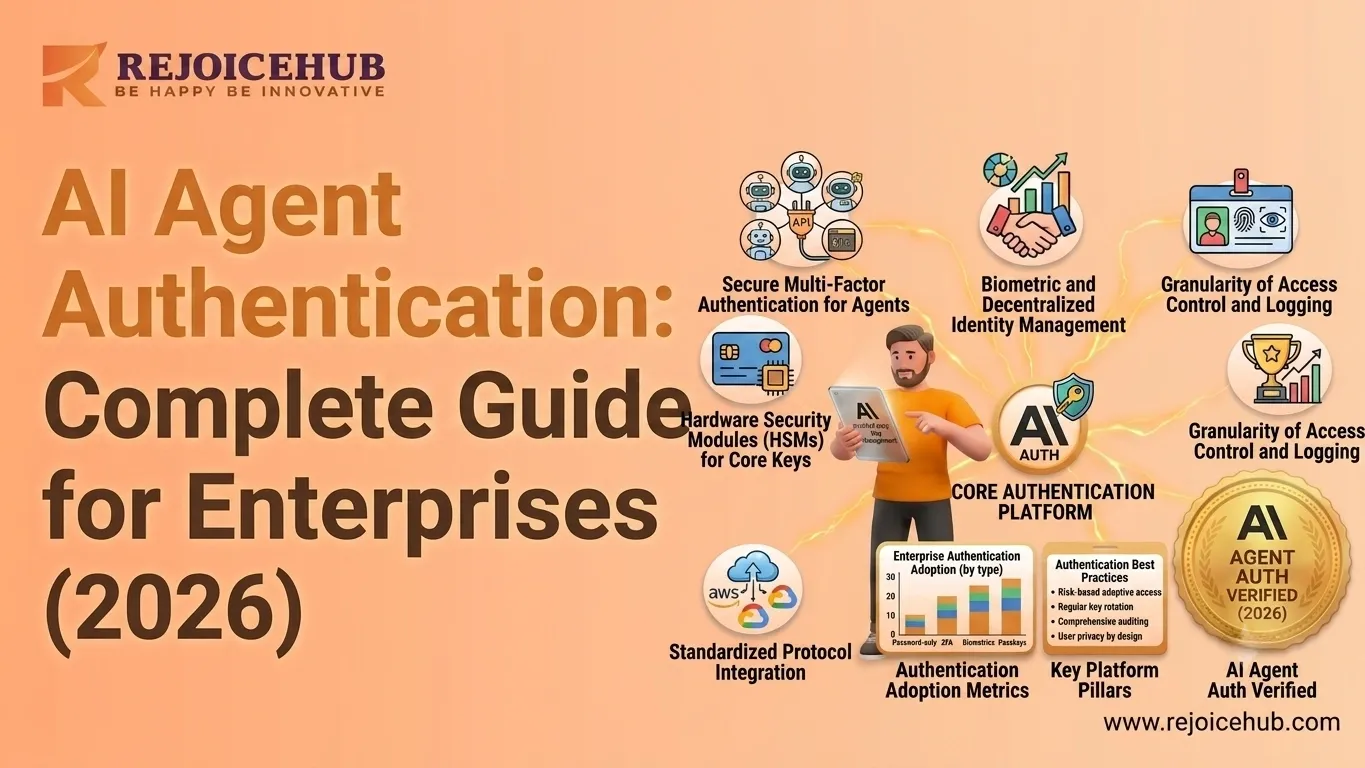
AI agents aren't really "experimental" tools anymore, like way off in the corner of enterprise software. They are booking meetings, processing invoices, pulling info from CRMs, and making calls that used to need a human in the loop. If you're wondering exactly what are AI agents and how they differ from the automation you may already be using, it helps to start with the basics before diving into security.
That change is genuinely exciting, but it brings up a real question: how does your system know the AI agent is actually who it says it is? Not just some "good bot" vibe, but verifiably true.
This is where AI agent authentication shows up. As AI automation spreads through enterprise workflows, checking the identity of every bot, script, and autonomous agent isn't just a nice-to-have anymore; it's basic, like security-level stuff, trust, and compliance too.
In this guide, we'll sort out what AI agent authentication really means, why it matters to your business, and the practical way to implement it, so you don't accidentally throttle the automation you already built and paid for.
What Is AI Agent Authentication?
AI agent authentication is basically the process of confirming the identity of an AI agent, a bot, a script, or that kind of autonomous software system before it's allowed to access enterprise systems, data, or APIs.
Kind of like how employees use credentials to sign in and reach company tools, AI agents also need a verified digital identity first before they can take action on your behalf. This concept of verified digital identity is closely tied to the growing conversation around non-human identities in enterprise AI, where every bot and script needs its own credentialed presence, separate from the humans managing it.
Here's why this matters:
- AI identity: Every agent needs a unique, traceable identity separate from the humans who built or deployed it.
- Trust boundaries: Systems need to confirm an agent is legitimate before granting access.
- Enterprise context: In a business environment, an unauthenticated agent isn't just a bug risk; it's a potential breach point.
In short: AI agent authentication answers one question every time an agent tries to act: "Are you really who you claim to be, and are you allowed to do this?"
Without it, you're essentially handing out enterprise access to unverified software, which is a risk most businesses can't afford to take.
Why Enterprise AI Authentication Is Critical
As more companies ship AI agents for business into day-to-day operations, enterprise AI authentication becomes, like a frontline guard, not an afterthought. It kinda turns into the first real defense layer, right there in the workflows, before anything gets too far.
Here's what's at stake:
1. Data Protection
AI agents often touch sensitive data, customer records, financial details, and internal documents. Without authentication, that data is exposed to any script that can mimic legitimate access.
2. Unauthorized AI Access
A poorly secured agent can be hijacked or spoofed, giving bad actors a backdoor into your systems disguised as "normal" automation traffic.
3. Compliance
Industries like healthcare, finance, and SaaS operate under strict regulations (HIPAA, SOC 2, GDPR). Unauthenticated AI activity can trigger compliance violations and expensive audits.
4. Insider Threats
Not every risk comes from outside. A misconfigured internal agent with too much access can cause just as much damage as an external attacker.
5. API Abuse
Agents frequently interact with APIs. Without proper authentication, those endpoints become easy targets for abuse, rate-limit exploitation, or data scraping.
6. Autonomous Decision-Making Risks
The more autonomy you give an agent, the more damage an impersonated or compromised one can do, often before a human even notices. This is one reason many teams look closely at how agentic AI workflows are structured before granting them broader permissions.
Bottom line: Enterprise AI authentication isn't just an IT checkbox. It's what makes AI automation safe enough to scale.
How to Authenticate AI Agents
Now let's get practical. Here's how to authenticate AI agents using proven identity and security frameworks.
Authentication Methods
| Method | Best For | Notes |
|---|---|---|
| API Keys | Simple internal agents | Easy to implement, but weak alone needs rotation and scoping |
| OAuth | Third-party integrations | Widely supported, allows scoped, delegated access |
| OpenID Connect (OIDC) | Verifying agent identity | Adds identity verification on top of OAuth |
| Certificates (mTLS) | High-security environments | Mutual authentication between the agent and the server |
| JWT Tokens | Stateless, scalable systems | Carries identity + permissions in a signed token |
| Machine Identity | Multi-agent ecosystems | Treats each agent as a distinct, credentialed entity |
| Identity Providers (IdPs) | Centralized control | Okta, Azure AD, etc., extended to manage agent identities |
| MFA for AI | Sensitive actions | Adds a secondary verification layer for high-risk agent tasks |
Most mature enterprise setups don't rely on just one method; they kinda stack several of them together based on the risk level they see in a given situation, y'know. Getting this stack right is a core part of learning how to build an AI agent stack for business that can scale without creating new blind spots.
Authentication Workflow
Here's a simplified step-by-step process most secure systems follow:
- Agent requests access to a system, API, or data source.
- The identity provider verifies credentials (API key, certificate, or token).
- System checks permissions tied to that agent's identity (least privilege).
- Access is granted with a scoped, time-limited session.
- Actions are logged for auditing and anomaly detection.
- Credentials expire or rotate, forcing re-authentication.
This workflow keeps agents accountable at every step, not just at login.
AI Agent Authentication Protocols & Best Practices
As more businesses adopt AI agents to automate work, security becomes just as important as functionality. An AI agent often connects to sensitive systems, customer data, APIs, and internal applications. Without proper authentication and security measures, even a small mistake can lead to serious risks.
Here are the most important authentication best practices every organization should follow.
1. Follow a Zero Trust Approach
Never assume an AI agent is safe simply because it's running inside your company network. Every request should be verified before access is granted. This "trust nothing, verify everything" approach helps prevent unauthorized access.
2. Give Only the Required Access
An AI agent should only have permission to perform the tasks it is designed for. Avoid giving it full access to systems or data that it doesn't need. Limiting permissions reduces the impact if an agent or its credentials are compromised.
3. Rotate Tokens and API Keys Regularly
API keys and access tokens should not stay the same forever. Regularly replacing them lowers the risk of misuse if they are accidentally exposed or stolen.
4. Verify Identity Continuously
Authentication shouldn't happen only once when the agent starts. For sensitive actions, the system should verify the agent's identity again. Continuous authentication provides an extra layer of security.
5. Encrypt All Data
Any credentials or information shared between an AI agent and other systems should always be encrypted. Encryption protects sensitive data from being intercepted during transmission.
6. Store Secrets Securely
Never save passwords, API keys, or access tokens directly in your application's code. Instead, use trusted secret management tools such as HashiCorp Vault or AWS Secrets Manager to store and manage sensitive credentials securely.
7. Keep Detailed Logs
Record every authentication attempt and important action performed by the AI agent. These logs help teams monitor activity, investigate security incidents, troubleshoot issues, and meet compliance requirements.
8. Manage the Agent's Entire Lifecycle
Just like employees, AI agents have a lifecycle. Create a secure process for setting up new agent identities, updating permissions when needed, and removing access immediately when an agent is no longer in use. Businesses moving up the enterprise AI adoption roadmap tend to formalize this lifecycle much earlier than those still running ad hoc scripts.
Accelerate Your Workflows with Custom AI
Book a free consultation session with RejoiceHub. We'll map out a tailored automation roadmap for your company.
Common Challenges and Future Trends in AI Agent Authentication
As AI agents become more common in businesses, securing them is becoming more challenging. Organizations need to protect not only individual agents but also the growing network of systems they interact with. At the same time, new technologies are changing how AI authentication will work in the future.
Common Challenges Businesses Face Today
-
Identity Spoofing
Hackers may try to pretend to be a trusted AI agent by using fake identities or stolen credentials. Without proper verification, they can gain unauthorized access to important systems.
-
Credential Theft
API keys, access tokens, and passwords can sometimes be leaked or stolen. If these credentials fall into the wrong hands, attackers may use them to access company resources.
-
Managing Multiple AI Agents*
Many businesses now use several agents working together, and understanding the different types of AI agents in play becomes essential. Managing permissions, identities, and secure communication between all of them becomes more difficult as the number of agents grows.
-
Securing Third-Party Integrations
AI agents often connect with external tools, cloud platforms, and third-party services, sometimes coordinating through standards like the Model Context Protocol. Every new integration creates another potential security risk, making strong authentication even more important.
Future Trends in AI Agent Authentication
-
Decentralized Identity
In the future, AI agents may use secure digital identities that can be verified across different platforms without depending on a single provider. This will improve both security and flexibility.
-
AI-to-AI Authentication
As AI systems work together more often, agents will need to verify each other's identities before sharing information or performing tasks. This will make automated workflows much more secure.
-
Behavioral Authentication
Instead of checking only passwords or tokens, future security systems will also monitor how an AI agent behaves. If an agent suddenly performs unusual actions, the system can detect the risk and take action immediately.
-
Dynamic Trust Scoring
Future authentication systems may assign each AI agent a trust score based on its current behavior, activity, and risk level. Agents with higher trust scores can continue working normally, while suspicious agents may receive limited access until they are verified. This kind of scoring is increasingly discussed alongside broader AI agent infrastructure market trends, as vendors race to fill these gaps.
-
Looking Ahead
AI agent authentication is evolving rapidly. While today's focus is on protecting credentials and controlling access, the future will rely on smarter identity verification, AI-to-AI trust, behavioral analysis, and dynamic security decisions. Businesses that recognize the current enterprise infrastructure gaps around AI agents now will be better equipped to build secure, scalable, and reliable AI-powered systems.
Conclusion
With the rise of AI agents performing increasingly important and independent tasks, proving their authenticity is not a "nice-to-have" anymore; it is an integral component of good AI automation practices.
AI agent authentication ensures the safety of your information and compliance, creating the trust required for the further development of automation in your enterprise.
If your enterprise is going to develop secure AI agents, then authentication should be built into your system from the very beginning.
Frequently Asked Questions
1. What is AI agent authentication?
AI agent authentication is the process of confirming that a bot or AI system is genuinely who it claims to be before it gets access to your data or tools. It works like a login check for software, keeping unverified agents away from sensitive enterprise systems and information.
2. How to authenticate AI agents in a business setup?
You can authenticate AI agents using API keys, OAuth, OpenID Connect, certificates, or JWT tokens. Most businesses combine a few of these methods together, depending on how sensitive the task is. The agent requests access, gets verified, and only then receives permission to act.
3. Why does enterprise AI authentication matter so much?
Enterprise AI authentication protects your company from data leaks, hijacked bots, and compliance issues. Since AI agents often touch financial records, customer data, and internal tools, skipping authentication basically leaves the door open for anyone pretending to be a trusted system.
4. What are the best practices for AI agent authentication?
Good practices include following a zero trust approach, giving agents only the access they truly need, rotating API keys often, encrypting all data, and keeping detailed logs. Managing each agent's full lifecycle, from setup to removal, also keeps your systems much safer over time.
5. What authentication protocols work best for AI agents?
Common protocols include OAuth for third-party access, OIDC for identity checks, mTLS certificates for high-security setups, and JWT tokens for scalable systems. The right protocol usually depends on how much risk is involved and how many systems the agent needs to connect with.
6. What happens if AI agents aren't authenticated properly?
Without proper authentication, agents can be spoofed or hijacked, giving attackers a hidden way into your systems. This can lead to stolen data, failed compliance audits, and serious trust issues, especially in industries like healthcare and finance where regulations are strict.
7. What's the future of AI agent authentication?
The future includes decentralized identity systems, AI-to-AI authentication, and behavioral tracking that flags unusual agent activity in real time. Businesses are also moving toward dynamic trust scoring, where agents earn more access as they consistently prove they're behaving safely and normally.