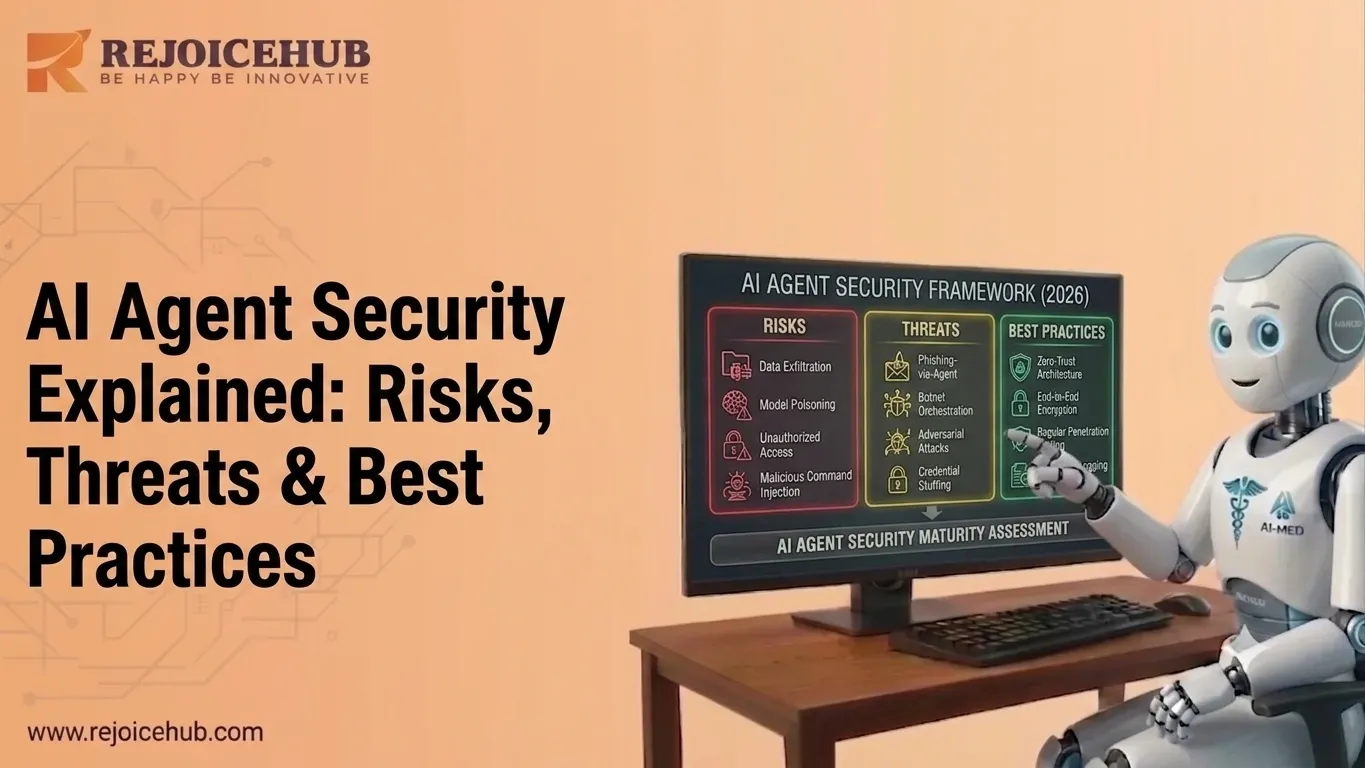
No longer limited to simply being a chatbot that responds to inquiries, AI agents are morphing into an independent digital workforce capable of scheduling meetings, populating CRMs, processing transactions, and gathering information from multiple systems, all without human interaction (e.g., clicking).
With this new level of independence comes heightened concern about the security of these AI agents and how it will affect the organization at the corporate level.
With AI agents interfacing with APIs, enterprise systems, databases, and third-party tools, new avenues for attack are exposed that traditional cybersecurity solutions were never designed to protect against. If an AI agent was not correctly configured, then it could result in leaking sensitive data, performing unauthorized actions, or serving as a backdoor to the entire technical infrastructure of your organization.
Organizations require robust security measures for AI agents as organizations utilize them throughout business operations in a wide variety of ways, and businesses begin using AI agents more frequently as actors, rather than assistants.
In this guide, you'll find information about AI agent security, the value of AI agent security, identification of major security threats to AI agents, and practical guidelines for securing enterprise AI agents.
What Is AI Agent Security?
AI agent security encompasses various safety measures, including procedures, systems, and devices to safeguard autonomous AI systems against abuse, misrepresentation, and unauthorized access.
Thus, you will want to confirm that the AI agent follows all the appropriate guidelines, only accesses the necessary information, and prevents being fooled into taking harmful actions.
How AI Agent Security Differs From Traditional Cybersecurity
Traditional cybersecurity protects static systems, servers, networks, and applications with predictable behavior.
AI agents are different because they:
- Make autonomous decisions in real time
- Interpret natural language instructions (which can be manipulated)
- Chain together multiple tools and API calls on their own
- Retain memory and context across sessions
- Act on behalf of a user, not just respond to one
This means the "attack surface" isn't just your network anymore, it's the agent's reasoning process, its tool connections, and its memory. Understanding what agentic AI actually involves is the first step toward securing it properly.
Components of AI Agent Security
A secure AI agent architecture typically includes five core components:
- Authentication: Verifying the agent's identity and the identity of the user it's acting on behalf of
- Authorization: Controlling exactly what actions, data, and tools the agent can access
- Data Protection: Encrypting and isolating sensitive information the agent handles or stores
- Guardrails: Rules and filters that constrain agent behavior and prevent harmful actions
- Monitoring: Continuous logging and observability of agent decisions and actions
- Quick answer: AI agent security combines authentication, authorization, data protection, guardrails, and monitoring to ensure autonomous AI systems act safely, within defined limits, and without exposing sensitive data.
Why Is AI Agent Security Important?
AI agents are moving from experimental pilots into core business operations, and that shift changes the risk equation entirely.
Enterprise adoption is accelerating. Companies are deploying agents for customer support, sales outreach, finance operations, and internal IT tasks. More adoption means more exposure, which is why understanding enterprise AI adoption levels matters before scaling deployment.
Autonomous decision-making removes human checkpoints. An agent that can independently query a database, send an email, or issue a refund doesn't wait for approval, which means mistakes or manipulations happen instantly, at scale.
Sensitive data access is often broad by default. Agents frequently need access to CRMs, financial systems, and internal documents to be useful, which means a compromised agent can expose far more than a compromised employee account. This is closely tied to the emerging concept of non-human identities in enterprise AI.
Regulatory compliance is catching up fast. Frameworks around data privacy (GDPR, CCPA) and emerging AI-specific regulations increasingly hold companies accountable for how autonomous systems handle data.
Customer trust is fragile. One incident involving an AI agent leaking customer data or taking a wrong action can damage brand trust for years.
Financial risk is real and immediate. Unauthorized transactions, API abuse, or data breaches caused by an agent carry direct financial and legal costs.
Real-World Scenario
Imagine a SaaS business using an AI agent for customer support purposes and automatic refund processing; then, one of its users learns that by embedding hidden instructions within a support ticket, they can trick the AI agent into approving refunds in excess of company policy limits (and therefore no hacker was responsible for thousands of dollars worth of unauthorized refunds; rather, the AI simply followed the instructions it wasn't meant to).
This is an example of the kind of risk proper security measures for an AI agent would have been designed to mitigate.
Accelerate Your Workflows with Custom AI
Book a free consultation session with RejoiceHub. We'll map out a tailored automation roadmap for your company.
Biggest AI Agent Security Risks & Threats
AI agents face a unique set of threats that don't map cleanly onto traditional IT security categories.
| Threat | Description |
|---|---|
| Prompt Injection | The attacker manipulates the agent's instructions directly through user input to override the intended behavior |
| Indirect Prompt Injection | Malicious instructions hidden inside documents, web pages, or emails that the agent processes |
| Data Leakage | Sensitive information is exposed through agent responses, logs, or memory |
| Unauthorized Tool Access | The agent is manipulated into using connected tools or APIs beyond its intended scope |
| API Abuse | Compromised or poorly secured integrations are exploited to extract data or trigger actions |
| Memory Poisoning | An attacker corrupts an agent's stored context or long-term memory to influence future behavior |
| Identity Spoofing | A fake agent or impersonated identity interacts with systems as if it were a trusted agent or user |
| Model Hallucinations | Agent takes unsafe or incorrect actions based on fabricated or misunderstood information |
Other AI Agent Security Challenges to Watch
- Expanding attack surface: every new tool or API connection is a new potential entry point, which is why mapping out the full AI agent stack for your business upfront matters
- Tool poisoning: malicious or compromised third-party tools feeding false data or instructions to the agent
- MCP security: as Model Context Protocol (MCP) becomes the standard for connecting agents to tools, securing these connections (authentication, permission scoping, trusted server verification) is now a top priority for enterprise teams
These risks compound quickly. An agent with broad permissions, weak input validation, and no monitoring is essentially an open door, and this gap is one of the more overlooked enterprise infrastructure gaps organizations face today.
AI Agent Security Best Practices
Here's how enterprises can secure AI agents without slowing down innovation.
1. Identity & Authentication
Every agent should have a verifiable, unique identity separate from the users it acts on behalf of.
For enterprise deployment: This lets security teams track exactly which agent performed which action and revoke access instantly if an agent is compromised.
2. Least Privilege Access
Give agents access only to the specific data and tools they need for their task, nothing more.
For enterprise deployment: a support agent shouldn't have the same database permissions as a finance agent. Scoped access limits the blast radius of any single compromise.
3. Human Approval Workflows
High-risk actions, such as refunds, data deletion, and financial transactions, should require human sign-off before execution.
For enterprise deployment: This preserves automation speed for low-risk tasks while adding a safety checkpoint where mistakes are costly.
4. Secure API Integrations
All API connections should use encrypted channels, rotating credentials, and strict rate limiting.
For enterprise deployment: This prevents a single compromised integration from becoming a company-wide breach.
5. Prompt Filtering
Input and output filtering should detect and block prompt injection attempts before they reach the model or before harmful outputs are executed.
For enterprise deployment: This is your first line of defense against manipulated instructions from users or embedded content, and it pairs well with broader context engineering practices that shape what an agent sees and acts on.
6. Encrypted Memory
Any context, conversation history, or long-term memory the agent stores should be encrypted at rest and access-controlled.
For enterprise deployment: Prevents memory poisoning and protects sensitive information stored across sessions.
7. Audit Logs
Every decision, tool call, and action an agent takes should be logged in detail and retained for review.
For enterprise deployment: Essential for compliance audits, incident investigation, and proving accountability to regulators or customers.
8. Continuous Monitoring
Real-time monitoring should flag unusual agent behavior, unexpected tool calls, abnormal data access patterns, or repeated failed actions.
For enterprise deployment: Catches attacks and malfunctions as they happen, not after the damage is done. This is where generative AI applied to cybersecurity is increasingly playing a role.
9. Regular Security Testing
Red-teaming and penetration testing specifically designed for AI agents should be part of your regular security cycle.
For enterprise deployment: AI-specific threats evolve fast, testing needs to keep pace with new attack techniques like prompt injection and tool poisoning. Businesses that skip this step often end up deploying AI agents without an ML team in place to catch these issues early.
If you're looking to build a custom AI agent with security built in from day one, RejoiceHub can help you design an architecture that balances automation with control.
Conclusion
Automated workflows driven by AI have tremendous potential to increase your company's profitability by streamlining processes, reducing costs, and eliminating downtime through continuous operation. Ensuring that you have sufficient security measures in place to protect the autonomous functions of your AI agents is critical to maximizing this profitability.
To do so, organizations must put in place adequate levels of authentication, authorization, continuous monitoring, and governance in order to utilize AI agents for business responsibly while simultaneously safeguarding their organizations, customers, and brands.
If you are looking for assistance in designing, building, and/or securing enterprise AI agents for your organization, RejoiceHub can assist you through the entire process from beginning to end (and beyond).
Frequently Asked Questions
1. What is AI agent security?
AI agent security is the set of measures that protect autonomous AI systems from misuse, hacking, or unauthorized access. It includes authentication, permission controls, data protection, and monitoring. Since AI agents act on their own, they need stronger protection than regular apps or websites.
2. Why is AI agent security important?
AI agents now handle real business tasks like refunds, customer data, and financial transactions, often without human review. If an agent is compromised or tricked, it can leak sensitive data, take wrong actions instantly, and hurt customer trust. That's why strong security keeps automation safe and reliable for companies.
3. What are the biggest AI agent security risks?
The biggest risks include prompt injection, where attackers manipulate an agent's instructions, and data leakage through responses or memory. Other risks are unauthorized tool access, API abuse, memory poisoning, identity spoofing, and model hallucinations, where the agent takes wrong actions based on incorrect or made-up information.
4. What are common AI agent security challenges?
As agents connect to more tools and APIs, the attack surface keeps growing. Common challenges include tool poisoning, where fake or compromised tools feed bad data to the agent, and securing MCP connections properly. Weak permissions and poor monitoring make these challenges even harder to manage safely.
5. How is AI agent security different from regular cybersecurity?
Traditional cybersecurity protects systems that behave in predictable ways. AI agents are different because they make real-time decisions, understand natural language, chain tools together on their own, and remember past context. This means the real attack surface includes the agent's reasoning, tool access, and memory, not just the network.
6. What is prompt injection in AI agent security?
Prompt injection happens when someone hides or sneaks instructions into a message, document, or webpage the agent reads. This tricks the agent into ignoring its rules and doing something it shouldn't, like approving a refund it wasn't supposed to. It's one of the most common AI agent attacks today.
7. How can businesses secure their AI agents?
Businesses should give agents a unique identity, limit their access to only what's needed, and require human approval for high-risk actions like payments or deletions. Adding encrypted memory, audit logs, continuous monitoring, and regular security testing also helps catch problems early before they turn into real damage.