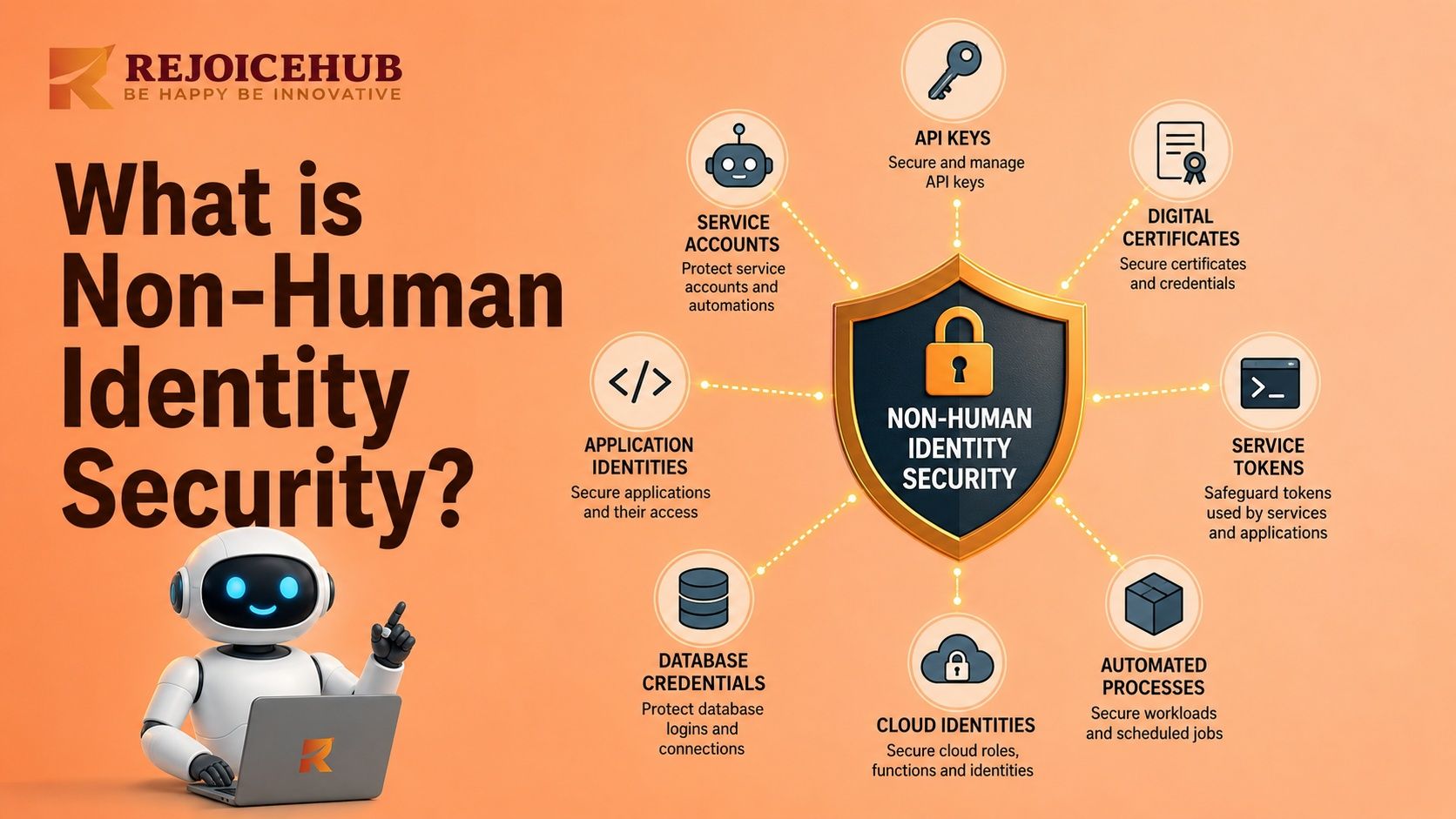
Every enterprise today is driven by machines communicating with machines. APIs call APIs. Service accounts launch containers. AI agents perform tasks not directed by a human. In fact, most enterprises today have way more machine identities than humans. Studies show the ratio can be as high as 50-to-1, and sometimes even higher.
Each of these non-human identities, whether it's a service account, an API key, a Kubernetes pod, or an AI agent, needs to authenticate, be authorized, and gain access to data and systems, just like a human user.
However, unlike humans, they typically lack multifactor authentication, are often unreviewed, and can persist in production indefinitely.
Attackers are capitalizing on this weakness by targeting these non-human identities, which is why the sector is seeing an explosion of breaches through stolen API keys and other machine credentials.
As a result, enterprises are investing significantly in Non-Human Identity Security (NHI Security) to secure their non-human identities and their access to critical systems.
What Is Non-Human Identity Security?
Non-Human Identity Security is the discipline of discovering, authenticating, authorizing, and monitoring machine identities, including service accounts, API keys, workload identities, and AI agents, to prevent unauthorized access, credential misuse, and lateral movement across enterprise systems.
Unlike human identity security, which centers on passwords, MFA, and behavioral login patterns, non-human identity security involves credentials created programmatically, often shared across services, and rarely rotated.
Why it matters: a compromised human account usually requires phishing or social engineering. A compromised non-human identity often just requires finding a leaked API key on GitHub, no phishing required.
Human vs. Non-Human Identities
| Attribute | Human Identity | Non-Human Identity |
|---|---|---|
| Authentication | Password + MFA | API keys, tokens, certificates |
| Lifecycle | HR-driven (onboarding/offboarding) | Often undocumented, no owner |
| Visibility | Centralized in IAM/SSO | Scattered across code, secrets vaults, CI/CD |
| Rotation | Regular password resets | Frequently static or hardcoded |
| Volume | Fixed (headcount) | Growing exponentially (APIs, agents, containers) |
| Monitoring | Behavioral analytics common | Often unmonitored |
Enterprises need specialized NHI security because traditional IAM solutions were designed to secure the login process for humans interacting through a dashboard, not thousands of AI agents and the growing infrastructure gaps they introduce, microservices, and workloads authenticating hundreds of thousands of times per minute.
Accelerate Your Workflows with Custom AI
Book a free consultation session with RejoiceHub. We'll map out a tailored automation roadmap for your company.
Types of Non-Human Identities
Non-human identities aren't a single category, they span infrastructure, software, and now autonomous AI. Understanding each type is the first step to securing it.
-
Service Accounts
Service accounts are non-interactive accounts used by applications or scripts to access systems automatically. Example: a backend job that pulls nightly reports from a database using a dedicated service account rather than a human's credentials.
-
API Keys & Tokens
API keys and OAuth tokens authenticate one system to another, for example, a SaaS app calling a payment gateway's API. These are among the most commonly leaked credentials, often exposed in public GitHub repos or client-side code.
-
Workload Identities
Workload identities let cloud-native applications (containers, serverless functions, VMs) authenticate to cloud services without embedding static credentials. Example: an AWS Lambda function assuming an IAM role to read from S3.
-
AI Agents
AI agents are autonomous non-human identities that can make decisions, call APIs, and execute multi-step tasks, often with standing access to sensitive systems. Example: an AI sales agent that queries a CRM, drafts emails, and updates records without human review at each step.
-
Kubernetes & Containers
Containerized workloads use service tokens and pod identities to communicate within a cluster and with external services. Example: a Kubernetes pod using a mounted service account token to call an internal API.
-
IoT Devices
IoT devices authenticate using embedded certificates or device tokens, often deployed at scale with minimal individual oversight. Example: thousands of connected sensors on a factory floor, each with its own device identity reporting to a central platform.
Key Takeaway: Each type of non-human identity carries different risk profiles, but they share the same root problem, credentials that are created faster than they're governed.
Common Security Risks & Best Practices
1. Common Risks
Machine identities fail in predictable, well-documented ways:
- Hardcoded credentials: API keys or passwords embedded directly in source code or config files.
- Overprivileged identities: Service accounts granted admin-level access "just in case," far beyond what they actually need.
- Stale service accounts: Accounts created for a project that ended months ago, still active and unmonitored.
- Secret leakage: Credentials exposed via public repositories, logs, or misconfigured storage buckets.
- Lack of visibility: Security teams simply don't know how many non-human identities exist across their environment.
2 Best Practices
| Practice | What It Does |
|---|---|
| Least privilege | Grants each identity only the access it needs, nothing more |
| Secrets management | Centralizes credentials in a vault instead of code or config files |
| Credential rotation | Automatically expires and replaces keys on a schedule |
| Identity lifecycle management | Ensures accounts are deprovisioned when no longer needed |
| Continuous monitoring | Detects anomalous machine behavior in real time |
| Zero Trust | Verifies every request, regardless of source, every time |
Expert insight: The most common mistake enterprises make isn't a lack of tools, it's a lack of ownership. Nobody is explicitly responsible for the lifecycle of a service account the way HR owns a human employee's lifecycle. Assigning clear ownership for every non-human identity is often the single highest-leverage fix.
For a deeper dive into how these risks play out specifically with autonomous AI systems, see our AI agent security risks and best practices guide.
How Enterprises Manage Non-Human Identities
Enterprises manage non-human identities using a layered stack combining IAM for policy, PAM for privileged access, secrets managers for credential storage, identity governance for lifecycle control, and AI-powered monitoring for anomaly detection rather than relying on any single tool.
- Identity and Access Management (IAM): Defines who (or what) can access which resources, and under what conditions.
- Privileged Access Management (PAM): Controls and audits access for high-privilege service accounts and admin credentials.
- Secrets Managers: Tools like HashiCorp Vault or AWS Secrets Manager store and rotate API keys, removing them from code entirely.
- Identity Governance: Provides visibility into which identities exist, who owns them, and whether access is still justified, an area where dedicated verification frameworks are becoming essential.
- AI-powered monitoring: Uses behavioral baselines to flag unusual machine activity, such as AI agents helping security teams find vulnerabilities before they're exploited.
- Cloud-native identity platforms: Native cloud IAM (AWS IAM, Azure AD Workload Identities, GCP Workload Identity Federation) reduces reliance on static keys altogether.
Enterprise scenario: A fintech company migrating to microservices discovers over 400 undocumented service accounts during an identity audit, many with production database access. By implementing a secrets manager and enforcing least-privilege policies, they reduce standing privileged access by 70% within one quarter.
This kind of layered approach mirrors what we outline in our broader guide to AI security debt and autonomous agent breach vectors. Unmanaged identity sprawl compounds quietly until it becomes a major incident.
AI Agents and the Future of Non-Human Identity Security
AI agents represent the newest and fastest-growing class of non-human identities, independent actors who make decisions and take action on their own, necessitating new approaches to governance beyond service account management.
Unlike a static service account performing one repetitive task, an AI agent can:
- Chain multiple API calls together dynamically
- Make context-dependent decisions about what to access next
- Operate across multiple systems in a single workflow
- Potentially delegate tasks to other agents
This creates unique challenges:
- Authentication challenges: How do you verify an agent's identity when its behavior isn't fully predictable in advance? This is why enterprise agent authentication is becoming its own discipline.
- Permission management: Static, standing permissions are risky for agents that adapt their actions dynamically; scoped, task-specific permissions are safer.
- Enterprise AI governance: Organizations need audit trails showing exactly what an agent did, why, and under whose authorization, especially as agents begin operating within a multi-agent system and delegating work to one another.
- Future trends: Expect to see short-lived, task-scoped credentials for agents, real-time permission negotiation, and dedicated "agent identity" standards emerging industry-wide.
This is closely tied to concepts like the lethal trifecta in AI agents, where broad access, untrusted input, and external communication combine to create serious risk if agent identities aren't tightly scoped.
Key Takeaway: AI agents shouldn't inherit blanket human-level access. The safest enterprise AI deployments treat every agent as its own governed non-human identity, with least privilege, time-boxed and sandboxed credentials, and continuous oversight baked in from day one.
Conclusion
Non-human identity security is no longer an option; it is a foundational requirement. As enterprises begin to increase their use of cloud services, APIs, automation, and AI agents in production, their machine identities will outnumber human ones.
Organizations that embrace least privilege, secrets management, identity lifecycle management, monitoring, and zero-trust capabilities will be best positioned to mitigate risk and operate at scale.
Having well-thought-out processes around non-human identity security will be critical for enterprises looking to successfully embrace automation, AI agents, and APIs, while ensuring the attack surface they create is minimized and well protected.
Ready to deploy AI agents securely?
RejoiceHub's AI Development, AI Integration, and Enterprise Security solutions help startups and SaaS companies build automation that scales without compromising on identity governance. book a strategy call to see how secure, scalable AI systems can cut operational costs while protecting your infrastructure.
Frequently Asked Questions
1. What is Non-Human Identity Security in simple terms?
Non-Human Identity Security is the practice of securing machine credentials like API keys, service accounts, and AI agent identities the same way organizations secure human logins. It focuses on authentication, least-privilege access, and continuous monitoring for anything that isn't a human user but still accesses systems.
2. Why are non-human identities considered a bigger security risk than human ones?
Non-human identities often outnumber human accounts by a wide margin, are frequently hardcoded or unrotated, and lack the visibility and lifecycle controls applied to employee accounts. This makes them an easier, less-monitored entry point for attackers.
3. What are some common examples of non-human identities?
Common examples include service accounts, API keys and OAuth tokens, cloud workload identities, Kubernetes service accounts, IoT device certificates, and increasingly, autonomous AI agents that authenticate and act independently.
4. How is machine identity security different from traditional IAM?
Traditional IAM was built around human login patterns, passwords, and MFA. Machine identity security must handle credentials created programmatically, rotated automatically, and used at much higher volume and frequency than human logins.
5. Do AI agents count as non-human identities?
Yes. AI agents are one of the fastest-growing categories of non-human identity. Because they can act autonomously and chain multiple actions together, they require scoped, task-specific permissions rather than broad standing access.
6. What's the first step enterprises should take to secure non-human identities?
Start with a full discovery and inventory of every service account, API key, and workload identity in the environment. You can't govern what you can't see; visibility is the foundation for least privilege, rotation, and monitoring.
7. How can RejoiceHub help with non-human identity and AI agent security?
RejoiceHub designs and secures AI agent deployments with least-privilege access, credential governance, and continuous monitoring built in from the start, helping enterprises automate confidently without expanding their attack surface.