
The progress of technological developments, which I have monitored for business research purposes, has now reached a pace that exceeds my ability to comprehend. Market research projects used to require extensive planning, which included selecting research companies and waiting for survey results, and spending additional time on manual data analysis. [AI market research tool now enable researchers to complete the entire research process within a few hours instead of requiring them to spend weeks on manual work.
The ai tools for market research work at your company faces two main challenges, which I already experienced during my research work at your company. The guide will explain all necessary information about the tools that businesses currently use, which tools will be most effective in 2026, and how to choose the appropriate tool based on your requirements.
What Are AI Market Research Tools?
Simply put, AI market research tools are software platforms that use artificial intelligence to help businesses gather, analyze, and understand market data. Instead of manually reading through hundreds of customer reviews or survey responses, these tools do the heavy lifting for you.
The market research tools that support them operate through machine learning, natural language processing (NLP), and predictive analytics. The software uses machine learning to develop its ability to recognize patterns from incoming data.
The system uses NLP technology to process customer reviews, tweets, and interview transcripts because these are human language texts. The system uses predictive analytics to generate forecasts about upcoming events through its analysis of historical patterns.
Some common things these tools help with are consumer sentiment analysis, competitor monitoring, trend forecasting, automated surveys, and analyzing customer interviews at scale. In short, they replace weeks of manual work with smart automation that delivers results in minutes.
Why Businesses Use AI for Market Research
My research shows that businesses permanently stop using their old research methods after they test artificial intelligence market research tools. The advantages become evident through direct observation of their benefits.
-
Faster Insights
The research duration now lasts only minutes because AI market research tools enable researchers to complete their work, which previously took them weeks to finish. Users can upload multiple surveys and social media comments to obtain immediate results that show complete sentiment analysis. The fast procedure generates a major time benefit that becomes hard for people to overlook.
-
Lower Research Costs
Businesses must hire research agencies for traditional market research because these agencies handle focus group testing, and companies fund their research activities. AI market research tools reduce expenses for businesses that need to conduct research. Small enterprises can access high-quality professional insights through multiple platforms that offer affordable subscription plans.
-
Predictive Market Trends
I consider AI customer behavior prediction to be the most thrilling thing I have witnessed. The tools analyze historical data to predict future audience demands before their requests. The ability to predict future outcomes gives companies a significant edge over their competitors.
-
Real-Time Consumer Insights
Businesses have the ability to track social media conversations throughout multiple platforms in real time. You receive instant notification when negative information about your brand starts to spread. You can respond to emerging industry trends before your competitors do when you track their progress in your field.
-
Automated Reports and Dashboards
Before the implementation of automated report generation systems, the process of gathering data for reports took up all of my afternoon work time. Most AI-powered market research tools now generate clean visual reports and dashboards that provide automatic results that help your team save time while sharing insights with stakeholders.
How AI Is Transforming Market Research
AI technology provides organizations with improved operational speed while enabling them to access entirely new performance capacities that did not exist before. The following products present fresh solutions that people should explore.
-
Synthetic Personas
This one genuinely surprised me the first time I came across it. AI can now generate virtual customer personas that simulate how different types of consumers might respond to a product or campaign. Instead of running a full focus group, companies can test ideas against these AI-generated personas first, saving time and budget.
-
Digital Consumer Twins
Taking it a step further, digital consumer twins are AI models that replicate the behavior of individual consumers based on real data. Think of it as a simulation of your actual customer base. Businesses use these to test pricing changes, new features, or marketing messages before going live.
-
AI-Driven Survey Analysis
Running a survey used to mean spending days manually coding open-ended responses. AI now reads through thousands of text answers, groups themes, detects sentiment, and delivers a summary report. It is faster, more consistent, and less prone to human error.
-
Automated Consumer Insights
The latest generation of best AI market research tools can pull insights from multiple data sources at once social media, web data, CRM records, and more and surface patterns you might never have found manually. It is like having a team of machine learning analysts working around the clock.
11 Best AI Market Research Tools in 2026
There are a lot of options out there, so I have put together a list of the standout platforms that are actually worth your time and budget.
1. Quantilope
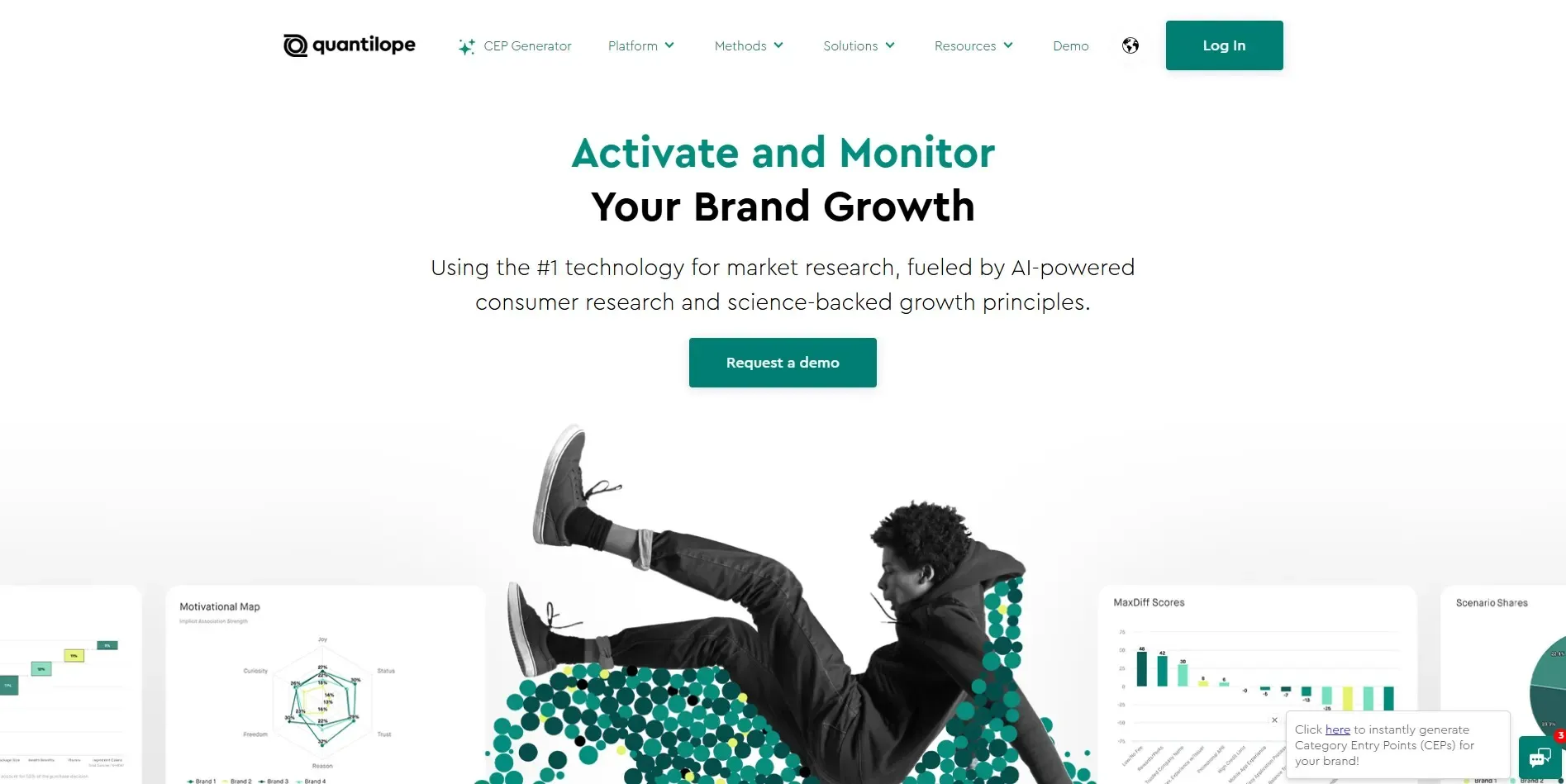
Quantilope specializes in automated research, making it easy to build surveys, run studies, and get real-time consumer insights without needing a data science background. It is a solid choice for research teams that want to move fast.
2. Brandwatch

Brandwatch is one of the most powerful tools for social listening and sentiment analysis. It monitors billions of online conversations to help brands understand how people feel about them, their competitors, and their industry.
3. Speak AI
Speak AI is brilliant for qualitative research. It transcribes audio and video content from interviews, focus groups, or customer calls and then analyzes the language to surface themes and insights automatically.
4. Appen

Appen is a go-to platform for data collection and creating high-quality AI training datasets. It is especially useful for companies that need to build or improve their own AI models with real-world human-labeled data.
5. Pecan AI

Pecan AI focuses on predictive analytics for customer behavior. It helps businesses forecast outcomes like churn, lifetime value, and purchase likelihood without requiring a team of data scientists to operate it.
Also Read: Top 7 AI Tools for Data Analysis in 2026
6. Crayon

Crayon is built specifically for competitive intelligence. It tracks your competitors' websites, content, pricing, and messaging changes in real time, giving you an ongoing picture of the competitive landscape.
7. Hotjar

Hotjar focuses on website behavior analytics. It shows you heatmaps, session recordings, and feedback tools that reveal exactly how visitors interact with your site. It is an excellent choice for product and UI/UX research.
8. Browse AI

Browse AI allows you to scrape data from any website without writing a single line of code. If you need to monitor competitor prices, extract product listings, or gather market data from the web, this tool makes it surprisingly simple.
9. Glimpse
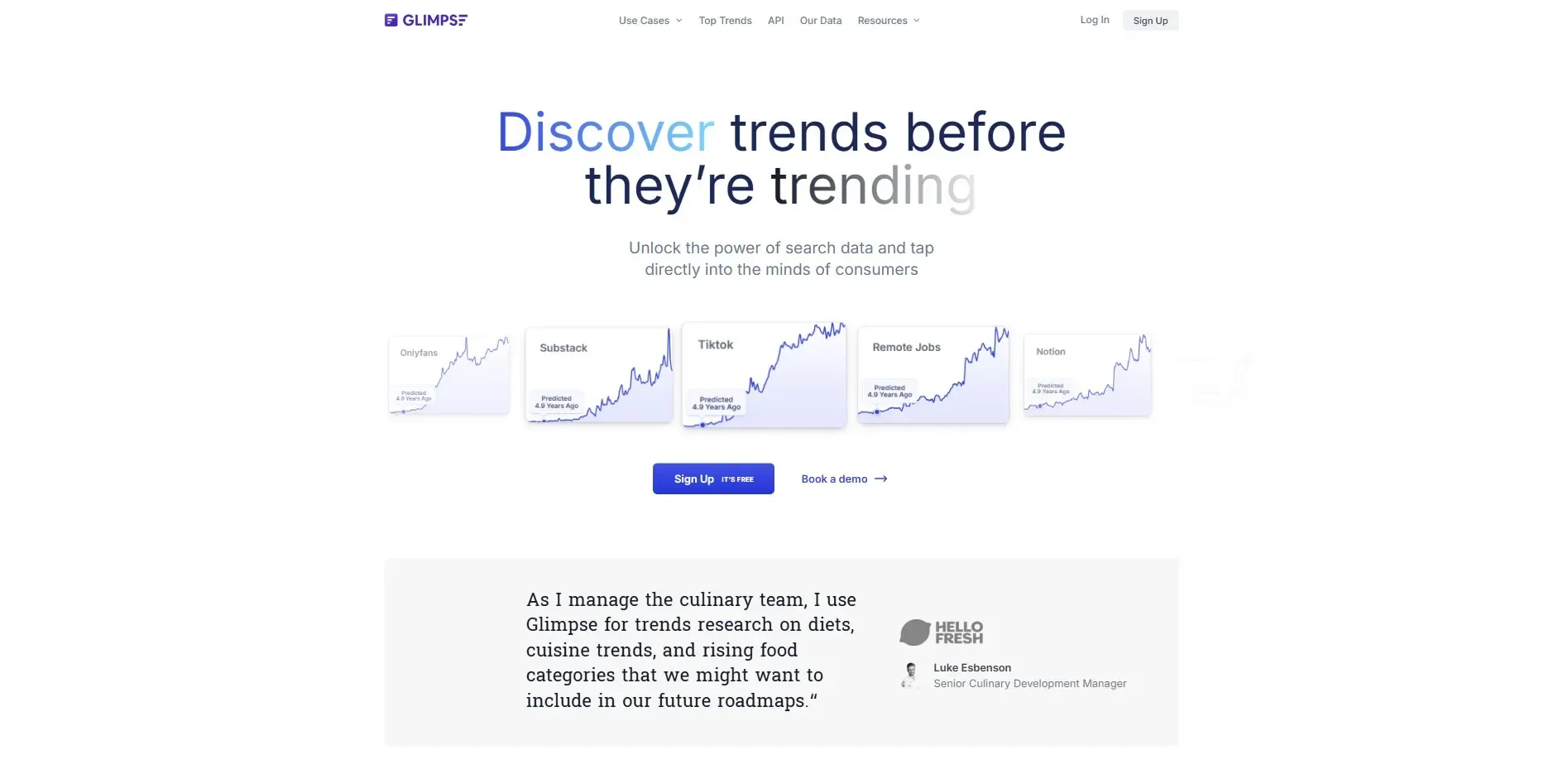
Glimpse is designed for trend detection. It connects to Google Trends and surfaces emerging topics early — often before they become mainstream. It is very useful for content teams and product strategists looking to stay ahead of the curve.
10. GWI Spark

GWI Spark gives you access to a massive global dataset of consumer behaviors, attitudes, and preferences. You can query the data conversationally using its AI assistant, making it accessible even to non-technical team members.
11. Perplexity AI
Perplexity AI functions as a smart AI research assistant. It searches the web in real time and delivers cited, up-to-date answers making it handy for quick desk research, industry overviews, and staying informed on fast-moving topics.
Key Features to Look for in AI Market Research Tools
Not all tools are created equal, and it is easy to get distracted by flashy interfaces. Here is what I always tell people to focus on when evaluating AI market research tools.
Data collection automation is the foundation. The tool should be able to pull data from multiple sources without manual effort. Real-time insights matter a lot too, especially if you are monitoring brand sentiment or market shifts. You want information as it happens, not days later.
Predictive analytics separate the basic tools from the truly powerful ones. If a platform can forecast trends or customer behavior, it saves you from being reactive and keeps you one step ahead. Social listening and AI in marketing capabilities are also essential for brands that care about their online reputation.
Finally, look for AI-powered reporting that automatically generates visual dashboards and summaries. If you still have to manually build reports after running analysis, the tool is not saving you as much time as it should.
Benefits of Using AI Market Research Tools
To summarize why so many businesses are making the switch, the benefits are straightforward and compelling. Research cycles become dramatically faster, which means decisions happen more quickly and confidently. Teams spend less time on data collection and more time on strategy.
There is also the matter of human bias. Manual research is naturally influenced by whoever is doing it. AI market research tools analyze data more consistently, which leads to more objective results. On top of that, companies gain the ability to track competitors and market movements in real time something that was simply not practical before.
Challenges of AI in Market Research
In my experience, it is also worth being honest about the limitations. Data privacy is a real concern. Many AI tools rely on large amounts of consumer data, which means companies need to stay on top of regulations like GDPR and CCPA.
AI bias is another issue. If the data used to train AI models is not diverse or representative, the insights it produces can be skewed. And there is always the risk of overreliance on automation. AI is powerful, but human judgment is still essential for interpreting findings and making final decisions. Always validate AI outputs with real human expertise.
AI Market Research Trends for 2026
The space is evolving fast. Here are a few developments that will define how AI-powered market research tools are used over the next year.
AI agents conducting research autonomously are starting to emerge systems that can plan, execute, and summarize research tasks with minimal human input. Real-time consumer intelligence is becoming standard, with platforms offering live dashboards that update continuously based on fresh data.
Automated focus groups powered by AI synthetic participants are being tested by several platforms, allowing businesses to run simulated research at scale. And predictive consumer modeling is getting more sophisticated, helping brands simulate customer responses to campaigns, pricing changes, or product launches before they go live.
How to Choose the Right AI Market Research Tool
Most people struggle with this, so let me explain simply. Start with your research goals. Are you tracking brand sentiment? Forecasting trends? Analyzing survey data? Different tools specialize in different areas, so knowing your primary need narrows the field quickly.
Next, think about data sources. Some tools excel at social media data, others at survey analysis or web scraping. Make sure the tool connects to the data you actually need. Budget matters; many platforms offer free trials, so test before committing.
Check for integration with your existing tools, like your CRM, marketing platforms, or analytics stack. And finally, consider your team's expertise. Some tools are built for data scientists, while others are designed for business users exploring AI transformation with no technical background.
AI vs Traditional Market Research
| Feature | Traditional | AI Market Research |
|---|---|---|
| Speed | Weeks or months | Minutes |
| Cost | Very high | Much lower |
| Insights | Limited scope | Data-driven, deep |
| Automation | Low | High |
| Human bias | High risk | Reduced |
Conclusion
If there is one thing I want you to take away from this article, it is this: AI market research tools are no longer a luxury for big corporations. They are accessible, affordable, and genuinely transformative for businesses of any size.
Whether you want to understand what your customers really think, keep tabs on competitors, forecast where your market is headed, or simply move faster than before, there is a tool on this list built for that. The best AI market research tools in 2026 make it possible to work smarter, spend less, and make decisions with real confidence.
For businesses that want to go a step further, platforms like RejoiceHub are also helping companies implement AI-driven automation and intelligent workflows to turn research insights into real business growth. By combining AI tools with automation strategies, businesses can move from collecting insights to executing smarter decisions faster.
Take your time exploring a few options, test with free trials where available, and focus on the one that solves your most pressing research challenge. Once you make the switch, it becomes difficult to imagine going back to slow, traditional research methods.
Frequently Asked Questions
1. What are AI market research tools?
AI market research tools are software platforms that use artificial intelligence technologies such as machine learning, natural language processing (NLP), and predictive analytics to collect, analyze, and interpret market data. These tools help businesses understand customer behavior, track competitors, identify trends, and generate insights much faster than traditional research methods.
2. How do AI market research tools work?
AI market research tools collect data from multiple sources such as surveys, social media, websites, customer reviews, and CRM systems. The AI algorithms then analyze this data using machine learning and NLP to detect patterns, measure sentiment, forecast trends, and automatically generate insights and reports.
3. What are the benefits of using AI for market research?
AI market research tools offer several benefits, including faster insights, reduced research costs, real-time consumer data analysis, predictive trend forecasting, and automated reporting. These advantages help businesses make data-driven decisions quickly and stay ahead of competitors.
4. What is the best AI market research tool in 2026?
Some of the best AI market research tools in 2026 include Quantilope, Brandwatch, Speak AI, Pecan AI, Crayon, Hotjar, Browse AI, Glimpse, GWI Spark, Appen, and Perplexity AI. Each platform focuses on different aspects of market research such as competitor intelligence, predictive analytics, social listening, and trend discovery.
5. Can small businesses use AI market research tools?
Yes. Many AI market research tools offer affordable plans or free trials, making them accessible to startups and small businesses. These tools allow smaller companies to gain professional-level market insights without hiring expensive research agencies.
6. How accurate are AI market research insights?
AI market research tools can provide highly accurate insights when trained on high-quality data. However, the accuracy depends on the quality of the data sources used. Businesses should combine AI insights with human analysis to validate findings and avoid bias.
7. What is the difference between AI market research and traditional market research?
Traditional market research relies on manual surveys, focus groups, and slow data analysis processes. AI market research automates these processes using machine learning and data analytics, allowing businesses to generate insights in minutes rather than weeks.
8. What features should you look for in AI market research tools?
Key features include automated data collection, real-time analytics, sentiment analysis, predictive forecasting, competitor monitoring, social listening, and AI-generated dashboards. Integration with marketing tools, CRM platforms, and analytics systems is also important.
9. Are AI market research tools safe to use?
Most reputable AI research platforms follow strict data privacy and compliance standards such as GDPR and CCPA. Businesses should always review the platform’s privacy policies and ensure customer data is handled securely.
10. Can AI replace traditional market research?
AI is transforming market research but does not completely replace traditional methods. Instead, it enhances research by automating data analysis and identifying patterns faster, while human researchers still interpret insights and make strategic decisions.
11. What industries use AI market research tools?
AI market research tools are used across many industries, including e-commerce, SaaS, retail, finance, healthcare, marketing, and product development. Any business that needs to understand customers, track trends, or analyze competitors can benefit from AI-powered research.