Let's be honest. Most entrepreneurs currently operating businesses and developing startups need to maintain at least 12 active browser tabs in their web browsers. One tab functions as your AI writing tool. The second tab serves as your coding assistant. The third tab functions as a research tool. The fourth tab exists to help you monitor all other activities.
The situation feels overwhelming, correct?
The current problem which several teams face today requires them to operate multiple AI systems which do not share information with one another. You waste time. You lose your ability to understand the situation. The tools begin to function as obstacles which prevent you from achieving your goals.
The OpenAI Superapp functions as a solution to this problem. If you are already familiar with how AI agents are transforming business automation, you will immediately understand why a unified platform like this matters.
Now, who is this really for? This product serves business owners who want to automate their repetitive tasks and startup founders who need to accelerate their operations without expanding their staff and developers who seek to optimize their work processes.
The OpenAI Superapp functions as a system which you will understand through this article because it explains its purpose and operation and every tool component and its business value. Let's dive in.
What Is OpenAI Superapp?
The OpenAI Superapp functions as an AI platform which OpenAI developed to deliver multiple AI functions through a single integrated platform.
What you get from this app is a combination of three functions which include a smart assistant and a coding partner and a research analyst. The OpenAI all-in-one app handles everything from a single location.
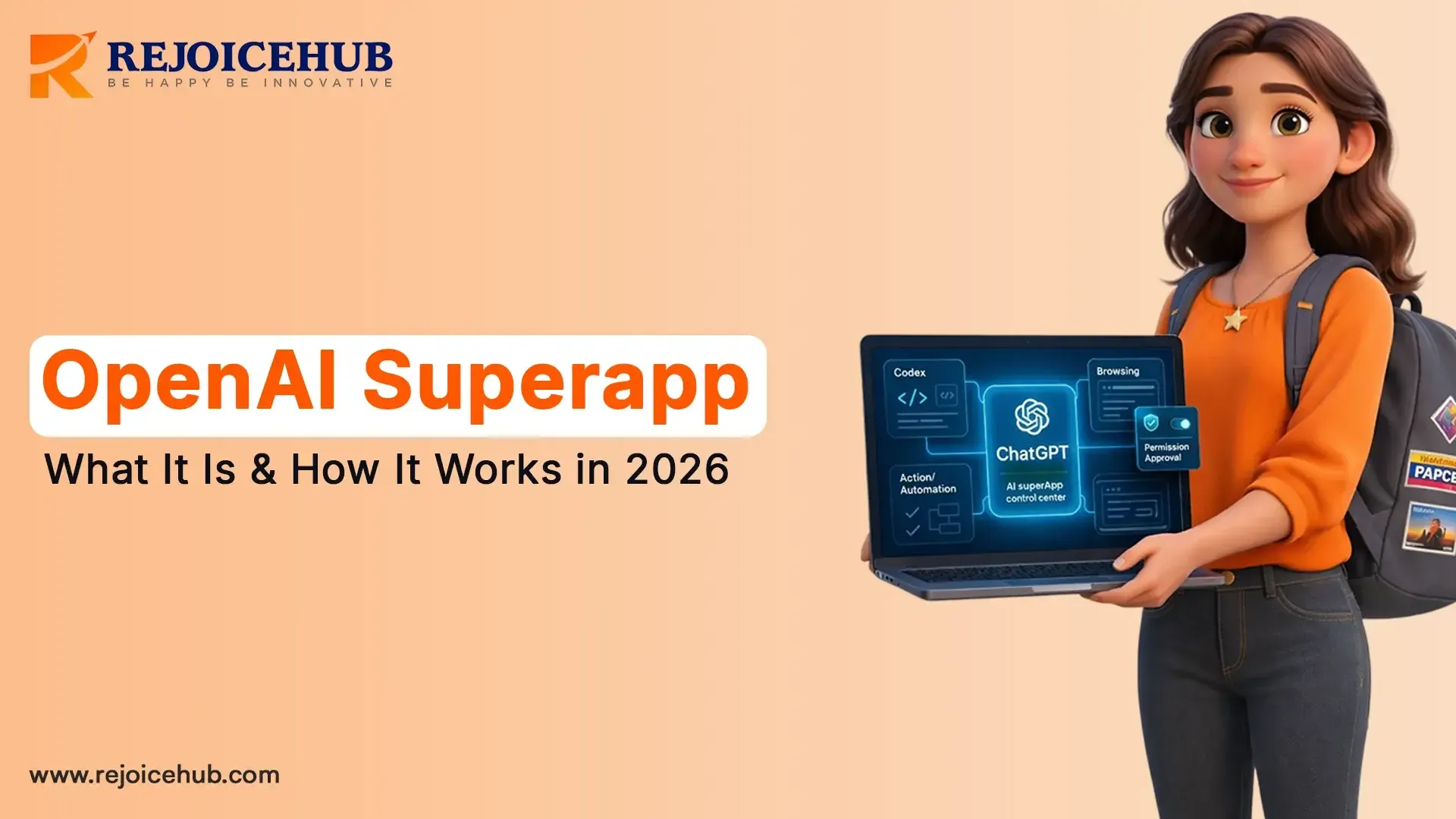
The platform supports three main tools which include ChatGPT for conversation and task management and Codex for coding and automation and Atlas for browsing and real-time research. The combination of three tools produces results which exceed their individual capabilities.
The system achieves its distinctiveness through its integrated design which combines separate tools into one functional solution. Your AI assistant gains the ability to communicate with your coding tool which has access to real-time web data. The OpenAI productivity application delivers its main value through its ability to create a work environment which operates smoothly and connects different elements while using intelligent technology.
The current situation represents more than a product update. The development of AI tools has undergone a fundamental transformation which now leads to the creation of integrated platforms that reflect actual human work patterns.
How OpenAI Superapp Works (Simple Breakdown)
The OpenAI Superapp functions through its specific operational system according to its user interface structure. Here is the system explained in simple terms.
You enter your workplace at the start of the day. You need to use only one application instead of starting five separate applications. You type in what you need — say, "Draft a client proposal, write the backend code for the pricing section, and pull the latest market research on our competitors."
The Superapp takes that single input and routes it intelligently across its three core tools. The actual process operates in this particular manner.
-
ChatGPT → Communication & Tasks
ChatGPT manages all language-related tasks. The system produces email drafts and generates content while it creates summaries of extensive texts and provides answers to inquiries and assists users in making decisions. The system functions as your communication interface which uses contextual information to produce humanlike responses.
Business owners can use the system to create sales emails within seconds while it can also produce summaries of 30-page documents and enable users to interact with each other to develop new concepts.
-
Codex → Coding Automation
The Codex engine serves as the foundation for all technical operations. The software develops code and fixes errors while creating automated scripts that enhance developer productivity. You describe your requirements in basic English and Codex converts them into functioning code.
Startups that lack budget resources for complete development teams will find this solution to be revolutionary. The system enables users to create prototype features while they automate processes and establish system connections without needing specialized personnel. This is very similar to how vibe coding works describing what you want in plain language and letting AI handle the rest.
-
Atlas → Browsing + Research
Your training data extends until the month of October in the year 2023. The platform uses Atlas to access online content which enables it to browse the web and retrieve relevant information while it creates article summaries and delivers precise data results that users can access without exiting the application.
Atlas functions as an everlasting research assistant who will complete all tasks without becoming fatigued. The system enables users to track current market trends while retrieving competitor pricing information and creating academic summaries and extracting recent data points for their upcoming presentations.
The workflow is elegantly simple:
- You give one input a task, a question, or a request.
- The AI processes it, decides which tool (or combination) handles it best.
- You get a useful, ready-to-use output whether it's text, code, or research.
The system operates through three steps which include input and AI processing followed by output. The system requires users to remain on the current interface because it does not permit them to move to different tabs. The system operates through a single uninterrupted process which connects task execution to final results.
ChatGPT, Codex & Atlas Browser Explained
Now we will look at each tool at a more advanced level. The individual tools need to be studied because their power becomes evident when they are combined together. The internal workings of the ChatGPT Codex Atlas browser need to be explained to understand its complete functionality.
-
ChatGPT: The Brain Behind the Conversation
ChatGPT has developed into a more advanced system than its initial chatbot function. The Superapp uses ChatGPT as its main user interface which people use to request various tasks. The system can understand subtle differences in meaning while maintaining dialogue comprehension across extended periods and it can produce creative works and develop strategic plans.
ChatGPT provides businesses with the same benefits as having an expert employee who can work round-the-clock for all language tasks. To understand how this differs from a standard chatbot experience, it helps to read about the key differences between AI agents and AI chatbots.
-
Codex: Your Code-Writing Partner
Codex is built on OpenAI's powerful code-generation model. The system can create both basic scripts and advanced programming functions because it supports multiple programming languages. The system understands user intent because people can describe their problems in plain English, which Codex uses to determine the most effective programming solution.
A startup can complete its custom API integration work within hours instead of spending days to finish. Business owners can now generate automatic reports that used to need developer assistance before.
-
Atlas: Your Real-Time Research Engine
The combination of Atlas and ChatGPT provides access to real-time information which neither system can deliver on its own. Atlas continuously searches online content while ChatGPT uses information from its last knowledge update. It retrieves content from websites to deliver you quick results which include processed information.
You need to prepare your sales call. You request the Superapp to investigate the prospect's company. Atlas retrieves their latest news articles along with information about their product launches and financial developments.
ChatGPT creates a customized talking points document which it prepares for you. Codex enables you to create a basic tracker that will help you monitor your upcoming tasks. The entire workflow process operates through a single platform.
Also Read: OpenAI Sweetpea AI Earbuds: A New Era for AI Wearables in 2026
How They Work Together A Real Business Use Case
Suppose, for example, you operate a small e-commerce brand and a new product is to be launched by way of customer engagement. Here is how the Superapp model stands out:
- Atlas researches trending products in your niche and pulls competitor pricing from across the web.
- ChatGPT writes your product descriptions, email campaigns, and social media posts.
- Codex automates your inventory update script so your website reflects the new product in real time.
If you want to go deeper on this, the guide on how to use AI in your e-commerce business covers practical implementation steps that pair well with what the Superapp offers.
Benefits of OpenAI Superapp for Businesses
When we discuss the advantages of OpenAI Superapp for businesses, we actually examine a solution that solves all fundamental business operational problems. The following advantages represent the most important achievements:
1. Automation That Actually Works
The Superapp automates complete business processes instead of working on single tasks. The AI system manages all operations from lead entry into the CRM system until team members receive their follow-up scripts. The system provides more than simple use; it delivers businesses a market edge.
2. Productivity You Can Measure
The OpenAI super app 2026 is designed for today's pace of business. Teams that adopt it are reporting dramatic reductions in time spent on repetitive tasks. The process requires less time for repetitive work and it gives users more opportunities for deep thinking. Businesses exploring what AI automation truly means will recognize exactly why this shift matters.
3. Real Cost Reduction
Think about the tools you're currently paying for — a writing assistant, a research tool, a coding helper, maybe a separate automation platform.
The Superapp consolidates all of that. The system requires users to have fewer subscriptions and to make fewer login attempts while maintaining one complete cost model.
4. Faster Decision-Making
The system provides access to market data. ChatGPT can process this data while Codex develops scenario models. The process provides results within minutes instead of waiting multiple days for report completion. The process enables you to make choices based on the latest information which you need at that specific moment.
OpenAI Superapp vs Traditional Tools
People should acknowledge that organizations currently operate their businesses through multiple unconnected software applications which need to be integrated. The method produces results but not complete success. The concealed expense remains unaddressed because no one discusses it.
Switching between tools causes you to lose all understanding of your current task. Your productivity will drop because studies show that people lose 40% of their work time when they switch tasks.
-
The "Multiple Tools" Problem
With standard systems, users need to use different tools for writing and coding and research work and automated tasks. Every system comes with its unique user interface and pricing model and operational characteristics. System integration can be achieved through various methods however complete integration remains an uncommon result.
-
The Single Platform Advantage
The OpenAI Superapp revolutionizes everything because it combines all features into a single platform which requires only one authentication process and one subscription fee to access all features that share information between ChatGPT and Atlas and Codex.
This system operates at a higher efficiency level than our current processes through its use of advanced technologies which enable entirely new work methods.
People should imagine this situation as a comparison between cooking in five different kitchens and working within a complete professional kitchen. The result produces outcomes which require less time to complete and create less mess and generate lower levels of stress.
-
Cost & Simplicity Comparison
The standard technology stack which includes writing, coding, research, and automation tools requires users to maintain multiple subscriptions while needing to create multiple accounts which results in their data being stored in separate databases.
OpenAI Superapp: Single subscription, unified experience, shared AI context. The math almost always favors consolidation — and the simplicity benefit is something competitors aren't offering at this level yet.
What This Means for the Future of Work (2026 & Beyond)
We have reached a critical point which will determine our future. The OpenAI super app 2026 functions as more than a product because it shows the future direction of work.
-
The Rise of AI Agents
We have progressed from developing AI systems which provide answers to creating AI systems which execute tasks. In 2026 and beyond, AI agents will browse the web, write code, send emails, and make decisions with minimal human input. The Superapp functions as an initial prototype which demonstrates upcoming technological advancements and is already accessible to users.
-
Fewer Tools, More Automation
Unified AI platforms have emerged as the new standard which replaces single-purpose tools that companies developed through their best-of-breed approach. Organizations that implement unified platforms at an early stage will achieve major advantages for both their productivity and their capacity to develop AI operational expertise.
-
AI-First Companies Will Lead
The businesses that thrive in the next few years won't just be the ones that use AI they'll be the ones that build AI into their core processes. The OpenAI Superapp platform provides users with time-saving benefits which extend beyond current operational needs. The process establishes a competitive edge which will grow stronger throughout the entire duration of its existence.
This situation provides startups with equal access to success. A small AI-native team can achieve better performance than a larger team which depends on manual work and unconnected software tools when they use the right operational platforms. For startups still figuring out where to begin, looking into solid AI business ideas can help frame the right starting point.
The question isn't whether AI will transform your industry. The transformation process has already begun. The question is whether you will lead the change or need to work to achieve it.
Conclusion
The OpenAI Superapp brings everything into one location which unites ChatGPT, Codex, and Atlas tools to enable you to handle all your communication and coding and research tasks without needing to move between different platforms. Businesses achieve better automation results which allows them to make decisions more rapidly while their expenses decrease.
RejoiceHub will help you create your own business solution if you plan to develop a similar project. The team at this company assists customers in transforming their concepts into reality through AI implementation in everyday business operations and development of custom automation solutions and complete AI-based systems. It serves as an excellent chance to improve your work methods while maintaining an advantage over your competition.
Frequently Asked Questions
1. What is the OpenAI Superapp?
The OpenAI Superapp is an all-in-one AI platform that brings ChatGPT, Codex, and Atlas together in a single app. Instead of jumping between different tools, you handle writing, coding, and research from one place. It's built for businesses and startups that want to get more done without the tab chaos.
2. How does the OpenAI Superapp work?
You type in what you need, and the app figures out which tool handles it best. ChatGPT takes care of writing and conversations, Codex writes or fixes your code, and Atlas pulls live data from the web. All three work together behind the scenes so you get one clean, ready-to-use output.
3. What is the difference between ChatGPT, Codex, and Atlas in the Superapp?
ChatGPT handles language tasks like drafting emails or summarizing content. Codex writes and automates code based on plain English instructions. Atlas browses the web in real time to pull fresh research and data. Together, they cover every major task a business deals with on a daily basis.
4. Who is the OpenAI Superapp made for?
It's built for business owners, startup founders, and developers who want to work faster without hiring a bigger team. If you're currently using five different tools to get through your workday, this platform was designed specifically with you in mind. It removes the switching and simplifies everything.
5. What are the main benefits of the OpenAI Superapp for businesses?
The biggest wins are time savings, lower tool costs, and faster decisions. You stop paying for separate writing, research, and coding subscriptions. Your team spends less time on repetitive tasks and more time on work that actually matters. Businesses also get real-time data to act on quickly.
6. Is the OpenAI Superapp good for small businesses or just enterprises?
It's actually a great fit for small businesses and startups. You don't need a large team or a big tech budget. A small team using this platform can compete with much larger companies that still rely on manual processes and disconnected software tools spread across multiple platforms.
7. What makes the OpenAI Superapp different from using separate AI tools?
Separate tools don't talk to each other, so you lose context every time you switch. The Superapp shares information across all three tools in real time. That means your research feeds into your writing, and your writing connects to your code, all inside one unified workspace without any manual handoffs.
8. Can the OpenAI Superapp replace a developer or research team?
It won't replace people entirely, but it can handle a lot of what small teams used to need extra hires for. Codex automates coding tasks, and Atlas replaces hours of manual research. For early-stage startups especially, it significantly reduces how much you depend on specialized staff for basic technical work.
9. What is Atlas in the OpenAI Superapp?
Atlas is the real-time browsing and research tool inside the Superapp. It goes online, pulls current information from websites, and delivers summarized, useful results right inside the platform. Think of it as a research assistant that never sleeps and always has access to the most up-to-date information available.
10. How does the OpenAI Superapp help with productivity in 2026?
In 2026, businesses need speed. The Superapp cuts down time lost from switching between tools, which research shows can eat up nearly 40% of your workday. With one input triggering writing, coding, and research simultaneously, teams complete in minutes what used to take hours across multiple disconnected platforms.
11. What tasks can I automate using the OpenAI Superapp?
You can automate email drafting, content creation, competitor research, inventory update scripts, API integrations, report generation, and lead follow-ups. Basically, any repetitive task that currently eats up your team's time is a good candidate for automation through the Superapp's three connected AI tools.
12. Does the OpenAI Superapp require technical skills to use?
Not at all. You describe what you need in plain, everyday English, and the platform handles the technical side. Whether you're asking for a piece of code or a market research summary, you don't need to know programming or advanced AI prompting. It's genuinely built for non-technical users too.
13. What does the future of work look like with the OpenAI Superapp?
AI platforms like the Superapp are shifting work from tool-switching to full automation. By 2026 and beyond, AI agents will handle browsing, writing, and decision-making with very little human input needed. Businesses that build these platforms into their core processes early will have a serious and lasting advantage over competitors.