AI agents aren't some general future idea anymore. They're already living inside your CRM, quietly automating bits of your sales pipeline and fielding your customer support tickets right now. If you've been exploring use cases of AI agents in business, you already know the momentum is real.
But the real thing to ask is, who is actually governing them?
That's pretty much what the MCP Gateway is set up to handle. And that's why Snowflake's acquisition of Natoma looks like a loud signal across the entire AI industry, not just a side deal. The Agent Governance Era has, frankly, started already.
In this post, we'll sort of unpack what an MCP Gateway is, why Snowflake took that bold step, and what it means in practical terms for your business if you're building AI agents or using them today.
What Is the Model Context Protocol (MCP)?
Before we get into the gateways, let's kinda set the base first.
Model Context Protocol (MCP) is an open standard, originally developed by Anthropic, that defines how AI agents chat with external tools, APIs, databases, and services in a sort of consistent way.
Think of it as USB-C for AI agents, yeah.
Just like USB-C lets you plug any gadget into any charger, MCP lets any AI agent connect to any data source or tool consistently, securely, and at scale.
Why Does MCP Matter for Businesses?
Without a standard like MCP, every AI agent integration is a custom one-off project. That means:
- More development time and higher costs
- Inconsistent behavior across systems
- Security vulnerabilities from uncontrolled data access
- Zero visibility into what your agents are actually doing
MCP changes all of that by creating a universal language for agent-tool communication.
What Is an MCP Gateway?
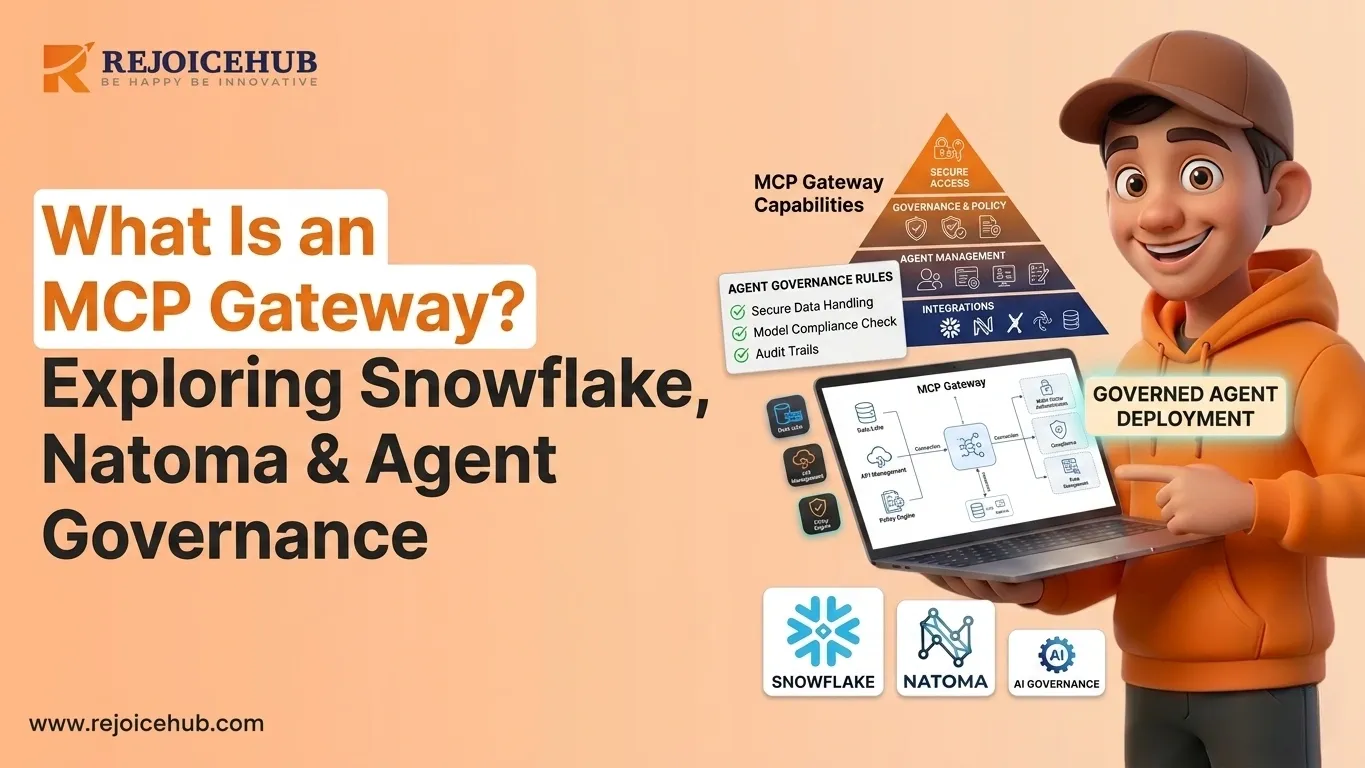
An MCP Gateway is this kind of centralized layer that kinda sits between your AI agents and the tools or data they end up connecting to.
Basically, it plays the traffic controller, security enforcer, and compliance monitor roles all in one, so it feels like you only manage the surface from one spot.
A quick mental picture looks like this:
What Does an MCP Gateway Actually Do?
| Function | What It Means for Your Business |
|---|---|
| Authentication & Authorization | Controls which agents access which data |
| Audit Logging | Tracks every agent action for compliance |
| Rate Limiting | Prevents agents from overloading systems |
| Policy Enforcement | Applies rules like "never access PII" |
| Observability | Real-time monitoring of agent behavior |
| Routing | Directs agent requests to the right tools |
Without an MCP Gateway, AI agents are kinda like unsupervised staff autonomous but, honestly, not really accountable at all.
With one? Then you get the quickness of automation, plus the oversight and governance control.
Snowflake's Natoma Acquisition: What Really Happened?
In 2025, Snowflake, one of the world's leading cloud data platforms, seemed to quietly make a move that, sort of, shifted the enterprise AI landscape a bit.
They acquired Natoma, a startup that had already built one of the first enterprise-grade MCP gateway platforms, y'know, the kind of thing teams use to connect things and make it work.
Who Was Natoma?
Natoma was a San Francisco-based AI infrastructure company, really centered on building a kind of governance and security layer for AI agents working inside enterprise environments. It sounds simple, but it wasn't, because there was all that stuff around policies and protections, you know.
Their main offering was a core product, an MCP-compatible gateway that lets companies roll out dozens, even hundreds, of AI agents in a safer way. And still, without giving up compliance or security, even when everything gets complicated.
Why Did Snowflake Buy Them?
Snowflake basically sits right in the middle of enterprise data. Millions of businesses store queries and move data through Snowflake every day, yeah.
And now, since AI agents are starting to need to read, write, and act on that data, Snowflake wants to become the place where it all happens, but safely, of course.
By acquiring Natoma, Snowflake is saying:
"We're not just a data warehouse anymore. We're the governed AI data operating system for the enterprise."
This is a massive strategic play, and it signals something bigger than one acquisition.
What This Signals: The Agent Governance Era Has Begun
When Snowflake buys Natoma, it's not only a product move, it's kind of a declaration in plain sight.
Here's what this acquisition signals for the broader AI industry:
1. Governance Is Now a First-Class Concern
Early AI adoption was kinda focused on capability, like what can the AI actually do? The next phase is more about control, what the AI is allowed to do, and also how do we tell it's complying, you know, in a solid way?
MCP Gateways are basically the infrastructure that makes control possible.
2. Enterprise AI Needs a Security Layer
Uncontrolled AI agents are kind of a compliance and security nightmare, especially in healthcare, finance, and legal and related domains.
HIPAA, SOC 2, GDPR… they all basically demand you know what data your systems are touching, ingesting, or moving around. But AI agents without proper governance don't really do that, by default. Understanding how generative AI can be used in cybersecurity makes it clear why a governance layer is non-negotiable.
The MCP Gateway is how enterprises can meet those standards while still keeping automation moving, not slowing it down.
3. The "Agent Stack" Is Maturing
The AI agent stack is changing pretty fast, from simple LLM-driven workflows into something more fully governed, enterprise-level ecosystems. LLM agents are still the reasoning engine, sure, but now you get these extra layers, like agent orchestration, MCP, MCP Gateways, and observability platforms, and honestly, they are turning into necessities for scalability, security, and tighter control.
As orgs start deploying multi-agent systems at larger scales, governance and communication standards are no longer "nice to have", they're kinda fundamental. Snowflake's latest move kinda underlines that the infrastructure layer matters a lot in the next stage of AI adoption, and not just in theory.
4. Data Platforms Are Becoming AI Operating Systems
Snowflake, Databricks, and a bunch of other data platforms are kinda sprinting to be the central nervous system for enterprise AI.
Whoever ends up owning the data governance layer, well, they end up kinda owning the whole enterprise AI stack too.
And the Natoma acquisition was Snowflake doing that, so to speak, making their move to grab that position, before anyone else could.
What Does This Mean for Your Business?
Whether you're a startup founder, SaaS company, or enterprise operations leader, the Snowflake-Natoma story has practical implications.
If You're Building AI Agents
You need to start thinking about agent governance from day one not as an afterthought.
Ask yourself:
- How are my agents authenticated to access systems?
- What audit logs exist for agent actions?
- How do I enforce data access policies across agents?
- Can I monitor all agent activity in real time?
If you can't answer these questions, you don't have a governance strategy. Learning how to build an AI agent stack for your business is a solid starting point.
If You're Evaluating AI Platforms
Look for platforms that have built-in MCP compatibility and gateway-level controls.
Questions to ask vendors:
- Does your platform support MCP?
- Do you provide an audit trail for agent actions?
- How do you handle PII and sensitive data in agent workflows?
- Can I set role-based access controls for agents?
If You're in a Regulated Industry
This is non-negotiable. You cannot deploy AI agents that access sensitive data without a governance layer.
The Natoma acquisition is a signal that the market is building this infrastructure but you don't have to wait for the big players to catch up.
How RejoiceHub Approaches AI Agent Governance
At RejoiceHub, we build AI agents that are fast, intelligent, and enterprise-ready.
That means every AI agent we develop comes with:
- Role-based access control: agents only access what they need
- Audit logging: every action is tracked and reportable
- Compliance-first design: built for HIPAA, SOC 2, and GDPR requirements
- MCP-compatible architecture: future-proofed for the emerging agent ecosystem
We don't just build agents. We build agents that your legal and security teams can actually approve.
The Future of the MCP Gateway Ecosystem
The Snowflake-Natoma acquisition is just the beginning. Here's what we expect to see over the next 12–24 months:
- Open-source MCP Gateway projects will emerge giving developers more choice.
- Cloud providers (AWS, Azure, GCP) will integrate MCP Gateway capabilities into their AI services.
- Compliance frameworks will explicitly require MCP Gateway-equivalent controls for AI agent deployments.
- AI agent marketplaces will require MCP compliance as a certification standard.
The businesses that build on governed, MCP-compatible agentic AI workflows today will have a significant competitive advantage as these standards mature.
Conclusion
The world of AI agent systems is evolving into a new era where governance, security, and compliance are becoming the foundation, not an extra feature.
With the rise of the MCP protocol, which acts as the interface between agents and tools and data, the advent of MCP gateways underscores the increasing importance of managed and policy-based operations in AI agent systems.
The fact that Snowflake recently bought Natoma underlines this paradigm shift, as companies see the importance of governance in AI. The Agent Governance Era is here, and it brings with it the need for balancing innovation with governance.
At RejoiceHub, we build our AI agent infrastructure from the ground up with governance architecture in mind, thus making the adoption and growth of AI possible without sacrificing control and compliance.
Frequently Asked Questions
1. What is an MCP Gateway, and why does it matter for AI agents?
An MCP Gateway sits between your AI agents and the tools they connect to. It handles authentication, audit logs, and policy enforcement all in one place. Without it, your agents can access data freely with zero oversight. Think of it as a security checkpoint that keeps your AI-driven workflows safe and trackable.
2. What is the Model Context Protocol (MCP) in simple terms?
MCP, or Model Context Protocol, is an open standard created by Anthropic. It gives AI agents a common way to connect with different tools, APIs, and databases. Instead of building a custom connection every time, MCP works like a universal plug one standard that works across all systems, saving time and reducing errors.
3. Why did Snowflake acquire Natoma?
Snowflake bought Natoma to add a governance and identity layer for AI agents inside its platform. As more businesses use AI agents to read and act on data, Snowflake wants to be the safe, central place where that happens. Natoma's MCP Gateway fills that gap by adding access control, audit trails, and policy enforcement.
4. What is the Agent Governance Era, and what triggered it?
The Agent Governance Era is the shift from asking "what can AI do?" to asking "what is AI allowed to do?" As AI agents start working inside business systems automatically, companies need rules, audit logs, and access controls. Snowflake's Natoma deal is one of the clearest signals that this era is already here.
5. How does an MCP Gateway help with compliance like HIPAA or GDPR?
Industries like healthcare and finance have strict rules about who accesses sensitive data. An MCP Gateway enforces role-based access, logs every agent action, and blocks unauthorized data access. This makes it much easier to meet compliance standards like HIPAA, SOC 2, and GDPR without slowing down your AI workflows.
6. Do small businesses or startups need an MCP Gateway too?
If you're building or using AI agents that connect to any business data, yes even startups benefit from having a governance layer. You don't need to be enterprise-scale to face a data breach or compliance issue. Starting with good access controls and audit logging from day one saves a lot of headaches later.
7. What should businesses look for in an MCP-compatible AI platform?
Look for platforms that support MCP natively and offer built-in audit trails, role-based access controls, and PII protection. Ask vendors directly whether their system can track what each agent does and why. A strong MCP Gateway should give your legal and security teams the visibility they need to feel confident.