The process of writing code with AI is much faster than that of any human team. Platforms such as GitHub Copilot, Claude Code, Cursor, and GPT-5.5 can write entire functions, tests, and complete features within seconds.
However, faster does not mean better.
Code written by AI might contain bugs, security vulnerabilities, and logical errors that will not be apparent at first glance, but will affect the product during its run. This is why engineering teams require human verification as well as a proper AI code review procedure.
In this guide, we will explain exactly how to perform safe AI code review, the workflow used by best engineering teams in 2026, and the list of items that should be included in an AI-generated code review checklist.
What Is AI Code Review?
AI code review refers to an approach that evaluates the generated code from AI coding assistants through a combination of automated tools and manual inspection before being integrated into production.
It combines two things:
AI-generated code review tools that scan for bugs, security flaws, and style issues automatically Human review that checks business logic, context, and intent AI can't fully understand
Modern engineering teams rely on AI coding assistants like:
GitHub Copilot: inline code suggestions inside your IDE Claude Code: agentic coding for larger, multi-file tasks Cursor: an AI-native code editor built for fast iteration GPT-5.5: general-purpose model used for code generation and debugging
They provide immense gains in speed. However, none of these can understand your product, users, and compliance regulations. This is precisely why human code review is necessary and why AI code review as a field exists.
Why AI-Generated Code Requires Human Review
AI models are trained to predict plausible code, not necessarily correct code a gap that shows up often in vibe coding workflows where speed is prioritized over verification. That distinction matters more than most teams realize.
Here's what commonly goes wrong with unreviewed AI output:
Hallucinated code: AI invents functions, libraries, or APIs that don't actually exist Hidden bugs logic that runs without errors but produces wrong results Security flaws unsafe input handling, exposed secrets, weak authentication logic Performance problems inefficient queries, unnecessary loops, memory leaks Deprecated APIs AI trained on older data may suggest outdated methods Maintainability issues code that works but is hard for humans to read or extend
Here's how human and AI review compare:
| Review Aspect | Human Review | AI Review |
|---|---|---|
| Business logic understanding | Strong | Weak |
| Speed | Slower | Very fast |
| Consistency | Variable | High |
| Security pattern detection | Moderate | Strong (with tools) |
| Context awareness | Strong | Weak |
| Scalability across teams | Limited | High |
The takeaway: AI and humans aren't competing; they're complementary. The best secure AI code review processes use AI for speed and coverage, and humans for judgment.
AI Code Review Workflow for Engineering Teams
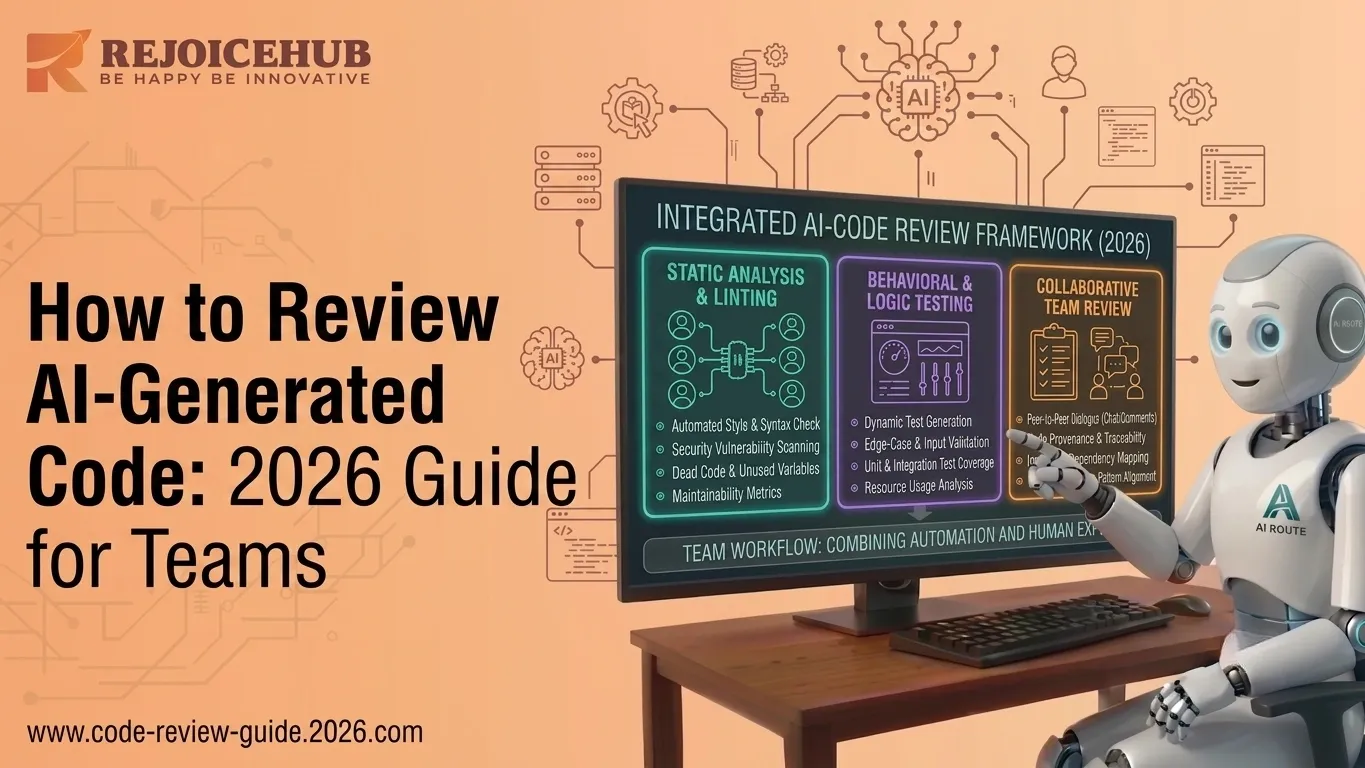
AI code review process always follows a defined process, be it for GitHub Copilot suggestions or results generated by an autonomous coding agent.
AI Code Generation → Static Analysis → Security Checks → Peer Review → Automated Testing → Approval & Merge
1. Generate AI Code
A developer prompts an AI assistant (Copilot, Claude Code, Cursor, GPT-5.5) to generate a function, feature, or fix.
2. Run Static Analysis
Linters and static analysis tools catch syntax issues, code smells, and style violations before a human even looks at it.
3. Perform Security Scanning
Automated SAST tools scan for vulnerabilities, SQL injection risks, hardcoded secrets, insecure dependencies, and auth flaws an area where comparing Claude and Copilot for security can help teams pick the right tooling.
4. Peer Review
A human engineer reviews the code for business logic accuracy, architectural fit, and edge cases AI can't anticipate.
5. Execute Automated Tests
Unit, integration, and regression tests confirm the code behaves correctly across expected and unexpected scenarios.
6. Approve and Merge
Once the code passes automated checks and human sign-off, it's approved and merged into the main branch.
This layered approach to AI-assisted code review catches issues at multiple stages instead of relying on a single reviewer to catch everything at once, which is where most teams get burned.
Need help building this workflow into your engineering pipeline? RejoiceHub designs custom AI development and automation solutions that embed review and governance directly into your CI/CD process.
Accelerate Your Workflows with Custom AI
Book a free consultation session with RejoiceHub. We'll map out a tailored automation roadmap for your company.
AI Code Review Checklist
Use this checklist every time you review AI-generated code, whether it's a Copilot suggestion or a full Claude Code output:
- Logic: Does the code actually solve the intended problem?
- Security: Are inputs validated and outputs sanitized?
- Authentication: Are access controls and permissions correctly enforced?
- Error handling: Does the code fail gracefully instead of crashing?
- Secrets: Are API keys, tokens, or credentials hardcoded anywhere?
- Dependencies: Are all imported libraries trusted, licensed, and up to date?
- Performance: Are there unnecessary loops, queries, or memory issues?
- Documentation: Is the code commented and self-explanatory?
- Naming conventions Do variable and function names follow team standards?
- Unit tests: Does the code include or trigger adequate test coverage?
Save this AI-generated code review checklist and run through it before every merge it takes minutes and prevents hours of debugging later.
AI Code Review Best Practices
Teams that get real value from AI coding tools follow a consistent set of habits. Here are the AI code review best practices worth adopting:
Review the prompts, not just the output. Vague prompts often produce vague or wrong code. Read AI-generated comments carefully. They can be confidently wrong, describing logic the code doesn't actually perform. Verify business logic manually. AI doesn't know your pricing rules, compliance requirements, or edge cases you do. Document AI usage. Track which code was AI-generated for easier audits and debugging later. Keep humans accountable. Someone should always own the final decision to merge, not the AI. Define clear coding standards. Give both developers and AI tools a consistent style and architecture to follow. Use CI/CD validation. Automate testing and security scanning so nothing reaches production unchecked. Apply enterprise governance. Larger teams need approval workflows, audit trails, and role-based access for AI-assisted commits.
This is where enterprise AI code review starts to feel less like a manual chore and more like a system, you know, one that scales as your engineering squad and AI usage grow.
Common Mistakes to Avoid
Even experienced teams fall into these traps when reviewing AI-generated code:
Blind trust assuming AI output is correct because it "looks" clean Skipping testing merging AI code without running it through real test cases Ignoring licenses using AI-suggested libraries without checking licensing terms Accepting hallucinated code shipping functions or APIs that don't actually exist No peer review letting a single engineer approve their own AI-generated PR No security scans skipping automated checks to save time, and paying for it later, often because teams overlook context engineering when setting up their AI workflows
Avoiding these mistakes is often the difference between AI making your team faster or slower, once bugs and security incidents pile up.
Conclusion
AI speeds up development, but the speed, without a real review process, can add risk. I mean, human oversight is what protects code quality, security, and that long-term maintainability stuff.
With a solid AI code review workflow that mixes automated scanning plus human judgment, and the right set of AI tools for engineers, you get fewer bugs, fewer security gaps, and less technical debt before anything reaches production.
Need enterprise-grade AI development or AI agent solutions? Explore RejoiceHub's AI development services to build secure, scalable AI-powered engineering workflows tailored to your team.
Frequently Asked Questions
1. What is AI code review?
AI code review means checking code written by tools like GitHub Copilot or Claude Code before it goes live. It mixes automated scans for bugs and security issues with human checks for business logic. This combo keeps your app safe, accurate, and easy to maintain long-term.
2. How do you review AI-generated code safely?
To review AI-generated code safely, start with static analysis tools, then run security scans for things like exposed secrets or SQL injection risks. After that, have a human engineer check business logic and edge cases. Finally, run automated tests before merging anything into production.
3. What should be on an AI-generated code review checklist?
A solid AI-generated code review checklist covers logic, security, authentication, error handling, and secrets. It also checks dependencies, performance, documentation, naming conventions, and test coverage. Running through this list before every merge helps your team catch issues early, instead of debugging them later in production.
4. Is reviewing GitHub Copilot code different from reviewing Claude Code output?
Not really. Whether it's GitHub Copilot or Claude Code, the review steps stay the same: static analysis, security checks, peer review, and testing. Claude Code often writes bigger, multi-file changes, so reviewers should spend extra time checking how those changes fit your whole codebase.
5. What is an AI-assisted code review process?
An AI-assisted code review process combines AI speed with human judgment. It follows steps like code generation, static analysis, security scanning, peer review, automated testing, and final approval. This layered process catches more issues than relying on one person or one tool to review everything alone.
6. How does enterprise AI code review work?
Enterprise AI code review adds structure on top of the basic workflow, things like approval chains, audit trails, and role-based access for AI-assisted commits. Larger teams also track which code was AI-generated, so it's easier to debug issues or handle compliance audits down the road.
7. Can an AI code review agent replace human reviewers?
No. An AI code review agent is great for speed and catching common bugs or security flaws, but it doesn't understand your product, users, or compliance needs. Human reviewers are still needed to judge business logic and make the final call before code gets merged.