The work I did required me to spend multiple hours on photo editing because I needed to manually handle every editing option while I corrected every small mistake. The best AI for photo editing brought about a complete transformation to my work process because they changed everything I used to do during my afternoon work hours. My regular work tasks, which required me to use an entire afternoon, now need only a few minutes.
People who have experienced difficulties when trying to remove untidy backgrounds or improve uninteresting photographs share your feelings of frustration. In 2026, AI photo editors have brought about a complete transformation to our image editing process. These Best ai for photo editing tools provides complete information about current AI-based photo editing tools, which stand as the top selection. The material will show you what makes the tools special and which tools provide optimal performance for various requirements, and you will learn the process to select the correct tool for your work.
What is AI Photo Editing?
You should start your explanation with basic information. Best ai for photo editing uses artificial intelligence to automatically analyze and improve your images. The AI system handles all essential tasks, which include adjusting brightness, removing objects, and fixing colors. You need to learn particular tools and their correct operation in order to use traditional photo editors, which include earlier versions of Photoshop. You need skills, practice, and patience. AI-powered editors provide a different experience compared to standard editors. The system uses machine learning and computer vision technology to identify photo contents and its required corrections. You only need to click one button or enter your desired changes to complete your task. The difference becomes more significant when you compare it with your actual work as a non-professional editor.
Why Use AI Photo Editors in 2026
I have been using AI photo editing tools for a while now, and here is what I have noticed. First, they save an incredible amount of time. Tasks like background removal used to take me 20 minutes per image. Now, with an AI editing tool for photos, it happens in seconds.
Second, you do not need expert skills anymore. Anyone can use these tools. I have seen complete beginners create stunning edits on their first try. The AI handles the technical stuff while you focus on creativity. Third, the quality is consistent. Manual editing depends on your mood, energy, and skill level. AI delivers the same professional quality every single time.
Most importantly, these tools free you from boring technical work. Instead of worrying about layers, masks, and adjustment curves, you can focus on making your images look exactly how you imagined them.
Key Features to Look for in AI Photo Editors
When choosing the ai photo editing tools, I always check for specific features. These are the ones that actually matter in real-world use.
-
Background removal is essential. Whether you are creating product photos for your online store or cleaning up personal pictures, automatic background removal saves tons of time. The best tools can detect even complex edges like hair or fur.
-
Object detection and erase let you remove unwanted elements from your photos. Maybe there is a stranger in the background of your vacation photo, or an ugly power line ruining your landscape shot. AI can identify and remove these objects seamlessly.
-
Auto-enhance and lighting correction fix common problems instantly. The AI analyzes your image and adjusts brightness, contrast, saturation, and sharpness to make everything look balanced and professional.
-
Generative edits and text-based instructions are game-changers. You can literally type what you want, like "make the sky more dramatic" or "add flowers in the foreground," and the AI creates those edits for you.
-
Batch editing and workflow automation become critical when you have hundreds of photos to edit. Instead of editing each one individually, you can apply the same improvements to entire folders automatically.
Best AI Tools for Photo Editing
Now, let me share the actual tools I recommend based on different needs and use cases. I have organized them by category so you can quickly find what works best for you.
1. Best Overall AI Photo Editors
-
Adobe Photoshop (with AI features)
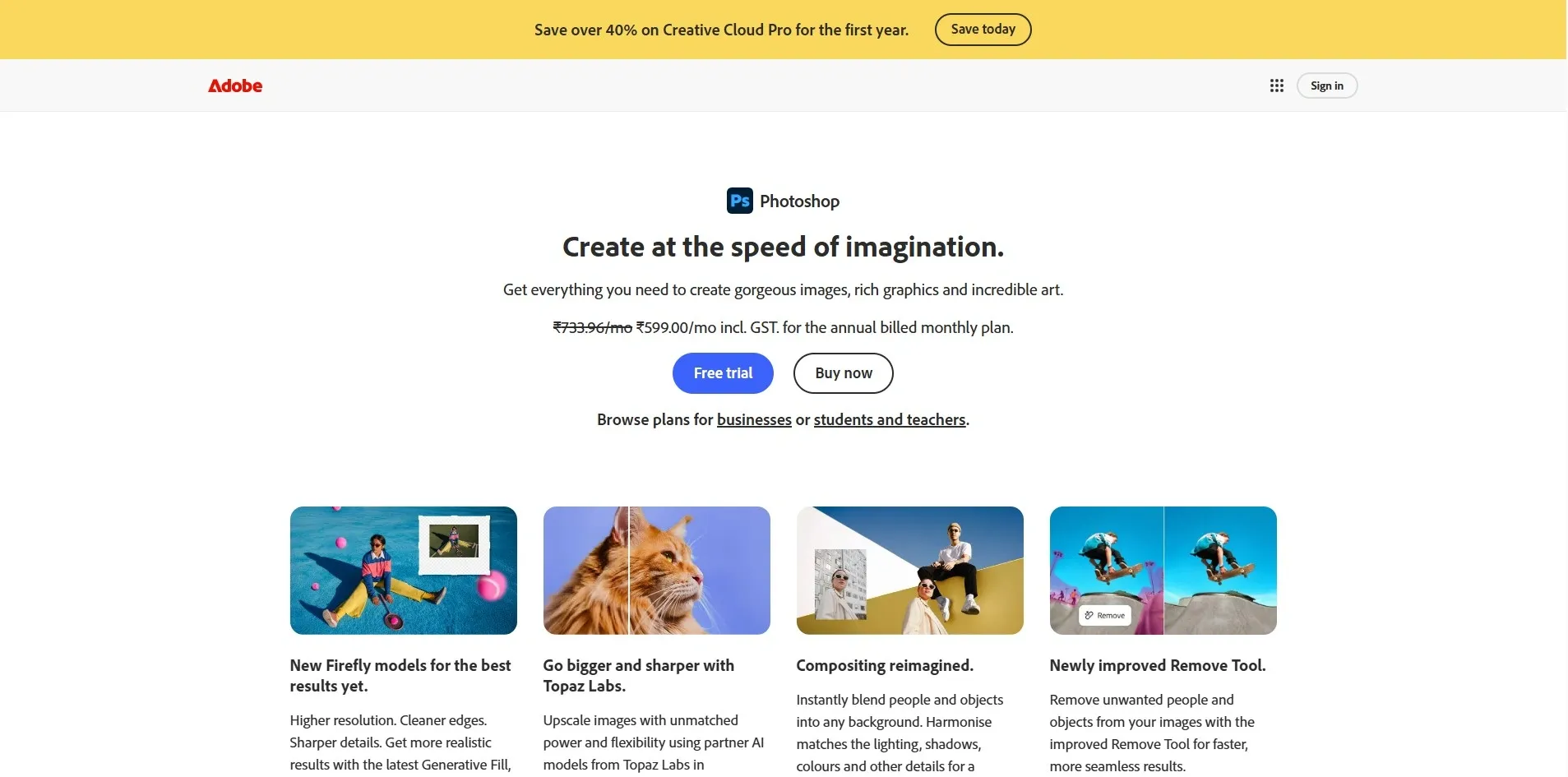
Adobe Photoshop (with AI features) remains the gold standard for professionals. Adobe has integrated powerful AI tools into Photoshop, including generative fill, neural filters, and automatic selections. If you are a creative professional or serious hobbyist, this is your best bet. The learning curve is steeper than other options, but the capabilities are unmatched.
-
Canva AI Photo Editor
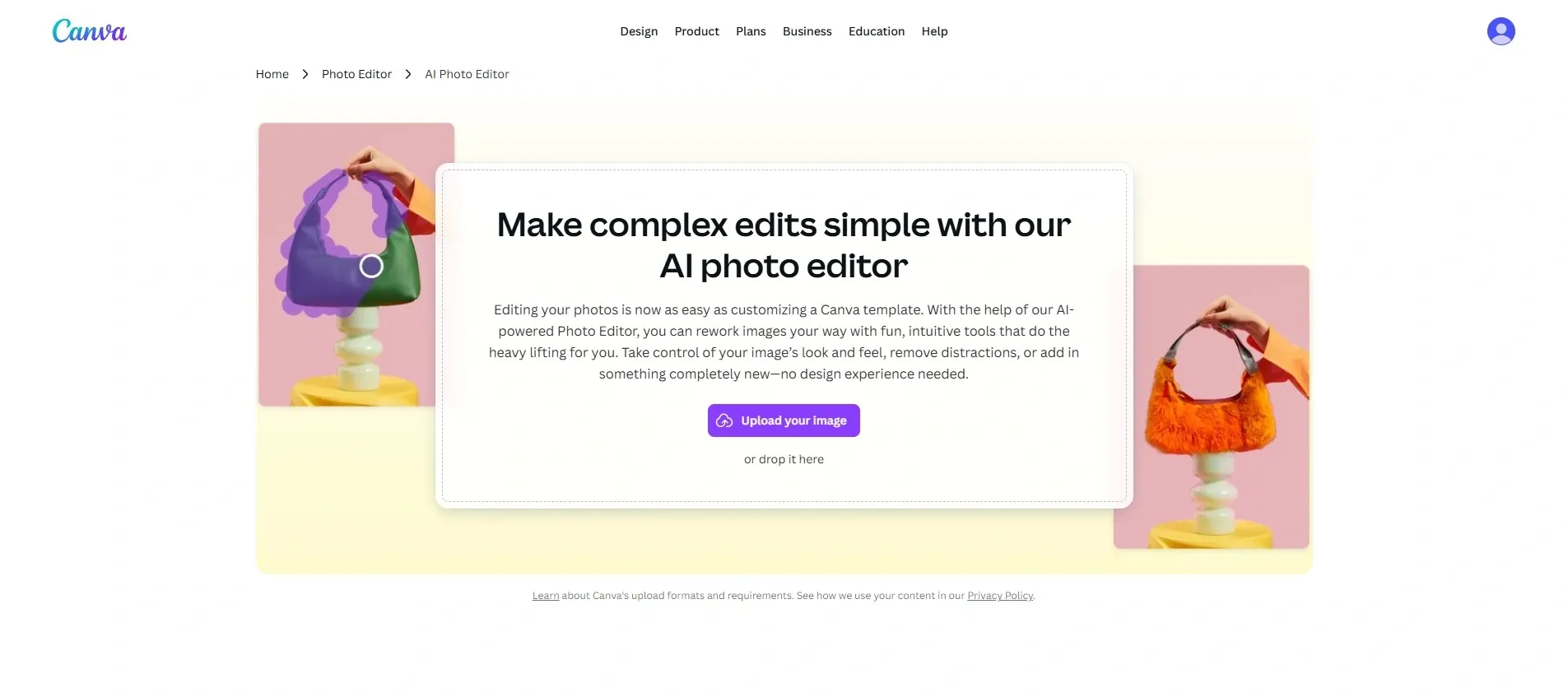
Canva AI Photo Editor has become my go-to for social media and marketing content. Canva combines simple design tools with excellent AI tools for photo editing. You can remove backgrounds, enhance images, apply filters, and create entire designs in one place. It is perfect for entrepreneurs, marketers, and content creators who need fast results.
2. Best AI Editing Tools for Online & Easy Use
-
Pixlr AI Photo Editor
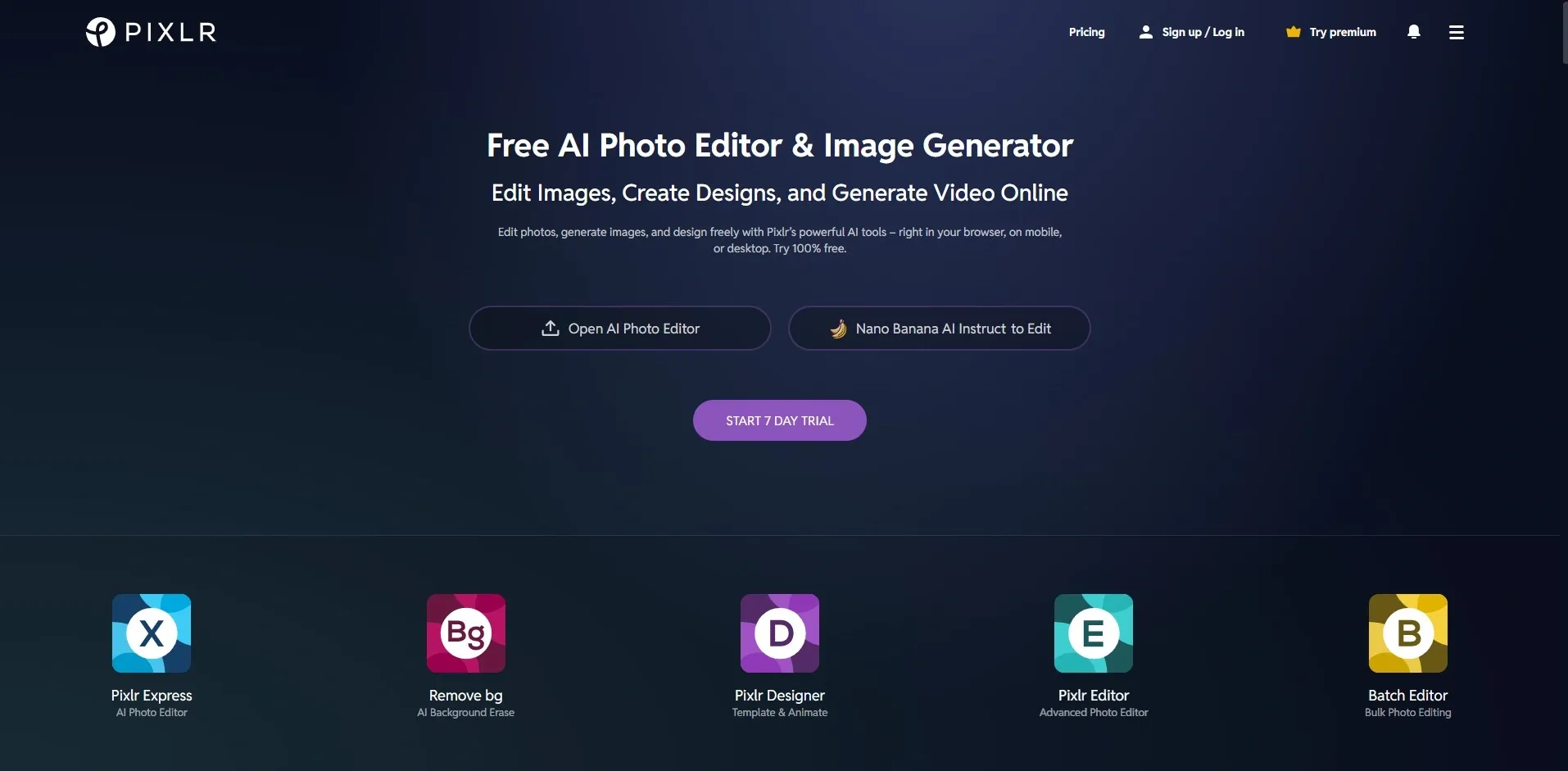
Pixlr AI Photo Editor works entirely in your browser. No downloads, no installations. I use this when I am working on a different computer or need quick edits. The background removal feature is surprisingly accurate, and the enhancement tools deliver solid results. It is completely web-based, which means you can access it from anywhere.
-
Fotor AI Photo Editor
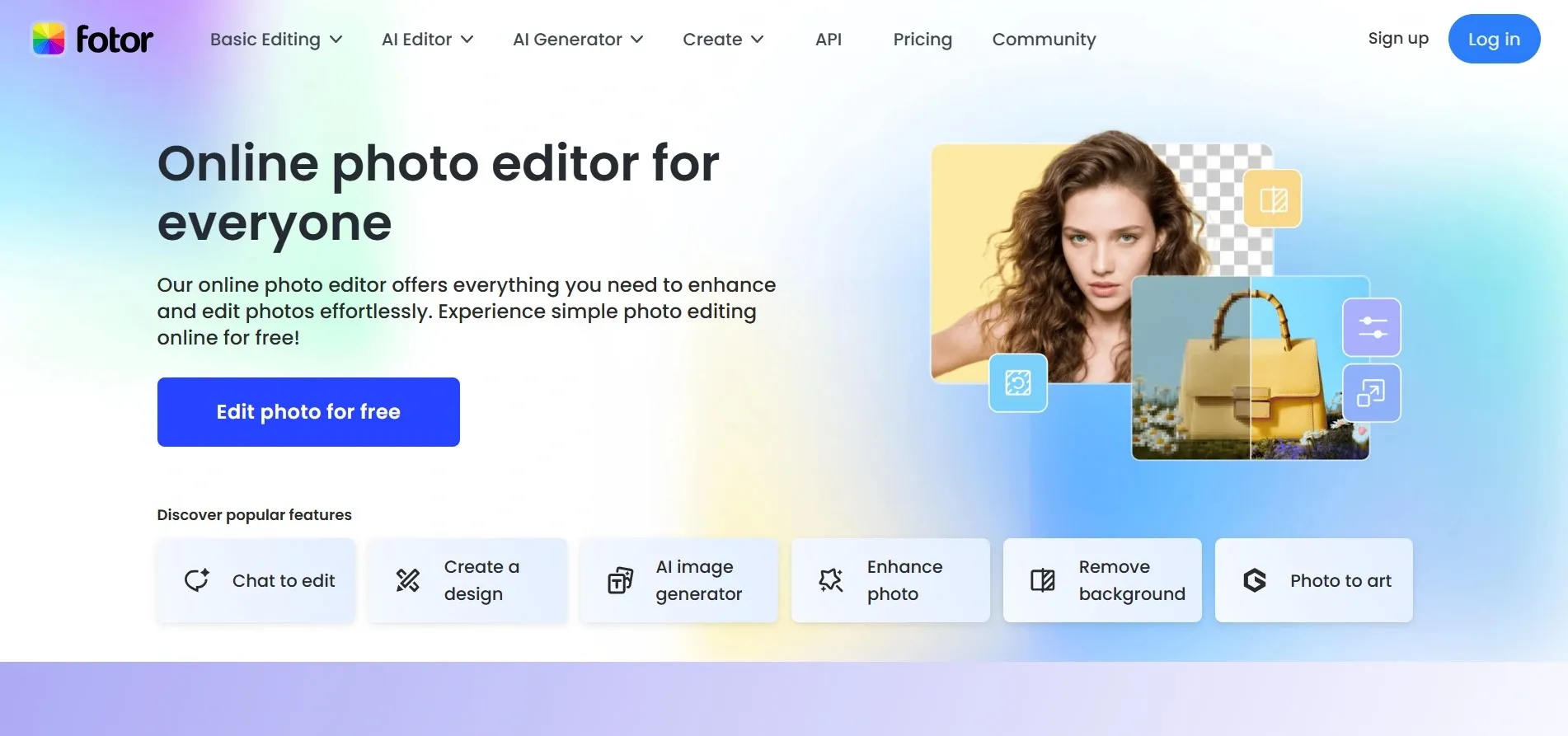
Fotor AI Photo Editor focuses on speed and real-time edits. The interface is clean and intuitive. You upload your photo, choose what you want to fix, and watch the AI work its magic instantly. I have found their one-click enhancement feature particularly useful for fixing lighting and color problems.
Accelerate Your Workflows with Custom AI
Book a free consultation session with RejoiceHub. We'll map out a tailored automation roadmap for your company.
3. Mobile-Friendly AI Photo Editors
Lensa has become incredibly popular for portrait and selfie editing. The app uses advanced AI to retouch faces, smooth skin, adjust features, and create artistic effects. If you primarily edit photos on your phone and focus on portraits, Lensa delivers exceptional results. The rise of AI in mobile phones has made tools like this far more powerful than they were just a few years ago.
-
Zoviz AI Photo Editor
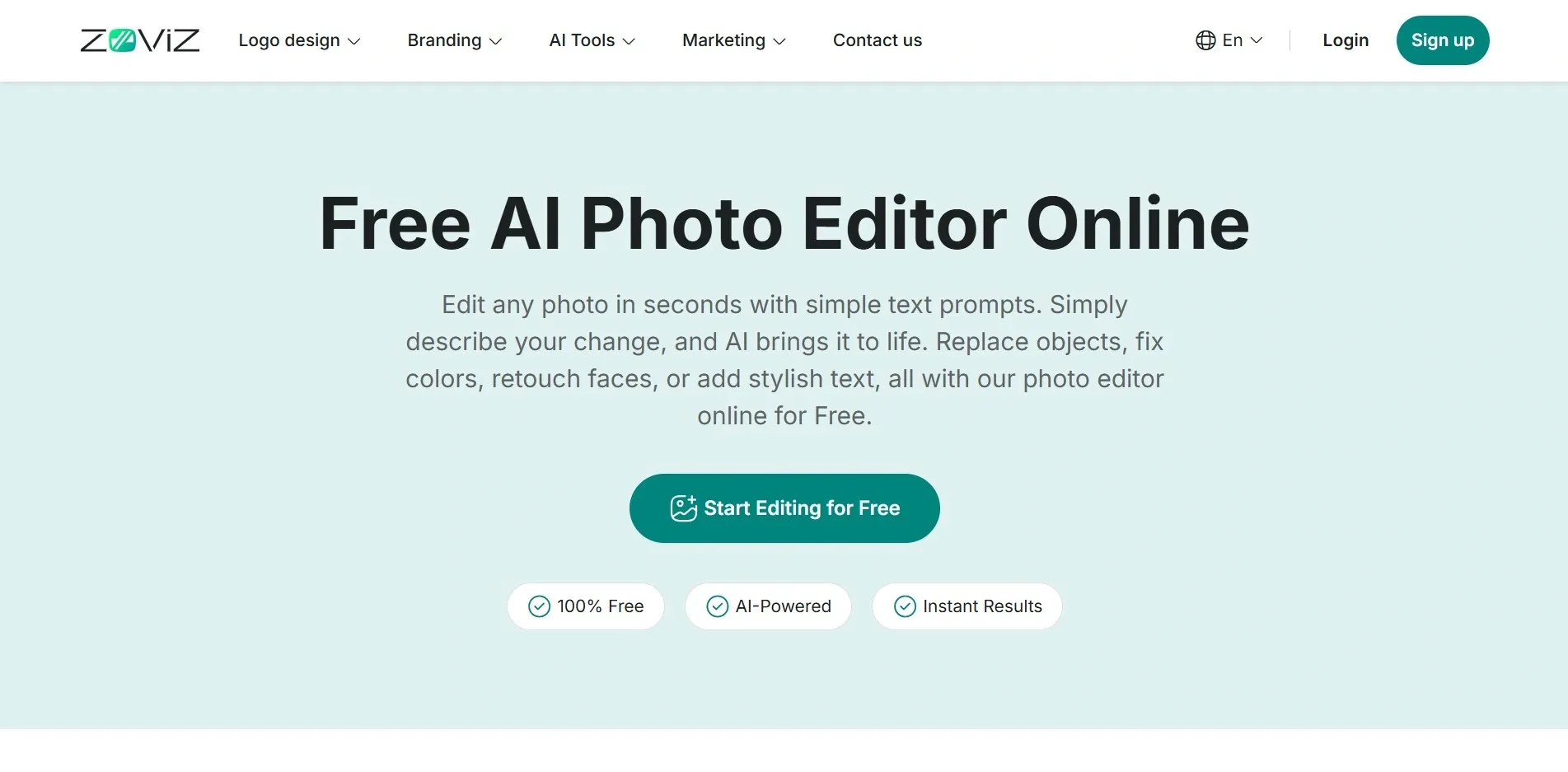
Zoviz AI Photo Editor. The platform provides its users with a complete package, which includes tools for removing backgrounds, erasing objects, and increasing image resolution. The main reason I appreciate Zoviz is that it combines various artificial intelligence functions into a single platform.
-
inPixio AI Photo Editor
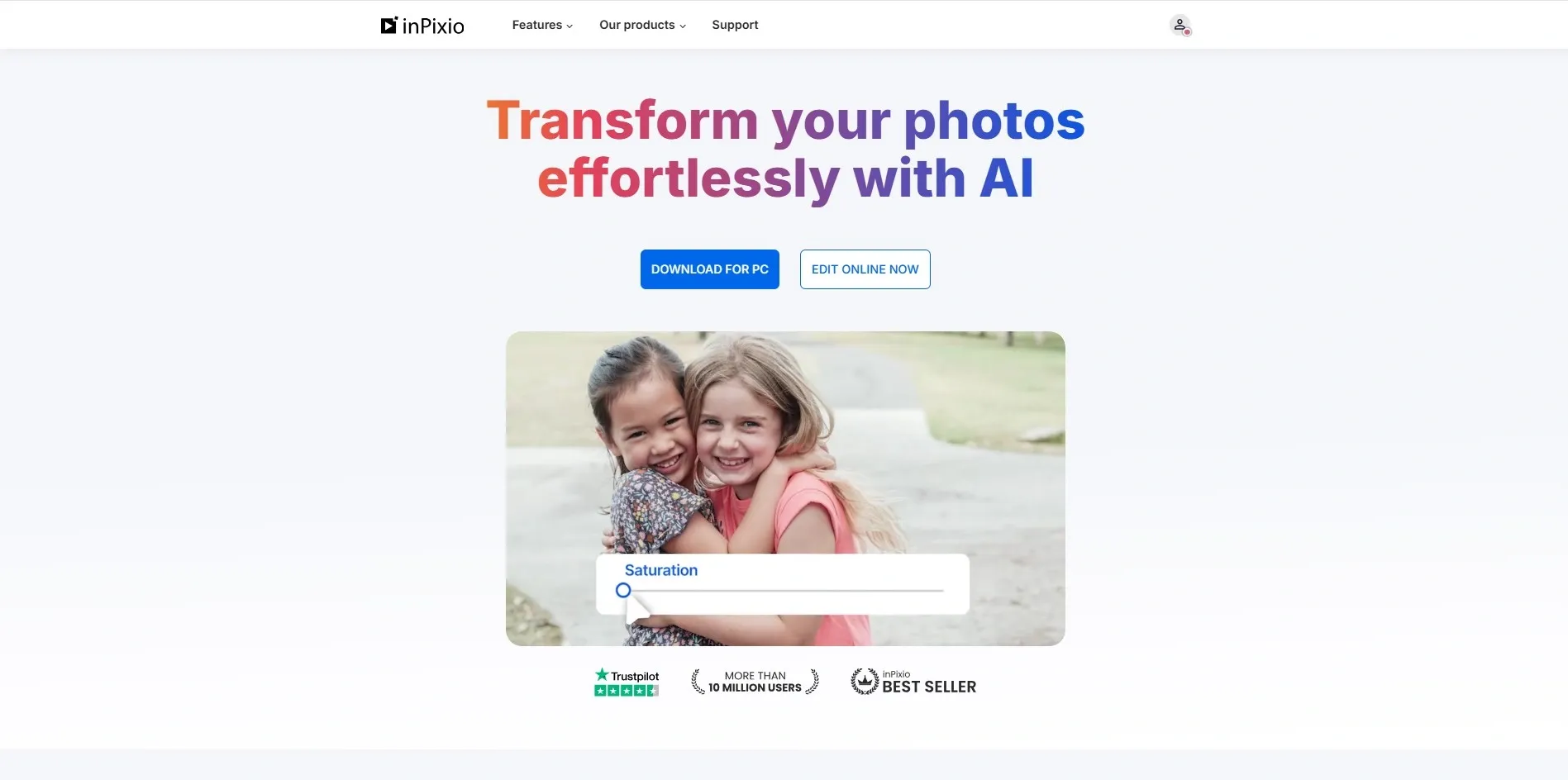
inPixio AI Photo Editor: The system presents its various functions through a single button, which delivers instant enhancements. The basic upgrades that inPixio offers work effectively for users who need simple improvements. The software serves users who require advanced editing tools to improve their photo appearance.
AI Photo Editing Tools Comparison
| Tool | Category | Best For | Platform | Key Features |
|---|---|---|---|---|
| Adobe Photoshop (AI features) | Best Overall | Professionals & serious hobbyists | Desktop (Win/Mac) | Generative fill, neural filters, automatic selections |
| Canva AI Photo Editor | Best Overall | Entrepreneurs, marketers, content creators | Web + Mobile | Background removal, enhance, filters, all-in-one design tool |
| Pixlr AI Photo Editor | Online & Easy Use | Quick edits, no installation | Web-based (browser only) | Accurate background removal, enhancement tools |
| Fotor AI Photo Editor | Online & Easy Use | Speed-focused, real-time edits | Web-based | One-click enhancement, lighting/color fix |
| Lensa | Mobile-Friendly | Portraits & selfies | Mobile App | Face retouch, skin smoothing, artistic effects |
| Zoviz AI Photo Editor | Mobile-Friendly | All-in-one combined AI tools | Web/Mobile | Background removal, object erase, resolution increase |
| inPixio AI Photo Editor | Mobile-Friendly | Simple, one-click improvements | Web/Mobile | Single-button instant enhancements |
How AI Photo Editing Works
Most people want to understand the functioning of these tools. I will explain it to you in a straightforward way. The AI system starts its investigative process by examining your visual content through its computer vision technology.
The AI system uses its specialized algorithms to execute various operations. The system employs edge detection methods to extract the primary character from its environmental components to perform background elimination.
The system evaluates lighting and color elements to establish suitable enhancement methods. The system generates new content according to your specifications by using advanced models that have learned from millions of images.
People use natural language processing to execute prompt-based editing. You type what you want in plain English, and the best AI for image editing that into specific editing actions. The technology behind this system operates in the same way as the ChatGPT system and similar AI assistant technologies.
Best Practices for Using AI Photo Editors
The results of your work will show significant improvement when you implement these basic practices, which I have learned through my professional experience.
You should perform manual verification on all AI-generated edits before you proceed to complete your work. The AI demonstrates exceptional intelligence, but it cannot achieve full accuracy. The system fails to understand your instructions because it lacks precision in its operations. The quick review process guarantees that all details will match the required specifications.
A blurry low-resolution image will never achieve the same quality as a sharp, well-lit photo, even after AI enhancement.
The highest quality outcomes require you to combine AI-based editing with your own manual editing processes. The AI performs all essential work while you create your unique style through minor manual adjustments. This hybrid system combines the rapid capabilities of AI with the precision control you gain from manual editing.
Pros & Cons of Using AI Photo Editing Tools
Let me be honest about both the advantages and limitations of these tools.
The benefits are clear. You save enormous amounts of time on repetitive edits. Tasks that used to require professional skills now work for anyone. You get professional-quality results at a fraction of the cost of hiring a designer or spending years learning complex software.
However, there are some downsides to consider. Many of the best AI tool for photo editing require paid subscriptions for full access to advanced features. Free versions often have limitations or watermarks.
Sometimes the AI misinterprets complex edits, especially with unusual compositions or artistic requests. When this happens, you might need to provide more specific instructions or make manual corrections.
Future Trends in AI Photo Editing
The technology keeps getting better every month. I am seeing some exciting developments that will shape the future of photo editing.
People will use text prompts to create advanced generative editing systems. Users will gain the ability to completely change their images through natural language descriptions. The AI system will now handle complex tasks through improved understanding of instructions and contextual information.
The current process of the bulk best AI tool for photo editing at scale has reached a stage of major improvements. Adobe Firefly introduces new features that enable users to apply AI-driven enhancements across thousands of images.
Design applications and mobile operating systems now include AI-based auto-enhance functions as built-in features. Your phone camera will soon use artificial intelligence to make automatic photo enhancements while you take pictures and after you finish shooting.
Conclusion
AI photo editors have completely transformed how we create and improve images. Whether you need quick social media edits, professional product photos, or creative artistic effects, there is an AI editing tool for photos that fits your needs perfectly.
The beauty of these tools is their accessibility. You do not need years of training or expensive equipment. You just need the right software and a willingness to experiment. For everyday use and social media, tools like Canva and Pixlr work wonderfully.
My advice is simple. Start with a free or low-cost option to see how AI tools for photo editing fit into your workflow. Experiment with different tools until you find one that matches your style and needs. The time and frustration these tools save is absolutely worth it.
Frequently Asked Questions
1. Do AI photo editors require editing skills?
No, most AI photo editors are designed for beginners. You can enhance images, remove backgrounds, and fix lighting with one click or simple text instructions without advanced technical knowledge.
2. Can AI photo editing tools work on mobile devices?
Yes, many AI photo editing apps like Lensa and Canva are mobile-friendly. They allow you to edit, retouch, and enhance photos directly from your smartphone.
3. Can AI edit multiple photos at once?
Yes, many AI tools offer batch editing. This allows you to apply the same enhancements or corrections to hundreds of photos automatically, saving significant time.
4. Which AI photo editor is best for eCommerce product images?
For eCommerce, tools with strong background removal and lighting correction features like Canva, Pixlr, or Photoshop AI are ideal for creating clean, professional product photos.
5. Can AI restore old or damaged photos?
Yes, advanced AI tools can restore old photos by removing scratches, sharpening details, enhancing colors, and even colorizing black-and-white images.
6. What should I consider before choosing an AI photo editor?
Consider your budget, editing skill level, required features (background removal, object erase, generative edits), device compatibility, and whether you need batch editing for large projects.
7. Which AI tool is best for photo editing?
The best AI tool for photo editing depends on your needs. Adobe Firefly is ideal for professional editing and generative fill; Canva AI is great for beginners and social media graphics; PhotoRoom excels at background removal; and Luminar Neo offers advanced AI-powered enhancements for photographers. If you need an all-around solution, Adobe Firefly remains one of the top choices.
8. Which photo editor uses AI for better edits?
Many modern photo editors use AI for better edits, including Adobe Firefly, Canva AI, Luminar Neo, Pixlr AI, Fotor AI, and PhotoRoom. These tools can automatically remove backgrounds, enhance image quality, retouch portraits, erase unwanted objects, and generate realistic edits in just a few clicks.
9. Which AI photo editor has the best features?
Adobe Firefly is widely considered one of the AI photo editors with the best features because it includes generative fill, object removal, image expansion, and AI-powered editing. Other feature-rich options include Luminar Neo for professional photography, Canva AI for design workflows, and PhotoRoom for product images and eCommerce content.
10. Which AI image editor has the best features?
If you're looking for the AI image editor with the best features, Adobe Firefly, Canva AI, and Pixlr AI are among the strongest options. They offer tools like AI image generation, background replacement, automatic enhancements, object removal, and smart editing features suitable for both beginners and professionals.
11. What's the best AI tool for photo editing?
The best AI tool for photo editing depends on your workflow and budget. Adobe Firefly is the top choice for advanced editing, Canva AI is excellent for creating social media visuals, PhotoRoom is perfect for product photography, and Remini is known for improving old or low-quality images. Comparing features, ease of use, and pricing will help you choose the right AI photo editor.