Drafting room designs used to require designers to search through multiple magazines for inspiration, which they would then use to create physical cutouts that represented their design visions.
The pastime of blaming architects for their poor work has developed into an established practice within the architectural field. The interior design industry has shown me its complete transformation, which I have experienced throughout my professional career.
What Is AI Interior Design?
I'll explain this in the simplest way possible. The process of the best ai tool for interior design enables users to create their ideal room design through an advanced digital assistant that renders their vision within seconds. You upload a photo of your space, tell it what style you're going for, and boom, it shows you what that room could look like.
The process enables users to examine an AI interior design tool for their living room space without the need for expensive consultations or guesswork.
The technology uses artificial intelligence to understand design principles, color theory, and spatial arrangements. The system provides users ai interior design tool through a friend-like interface that maintains constant energy to present different design possibilities.
How AI Is Changing Interior Design?
The actual situation beyond the public view currently operates through its hidden mechanisms. ai interior design tool accelerates the boring sections of creative work instead of replacing the whole artistic process. The best interior design AI tools in the past spent excessive time on traditional design drafting work because their process involved continuous sketching, measuring, redrawing, and starting over.
Now? Designers achieve rapid concept and mood board creation through digital methods that require no physical drawing. The work that required multiple days to complete now needs only a few minutes to finish.
During one client meeting, designers presented different design options, which allowed them to choose between all available possibilities instead of selecting one design that the designer had time to create.
The important point I want to explain is that the best AI tools for home interior design do not take over creative work that humans perform. The tool functions as a painting instrument that scientists use to handle their research work.
The Best AI Interior Design Tools You Should Know About
Alright, let's talk about the best ai tool for interior design. I've tested most of these myself, and I'll give you the honest breakdown of what works and what doesn't.
1. VisualizeAI: When You Need It to Look Real
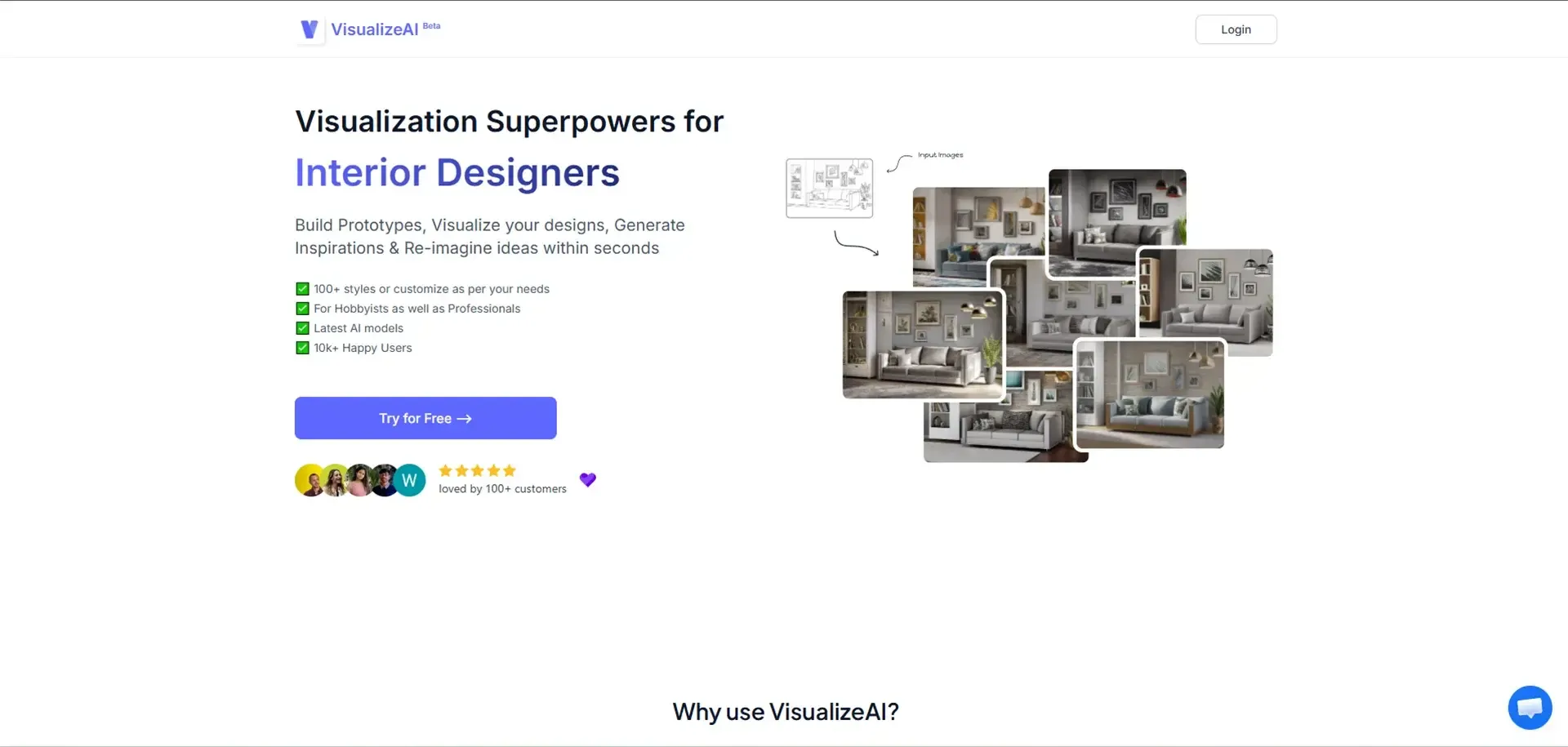
VisualizeAI is my go-to rendering tool, which produces lifelike results. The system creates unexpected authentic outputs from a room photo, which users upload together with their design specifications through the input "modern farmhouse with lots of natural light."
The system exhibits its best performance through its detailed work. The textures appear authentic, while the lighting behaves correctly, and users can present these pictures to contractors and family members without any viewing difficulties.
-
Pros: The realism is unmatched, it's great for both beginners and professionals, and the free version lets you test it out.
-
Cons: The free version limits how many designs you can generate and sometimes takes a minute to process.
-
Pricing: A free tier is available; paid plans start around $20/month.
2. RoomsGPT: Quick Makeovers in Seconds
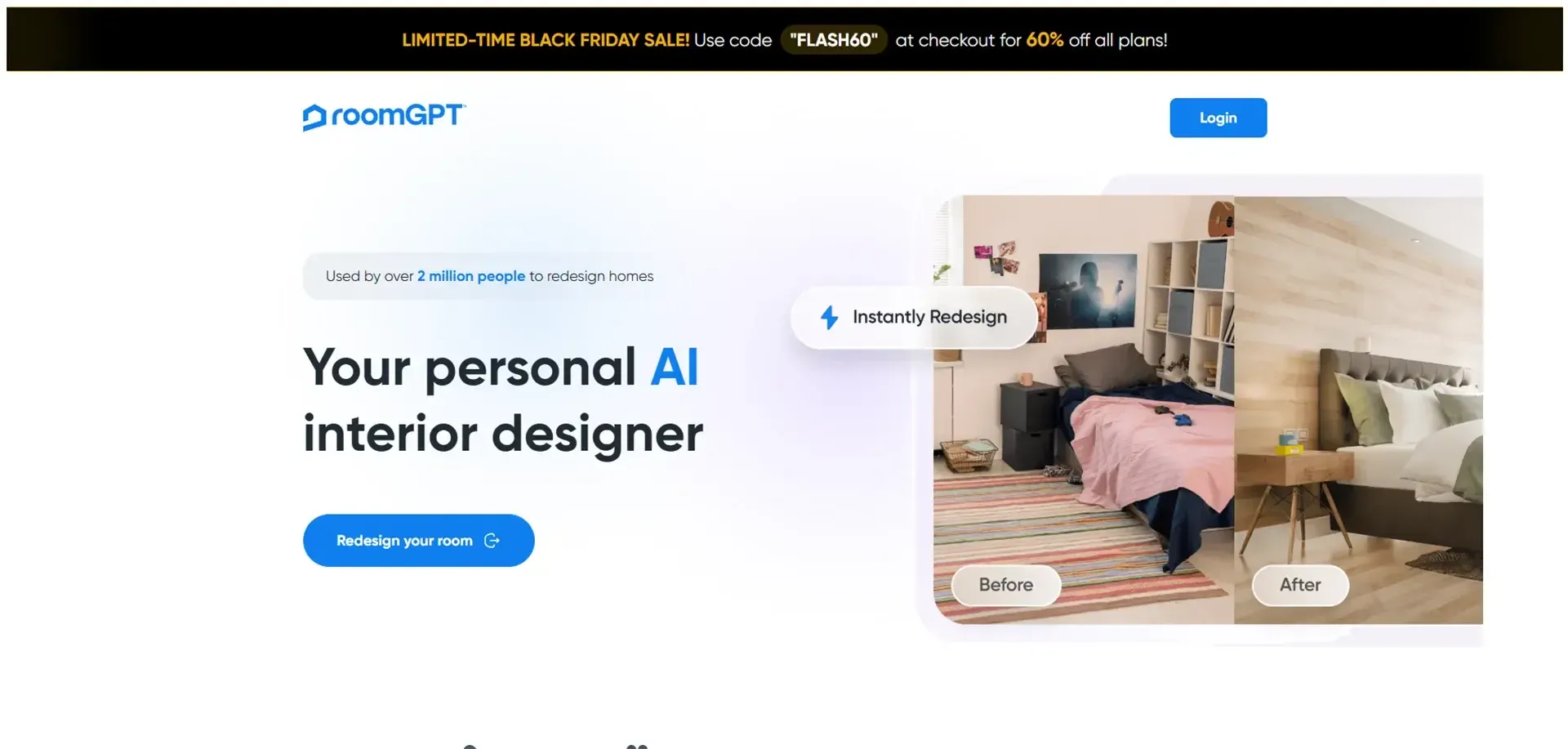
The application RoomsGPT helps users who want to view their room in various styles without needing to handle all the specific design elements. The application helps me because I can use it to find design solutions when I am experiencing creative blocks. The user uploads a picture of their room, which the program uses to create a new design for their home.
The user can view their traditional living room space as a modern minimalist design by clicking a button. The user can choose their preferred bohemian style by clicking another button. The process operates at maximum efficiency through a straightforward procedure.
-
Pros: Lightning fast, incredibly easy to use, great free trial
-
Cons: Less control over specific details; sometimes the results are a bit generic.
-
Pricing: Free trial available, then subscription-based
3. HomeVisualizer: Perfect for Total Beginners
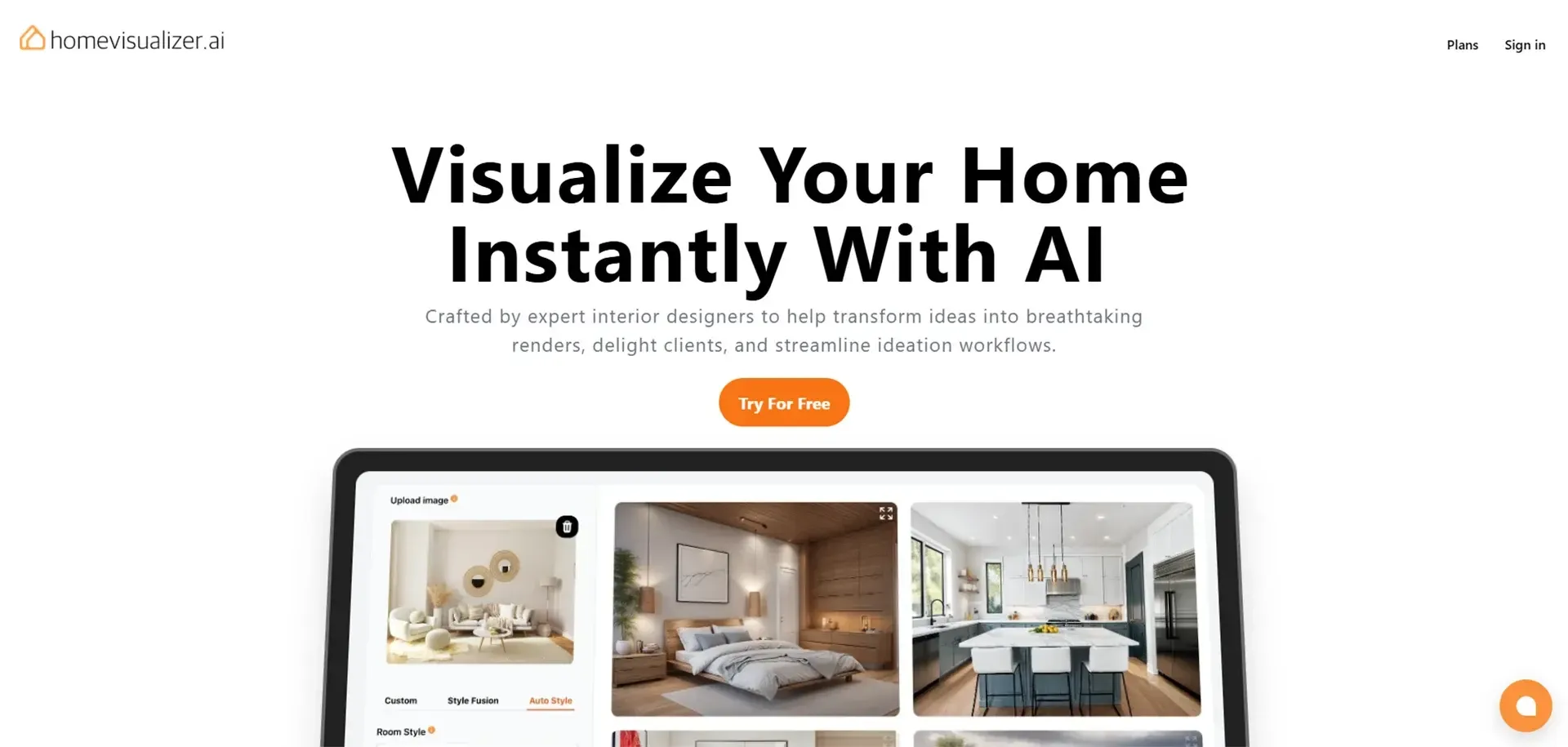
I suggested HomeVisualizer to my neighbor, who had never used design software. She completed her first redesign within five minutes. The interface of the program shows all the necessary information for users.
This is one of the best AI tools for interior design if you're just starting. The system operates in a basic way because it lacks both confusing menus and design terminology. You point and click to see your room change.
-
Pros: Super beginner-friendly, fast results, freemium model lets you try before buying
-
Cons: Limited advanced features, fewer customization options than Pro Tools
-
Pricing: Free basic version, premium features available
Also Raed: What Is Generative Design? Process, Benefits, and Use Cases
4. Homestyler: For the Layout Lovers
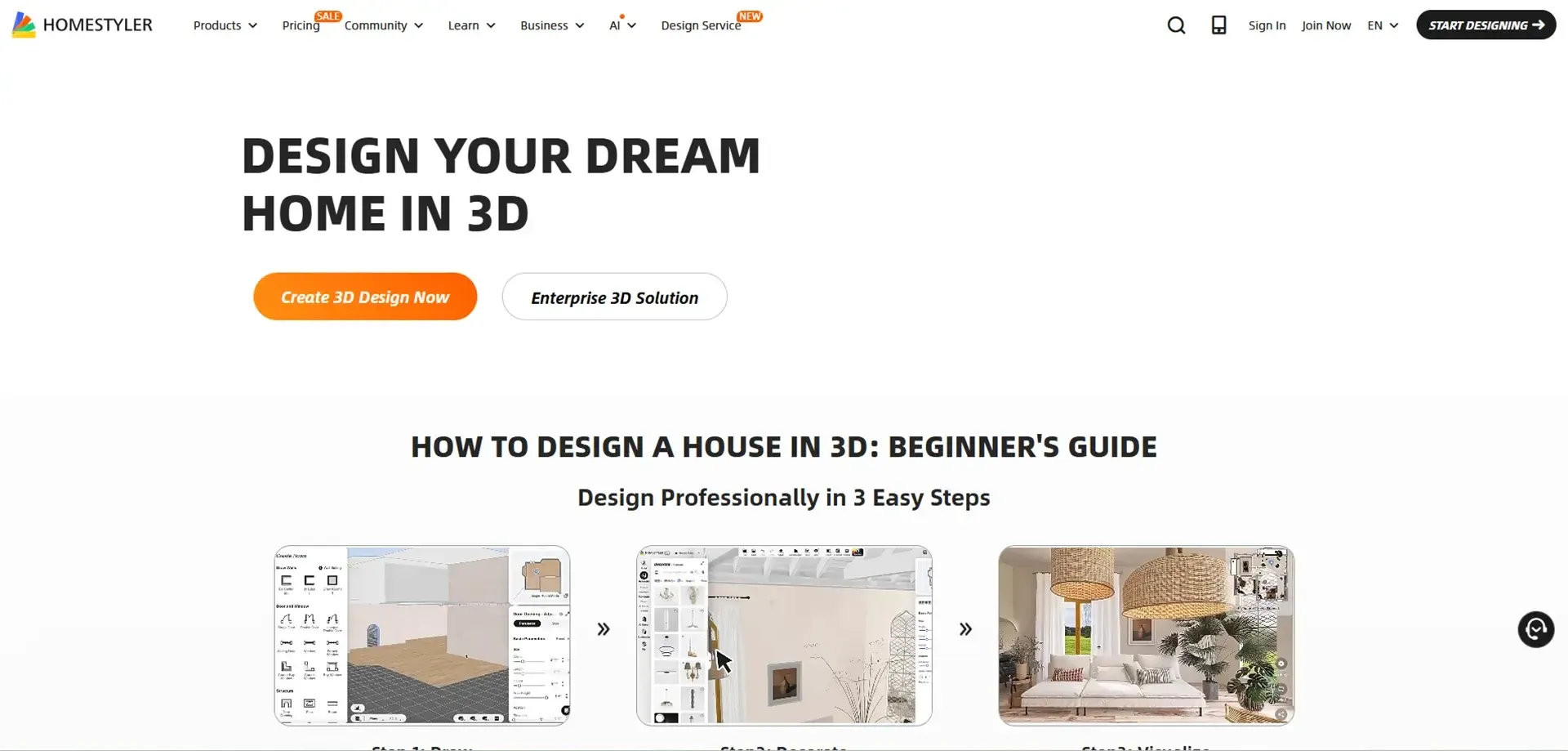
Homestyler is different from the others because it focuses on actual 3D layouts. The tool becomes essential when you need to locate furniture placement while determining wall paint colors.
I used this when I was rearranging my home office and couldn't figure out how to fit everything. The 3D virtual furniture system allowed me to design my space without needing to move my actual heavy desk three times.
-
Pros: Excellent for floor planning, both style and layout options, and the free version is generous.
-
Cons: Steeper learning curve, can be overwhelming at first
-
Pricing: Free for basic use, paid tiers for advanced features
5. Collov.ai: The Realtor's Secret Weapon
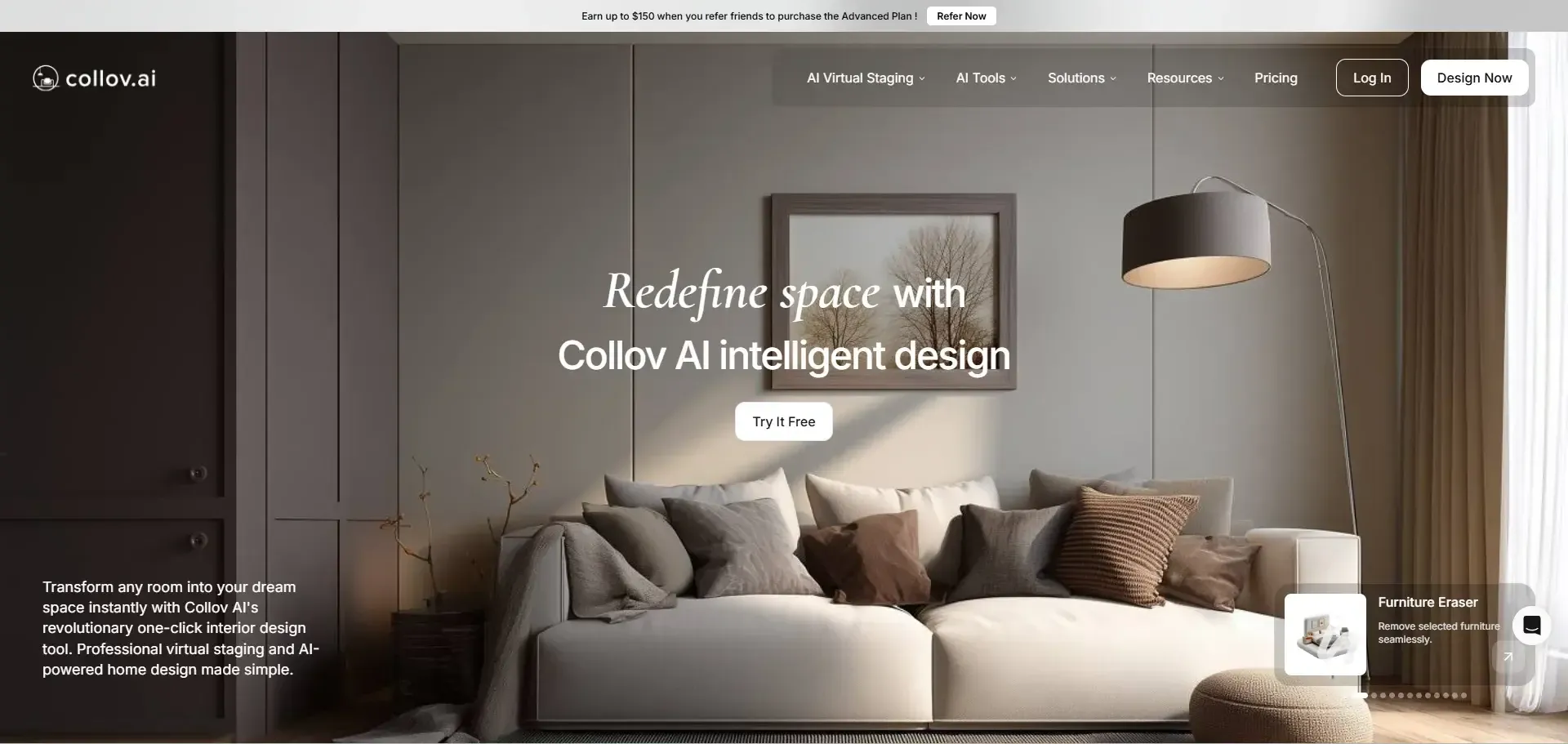
Collov.ai specializes in virtual staging, which is huge if you're selling a home or working as a realtor. Listings show empty rooms, which create a sad appearance.
I have witnessed real estate agents demonstrate their loyalty to this product. A virtually staged home gets more interest than empty photos, and this tool makes it affordable.
-
Pros: Professional virtual staging, great for real estate, and detailed floor planning
-
Cons: Paid service (no free tier), more expensive than hobby tools
-
Pricing: Subscription-based, geared toward professionals
Pros & Cons of Using AI for Interior Design
Allow me to try to give you my unexpurgated truths about AI for interior design.
Pros:
Your ability to create new concepts has reached a speed that exceeds your previous expectations. I dedicated an entire weekend to choosing between three paint colors. The current situation allows me to assess multiple choices within a single hour. The tool enables users to explore design options that they previously never considered.
Cons:
The current moment demands me to speak the truth. AI technology creates design layouts that lack realistic accuracy. The system proposed furniture placements that resulted in blocked doorways and created dangerous walking conditions. The system fails to recognize that your radiator needs to stay in its current location because you want to position a couch there.
Creative decision-making remains restricted because of the established limits. The artificial intelligence system detects patterns and trends, but it lacks awareness that your grandmother's vintage lamp serves as the main design element. The system might recommend that you replace items that hold deep personal significance for you.
How to Choose the Right AI Tool
The selection of top AI interior design tools requires knowledge about your specific requirements. I will assist you in determining your requirements.
The first step requires you to state your objective, which you must then achieve. Do you work as a designer who needs faster design solutions? Your requirements will be satisfied through the use of VisualizeAI and Collov.ai, which provide you with their complete set of tools. Are you just redecorating your bedroom for fun? HomeVisualizer or RoomsGPT will do the trick.
Your budget establishes your spending boundaries. Some users require assessment tools that do not charge fees, and that requirement is acceptable. Other users who operate companies should spend money on their essential business functions. You should determine your spending capacity before beginning your testing process.
You must examine all aspects of user experience. Users who find technology to be overwhelming should not use systems that require advanced technical capabilities. Start with basic programs. You can always upgrade later.
Quick decision guide:
Homestyler provides customers with printable floor plans. VisualizeAI should be selected by users who require mood boards and realistic renders. RoomsGPT provides the fastest solution for users who need quick redesigns. HomeVisualizer. Running a real estate business?
How to Use AI Design Tools (Step-by-Step guide)
Let me walk you through the basic process because it's simpler than you think.
Step one: it requires you to upload a clear photo of your room, which you should take during daytime hours when there is good lighting. The better your photo, the better your results.
Step two: Your style preferences should be added in the second step. Most tools let you choose from styles like modern, mid-century, bohemian, farmhouse, industrial, and more. Pick what speaks to you, not what you think you're "supposed" to like.
Step three: requires you to produce several outcomes. Don't settle for the first one. You must create three to four distinctive versions of your work. The first version and subsequent versions will show you different outcomes.
Step four: requires you to complete the final adjustments. The majority of tools provide you with options to modify their features by changing color, replacing furniture, and changing lighting conditions. You should experiment until you discover what feels appropriate.
Step five: and this is crucial: People need to recognize that they should use these outputs for inspiration rather than treating them as complete design solutions. These materials serve as initial assets that designers will use to develop their actual design work. You need to measure all items while verifying proper furniture dimensions and complete your personal design work.
AI + Human Design: Best Practices
I learned from my experiences that AI efficiency, together with human expertise, creates the most effective results.
You should use AI to generate creative ideas. The system will discover new opportunities that you will not find without its assistance. Human experts should handle all execution tasks. The designer needs to verify design dimensions, e-sign flow, and design compatibility.
My process requires me to verify all measurements according to established requirements. The beautiful rendering becomes worthless because your couch cannot pass through the doorway. Use the measuring tape to compare actual dimensions with the AI-provided dimensions.
ai interior design tool uses instinctive skills together with its practical design experience to create its work. The system fails to recognize that your west-facing room receives direct sunlight during the afternoon, which makes dark colors unusable.
The system fails to understand that your toddler will destroy anything white within 48 hours. Your knowledge about real-life situations brings essential information.
What's Coming Next: The Future of AI Design
Looking ahead to the future and beyond, I am very excited about where the technology is heading.
3D renderers are achieving their highest level of visual realism. The line between AI-generated images and actual photographs is blurring. Soon, you might not be able to tell the difference.
ai tools for Interior Design are becoming part of our current world. Imagine putting on a headset and actually walking through your redesigned room before buying a single piece of furniture. The technology exists today, but it will be available to everyone in the near future.
AI helping with material selection and shopping is another game-changer I'm watching. Some tools now recommend products to users, which they can purchase directly through provided store links that show product prices. This closes the gap between inspiration and action.
I have heard about design tools that can analyze your current Pinterest boards and Instagram saved content to create fashion designs that match your personal style. That's pretty cool.
Conclusion
We are in an era of best ai tool for interior design that are more affordable and convenient than before, and this is enabled by the AI tools, which will allow us to create and make it financially feasible. Regardless of how skilled you are, these platforms are always more useful when you use them as collaborative tools, but not as a final authority.
They can create impetuses and demonstrate the possibilities, yet your instincts, taste, and life needs should be in the first place. By the end of the day, a house is not supposed to follow the algorithm-driven trends but rather mirror you. You should do what feels like the right thing, you should not be scared to experiment, and you should have the fun of creating the space that you can call home.
If you’re looking to build or integrate AI solutions for design, automation, or business growth, RejoiceHub can help you turn innovative ideas into real-world results. From AI-powered applications to custom development solutions, our team helps businesses and creators leverage technology smarter and faster.
Frequently Asked Questions
1. What are the best AI tools for interior design in 2026?
Some of the best AI tools for interior design in 2026 include VisualizeAI, RoomsGPT, HomeVisualizer, Homestyler, and Collov.ai.
2. Are AI interior design tools free to use?
Many AI interior design tools offer a free version or trial. Platforms like RoomsGPT and HomeVisualizer provide freemium access, while advanced tools such as VisualizeAI and Collov.ai require paid subscriptions for premium features and high-resolution renders.
3. Can I design my room from a photo?
Yes. Most AI interior design apps allow you to upload a photo of your room and automatically generate redesigned versions based on your preferred style (modern, bohemian, farmhouse, minimalist, etc.).
4. Is AI interior design accurate for measurements?
AI tools can visualize layouts and furniture placement, but they may not always be perfectly accurate with measurements and proportions. It’s important to verify dimensions manually before purchasing furniture or starting renovations.
5. Can AI replace professional interior designers?
No. AI interior design tools enhance creativity and speed up visualization, but they cannot fully replace professional designers. Human designers bring contextual understanding, lifestyle considerations, structural knowledge, and personalized creativity that AI cannot replicate.
6. What is the best AI tool for virtual staging in real estate?
Collov.ai is widely used for AI-powered virtual staging. It helps real estate agents transform empty rooms into fully furnished spaces digitally, increasing property appeal and engagement in listings.
7. Which AI tool is best for 3D floor planning?
Homestyler is one of the best AI tools for 3D floor planning. It allows users to create detailed room layouts, arrange furniture in 3D, and visualize spatial flow before making real-world changes.
8. Are AI-generated interior designs realistic?
Yes, modern AI design tools can produce highly realistic renders with accurate lighting, textures, and shadows. However, some designs may still include unrealistic furniture scaling or impractical layouts, so human review is recommended.
9. Can beginners use AI interior design software?
Absolutely. Tools like HomeVisualizer and RoomsGPT are beginner-friendly and require no prior design experience. Users can generate room transformations within minutes by simply uploading photos and selecting styles.
10. How does AI interior design technology work?
AI interior design software uses machine learning and computer vision to analyze room photos and detect walls, furniture, lighting conditions, and layout patterns. It then applies design principles, color theory, and style databases to generate redesigned visuals.
11. What is the future of AI in interior design?
The future of AI in interior design includes advanced 3D rendering, VR and AR integration, personalized style detection from Pinterest or Instagram boards, automated material selection, and direct product purchasing suggestions. AI will continue improving speed, realism, and customization capabilities.