 The process of managing Google Ads became overwhelming for me over the past few years. The advertising system required you to conduct manual bid checks and keyword modifications while creating multiple ad variations, and, at the same time, needed to hope your budget would not be spent on non-converting clicks.
But today, things are very different. AI tools for Google Ads have changed the game completely. Whether you are a solo business owner or part of a large marketing team, these tools can do in minutes what used to take hours. And the results? Often far better than what human hands could manage alone.
In this guide, I am going to walk you through everything you need to know about Google Ads AI tools, what they are, why they matter, which ones to use, and how to get started without feeling confused.
What Are AI Tools for Google Ads?
At the simplest level, AI tools for Google Ads are software solutions that use machine learning and data analysis to help you run better ad campaigns. Instead of guessing what bid to set or which headline to use, these tools look at real data and make smarter decisions automatically.
There are three main things Google Ads AI tools do really well. First, they handle machine learning and automated optimization by constantly learning from your campaign data and improving over time. Second, they perform real-time data analysis and bidding, so your bids are always set at the right price to win the right clicks. Third, they assist with creative generation and predictive insights, helping you write better ads and forecast which ones will perform best.
Key Benefits of Using AI in Google Ads
Most people struggle with this part, understanding why they should even bother switching to AI-powered tools. So let me explain it simply. Here are the benefits that I have noticed time and again.
- Saves time on repetitive tasks: Bid adjustments, keyword reviews, and performance checks used to eat up hours every week. AI tools handle all of this automatically, freeing up your time for strategy.
- Improves targeting with data-driven insights: Instead of guessing who your audience is, AI tools analyze patterns and show your ads to people who are most likely to click and convert.
- Enhances budget management: One of the biggest pain points in Google Ads management is wasted spend. AI tools detect inefficiencies early and reallocate your budget to what actually works.
- Automated A/B testing and creative optimization: Rather than testing one ad variant at a time, AI tools can run and evaluate multiple versions simultaneously, finding the winner faster.
- Better ROI and reduced wasted spend: When your bids, targeting, and creatives are all optimized by AI, you naturally spend less and earn more from every campaign.
The Best AI Tools for Google Ads
Choosing the best AI for Google Ads can feel overwhelming because there are so many options. So I have organized them by their primary function to make things easier for you.
1. Campaign Management & AI Bidding Optimization
These are the tools that act like a co-pilot for your campaigns. They handle bidding, budget pacing, and overall Google Ads AI optimization in real time, across platforms like Google, Microsoft, and Meta.
-
Optmyzr
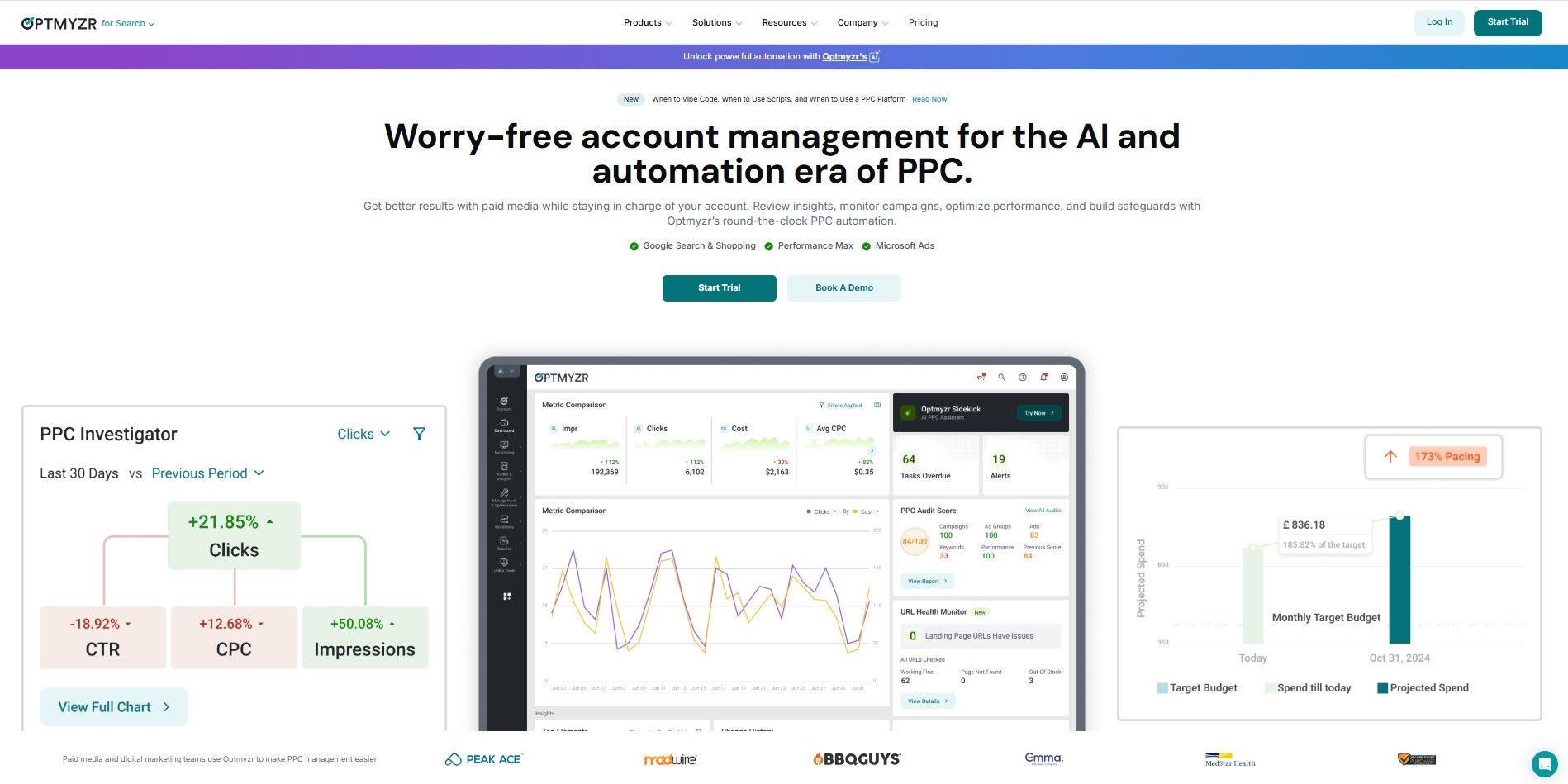
Optmyzr is a top choice for agencies and larger advertisers. It offers automated bidding "recipes," budget pacing alerts, one-click account audits, and cross-platform optimization. In my experience, Optmyzr is excellent for teams managing many accounts at once.
-
Acquisio
Acquisio uses predictive machine learning to automate and optimize bids in real time. It also includes budget forecasting and performance modelling, which is especially useful if you want to plan rather than just react.
-
Adzooma
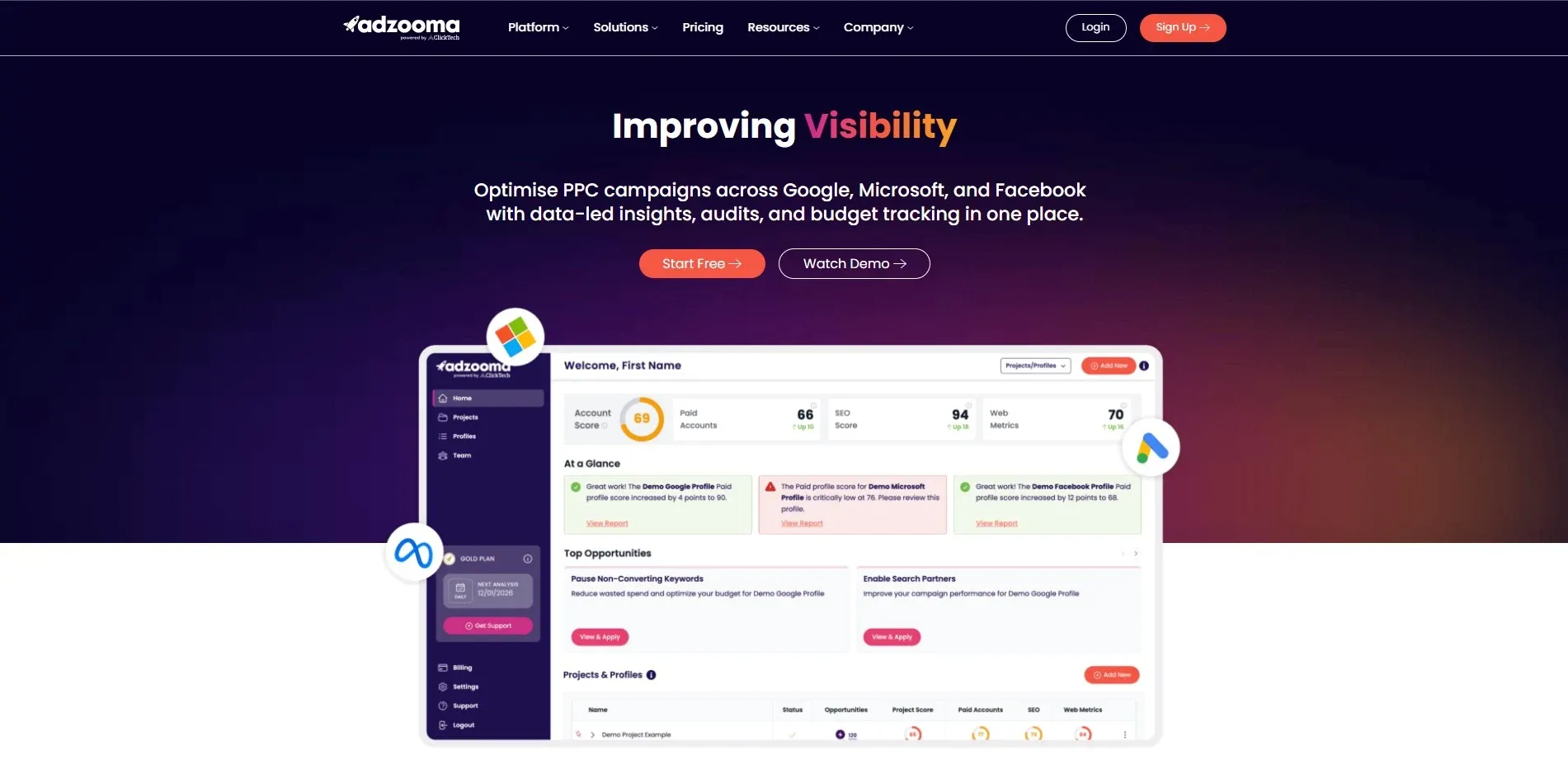 Adzooma is great for small to mid-size businesses. It provides AI-driven "Opportunities" — essentially smart suggestions for bid adjustments, keyword tweaks, and ad testing. It is beginner-friendly and does not overwhelm you with complexity.
-
Google Performance Max
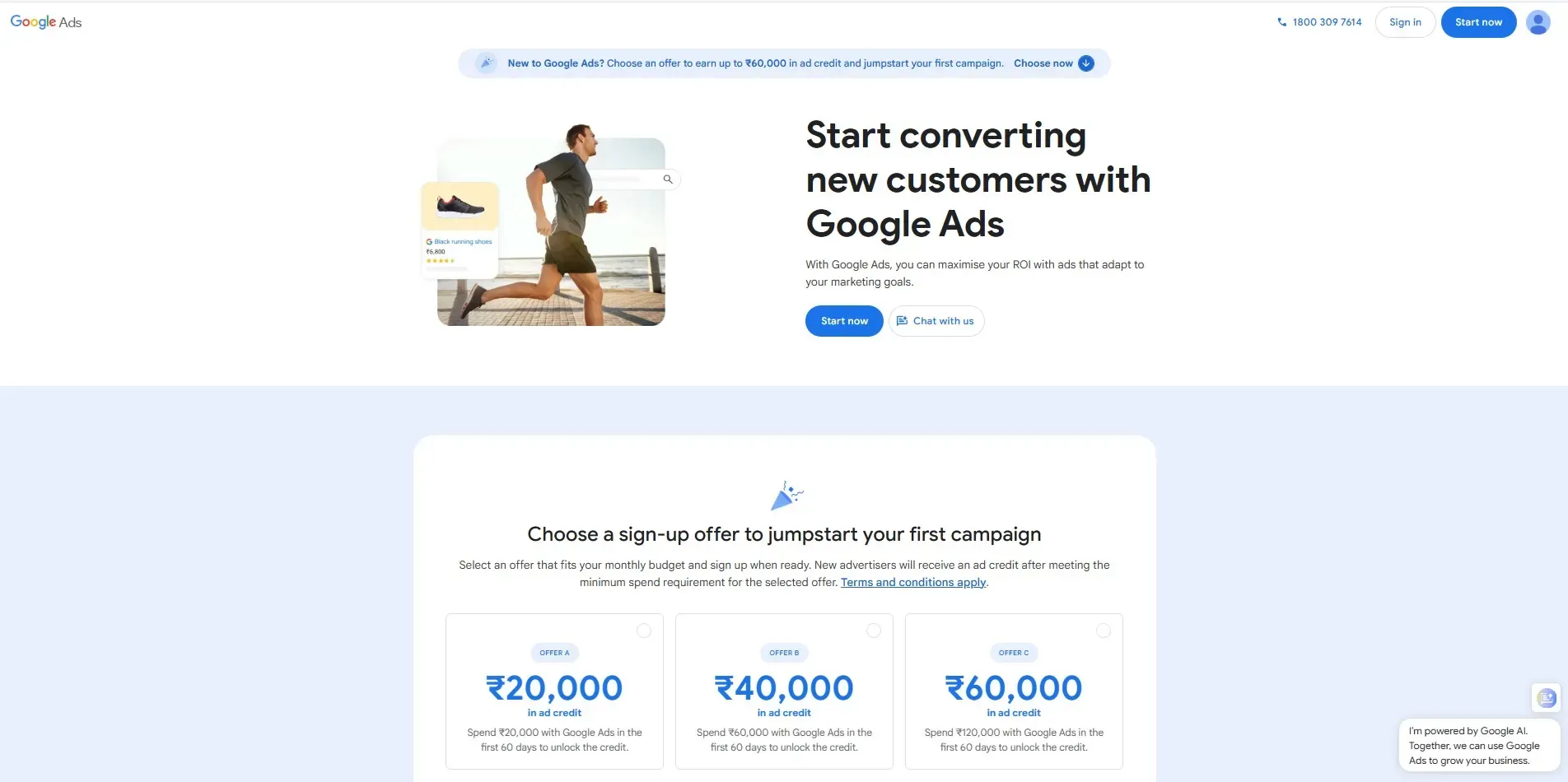 Google Performance Max is Google's own native AI Google Ads management solution. It automates placements across Search, YouTube, Display, Gmail, and Discover based on your conversion goals.
2. Ad Creative & AI Copywriting Tools
If you have ever run the same ads for too long and watched your click-through rate drop, you already know what I mean. These tools help you generate fresh, high-performing ad variations without spending hours writing copy.
-
AdCreative.ai
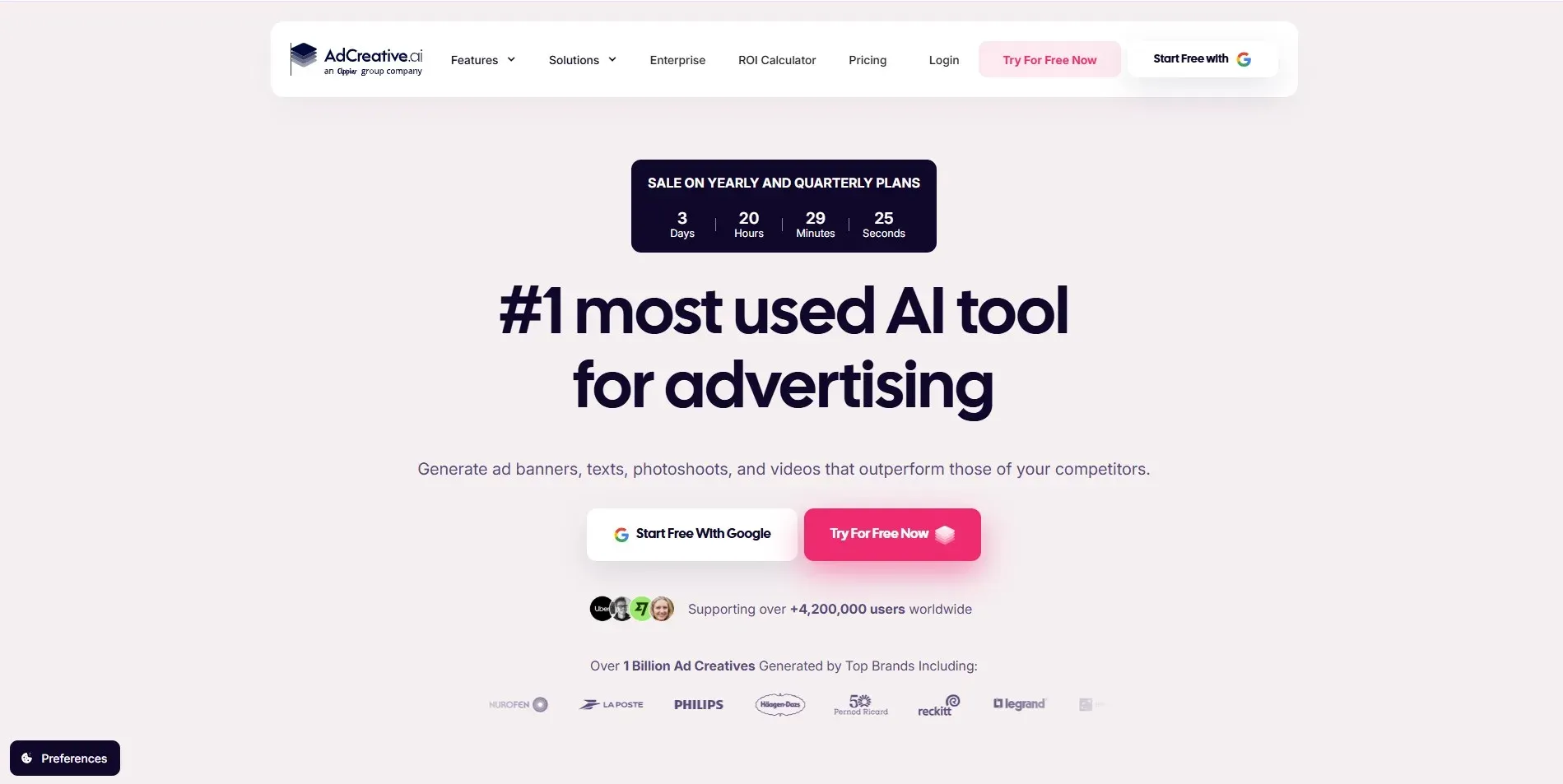
AdCreative.ai generates data-backed ad creatives and predicts which versions are likely to get the highest CTR. It even provides competitor-based insights so you can see what is working in your industry.
-
Anyword
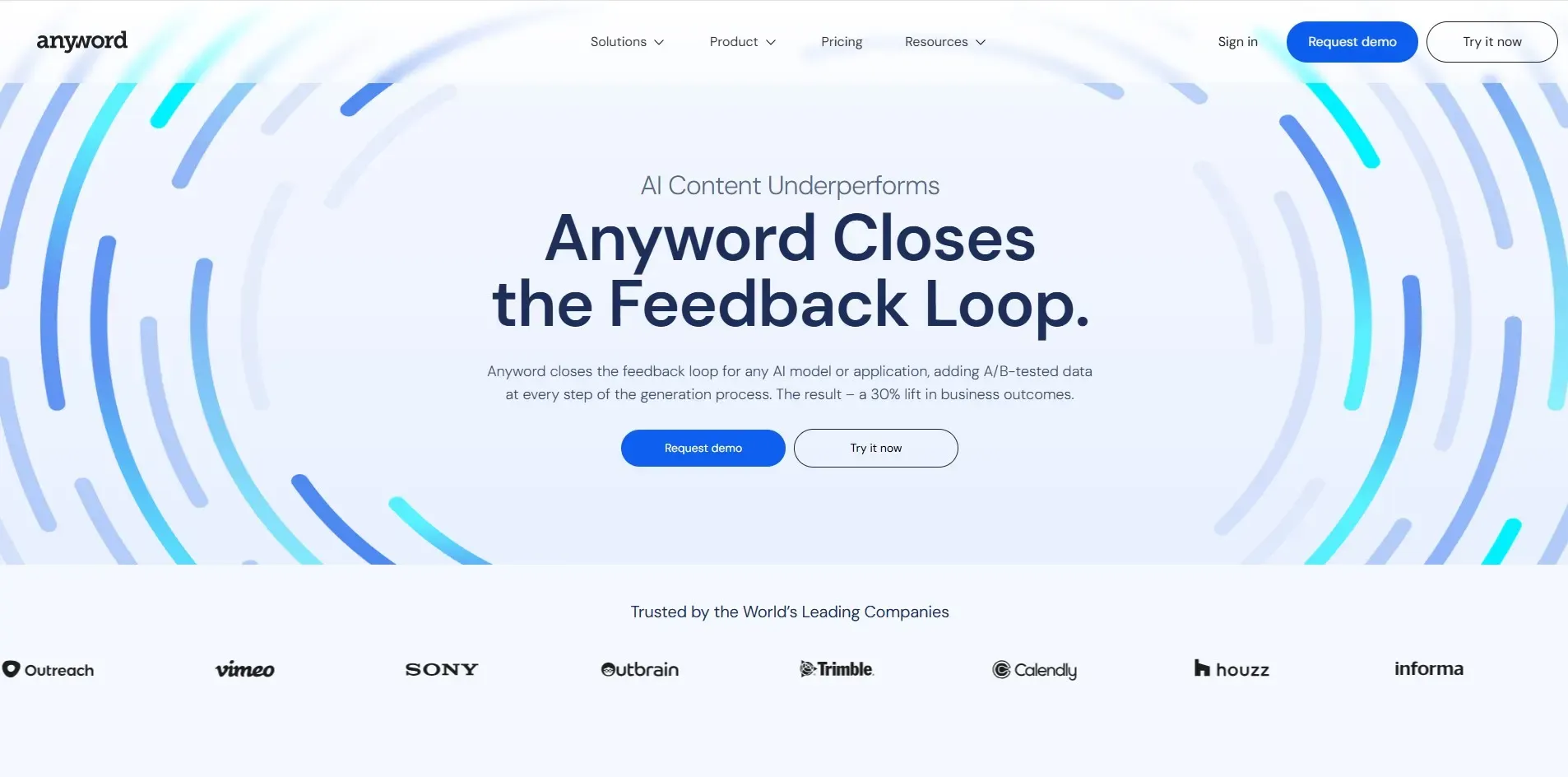 Anyword is one of my personal favourites for Google Ads AI copywriting. It includes a "Predictive Performance Score" that evaluates your ad copy before you spend a single penny. You can literally see how well your headline is expected to perform before it goes live.
-
Jasper ai
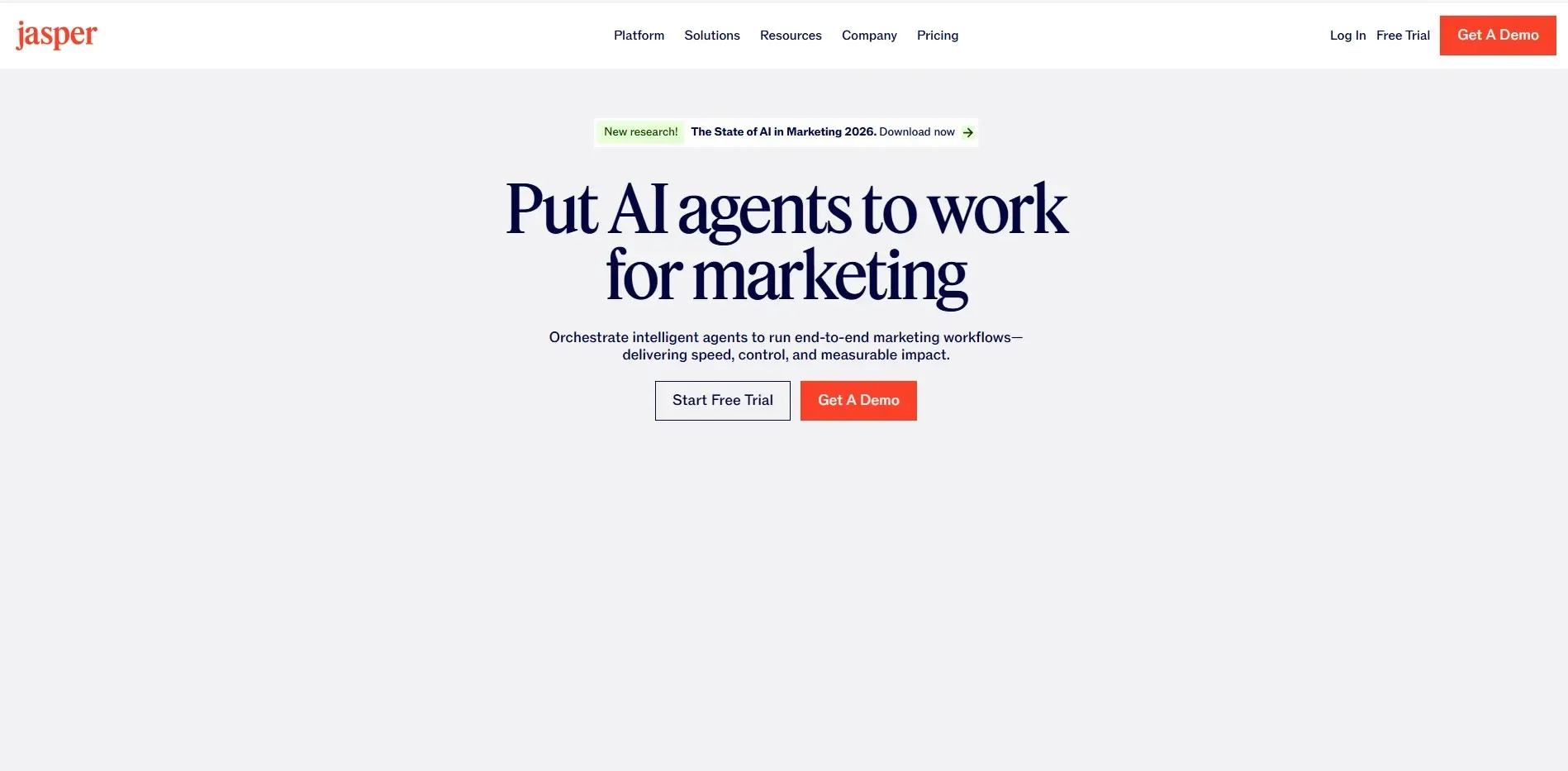
Jasper ai is a popular generative AI tool for drafting headlines, descriptions, and even landing page copy in your brand's unique voice. It has Google Ads templates built in, which makes it fast and practical for beginners.
Also Read: Best AI Keyword Research Tools That Actually Work in 2026
3. Keyword Research & Competitor Intelligence
Finding the right keywords is still one of the most important parts of Google Ads management. These AI tools for Google Ads go far beyond the basics and help you uncover high-intent keywords your competitors might be missing.
-
Semrush Ads Launch Assistant
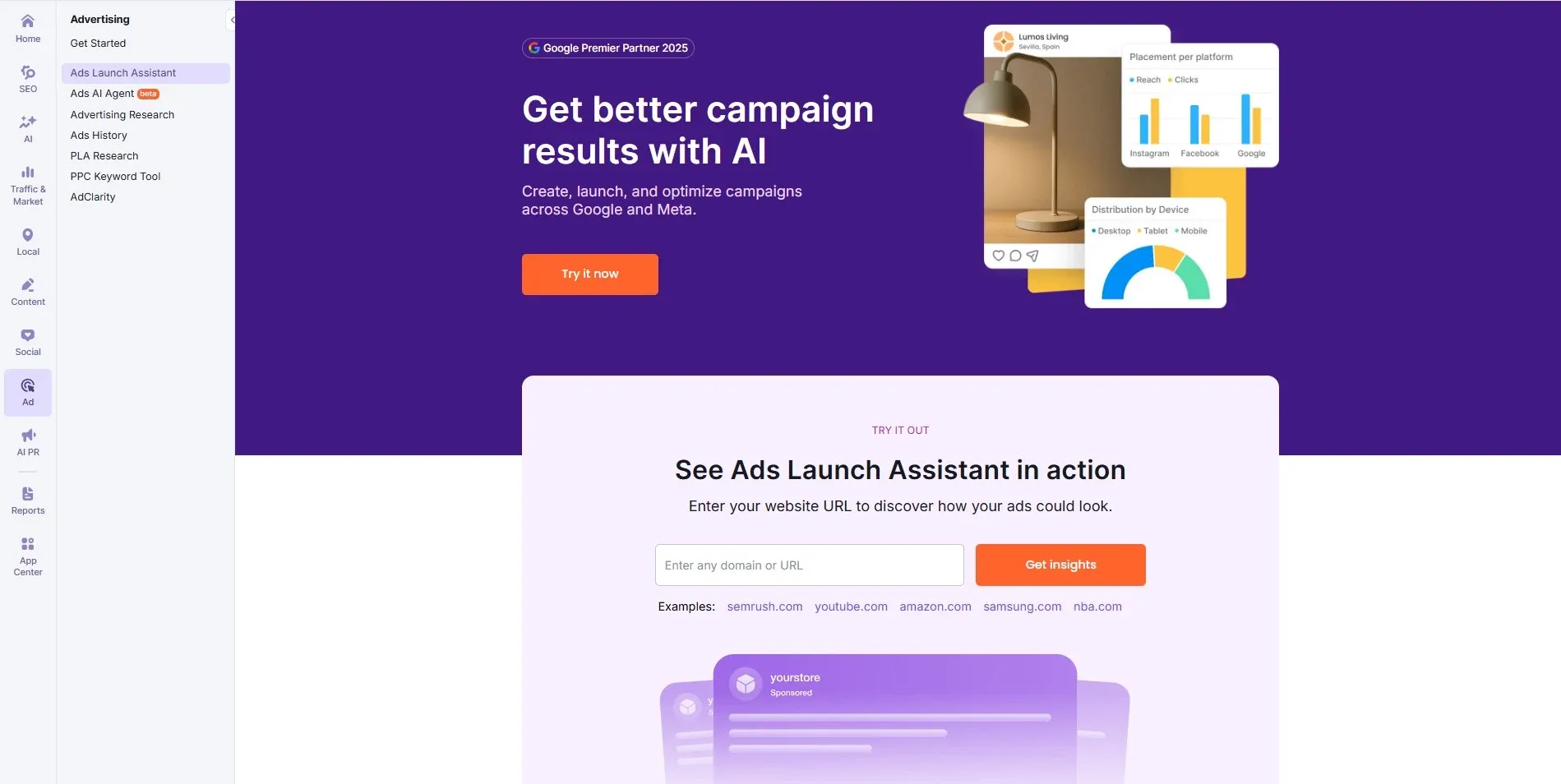
Semrush Ads Launch Assistant uses AI to identify keyword themes and automatically generate headlines and descriptions for faster campaign launches. It also includes competitive gap analysis, which shows you keywords your competitors rank for that you do not.
-
SpyFu
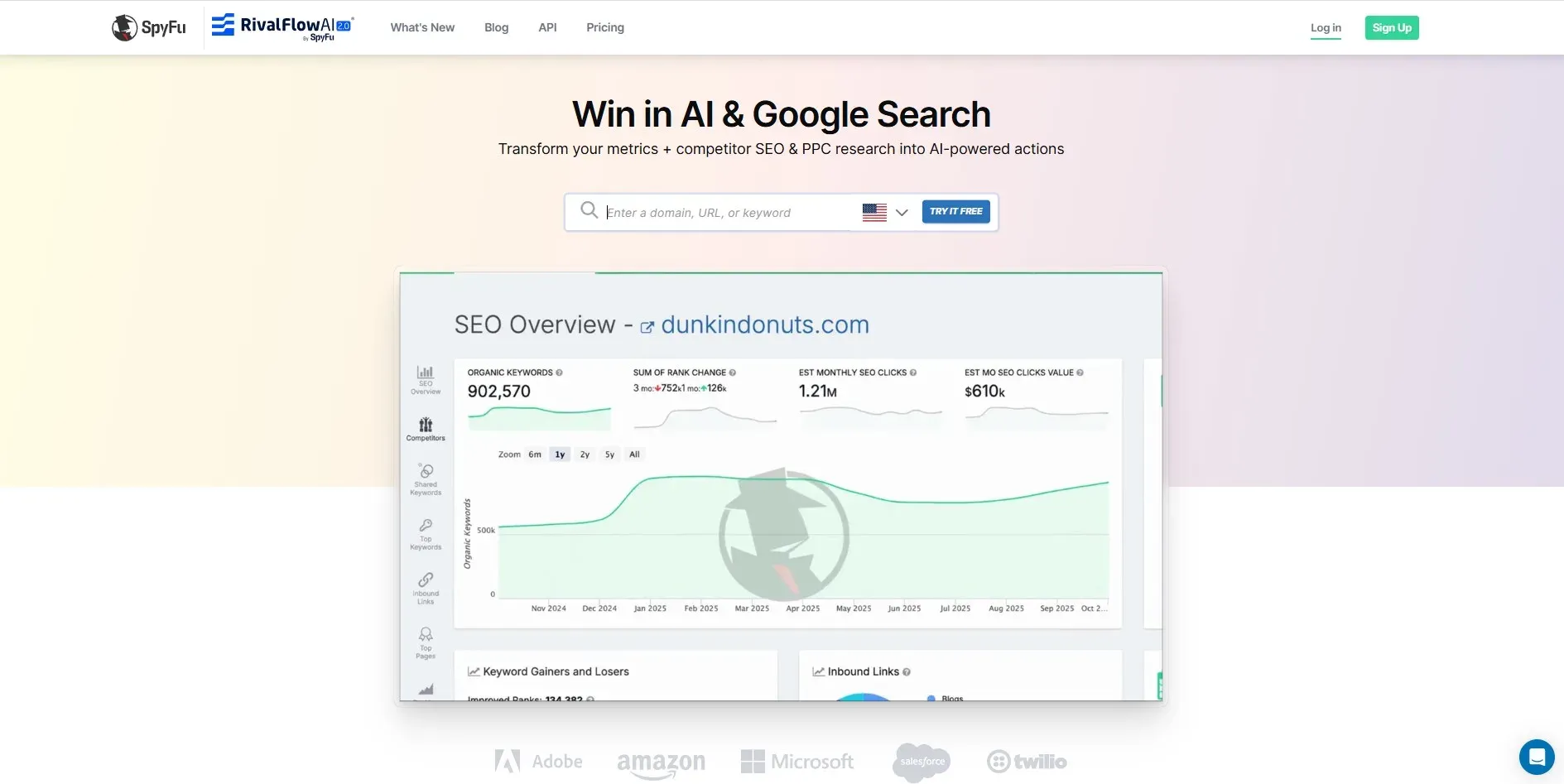
SpyFu is built specifically for competitive intelligence. It analyses competitor ad copy history, keywords, and estimated spend patterns, giving you a real advantage when planning campaigns.
-
WordStream Advisor
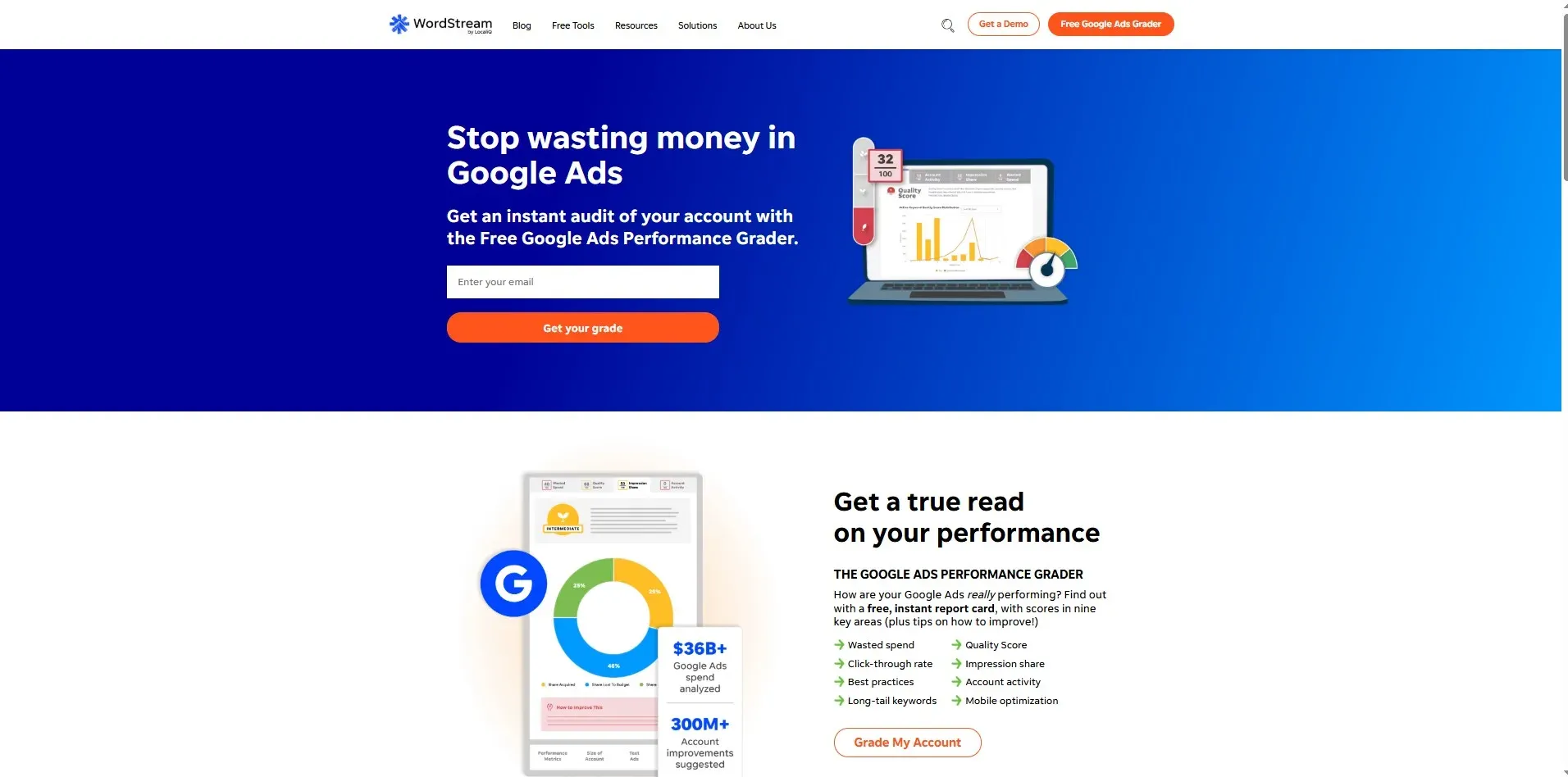
WordStream Advisor is perfect for small teams or beginners. It is known for its smart keyword suggestions and its clever "20-Minute Work Week" optimization workflow that keeps account management manageable without being overwhelming.
4. Landing Page & Conversion Optimization
Driving traffic is only half the job. Once someone clicks your ad, the landing page experience matters just as much. These tools make sure visitors actually convert.
-
Unbounce Smart Traffic
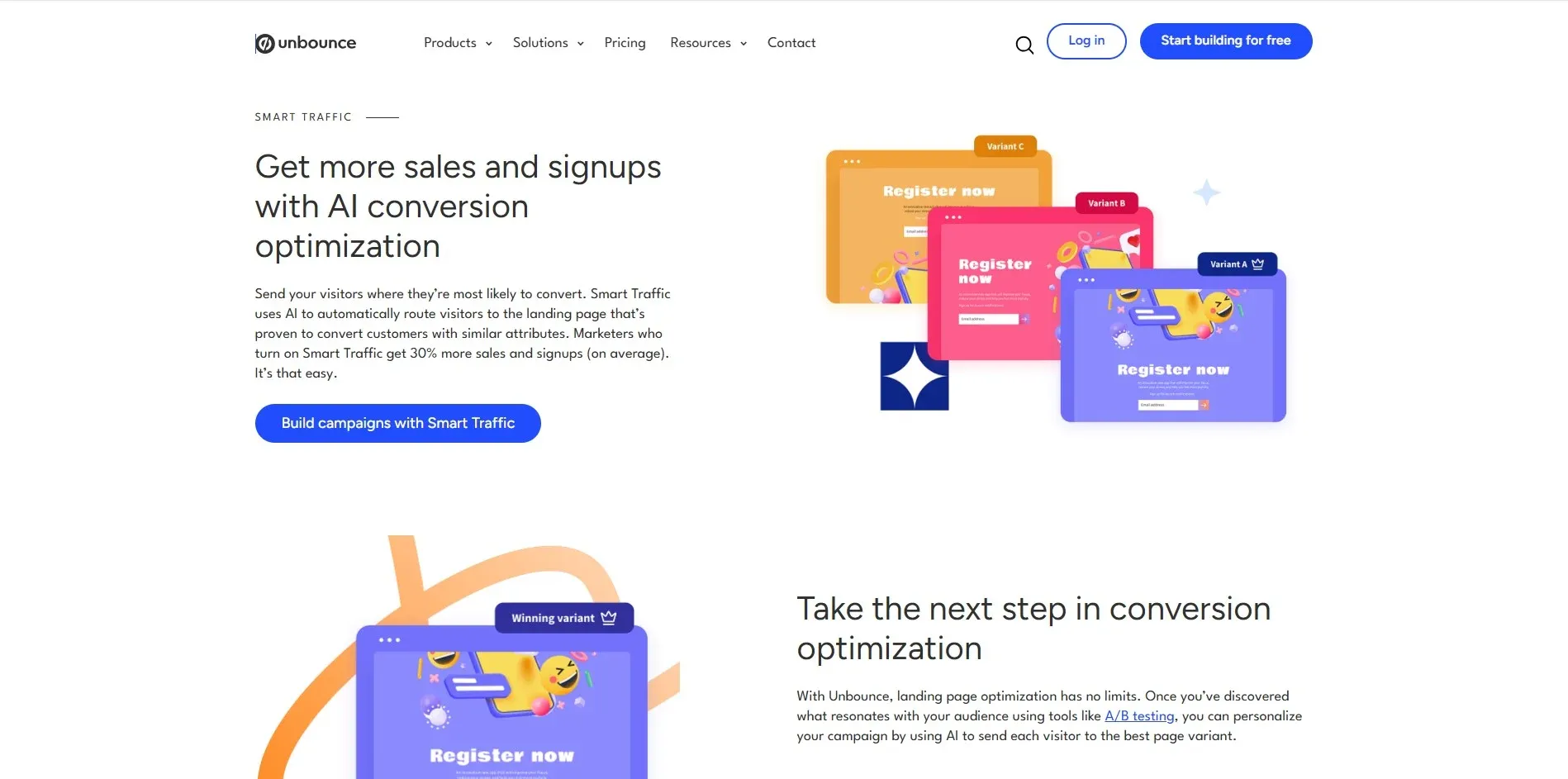
Unbounce Smart Traffic automatically routes visitors to the landing page variant most likely to convert, based on their behavioural data. It requires no coding and starts improving results almost immediately.
-
Instapage
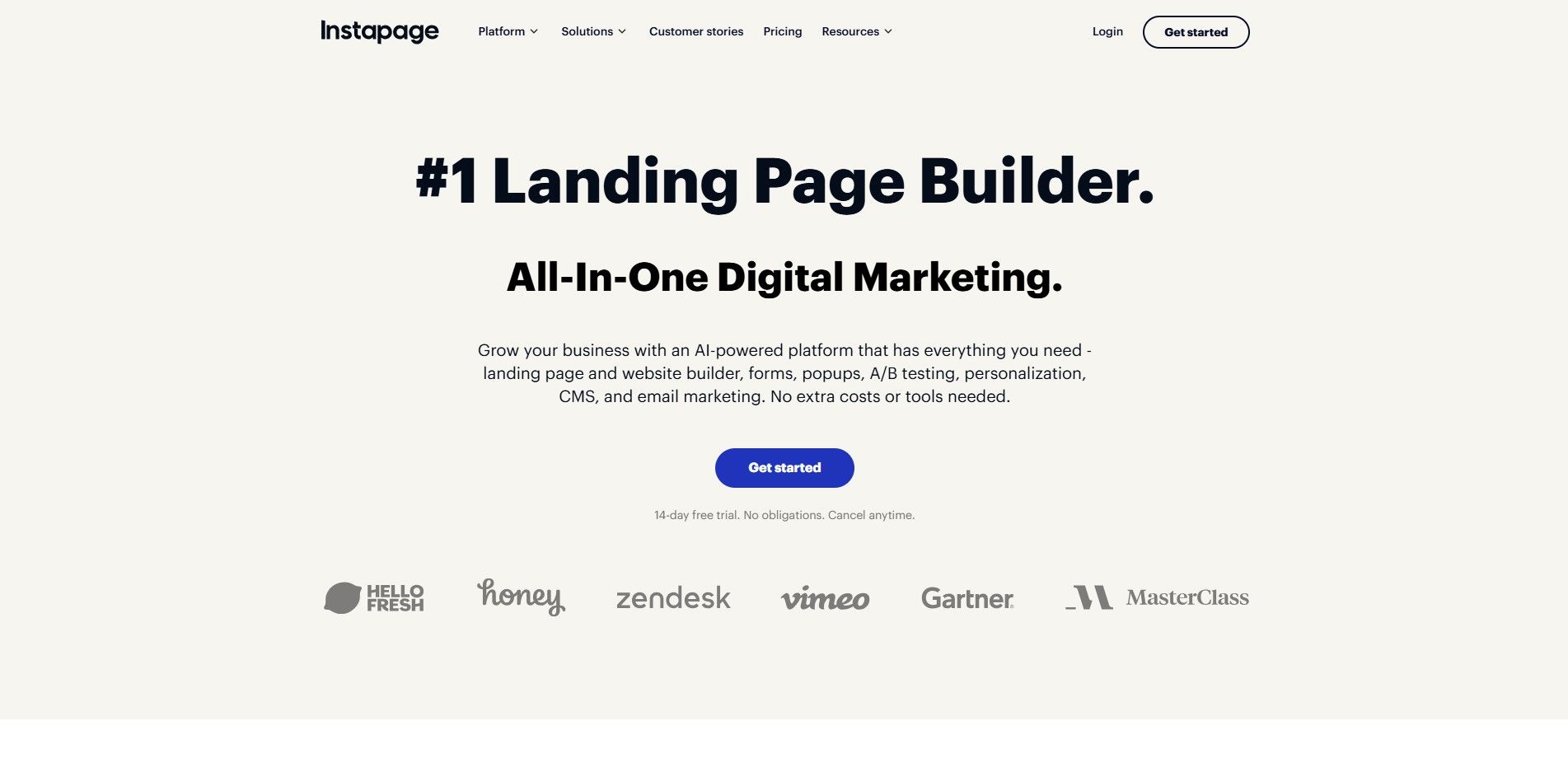
Instapage includes AI-driven A/B testing and personalization tools that tailor the post-click experience for different audience segments. It is best for enterprises or advertisers who want detailed personalization at scale.
Fraud Prevention & Advanced Reporting
-
CHEQ Essentials
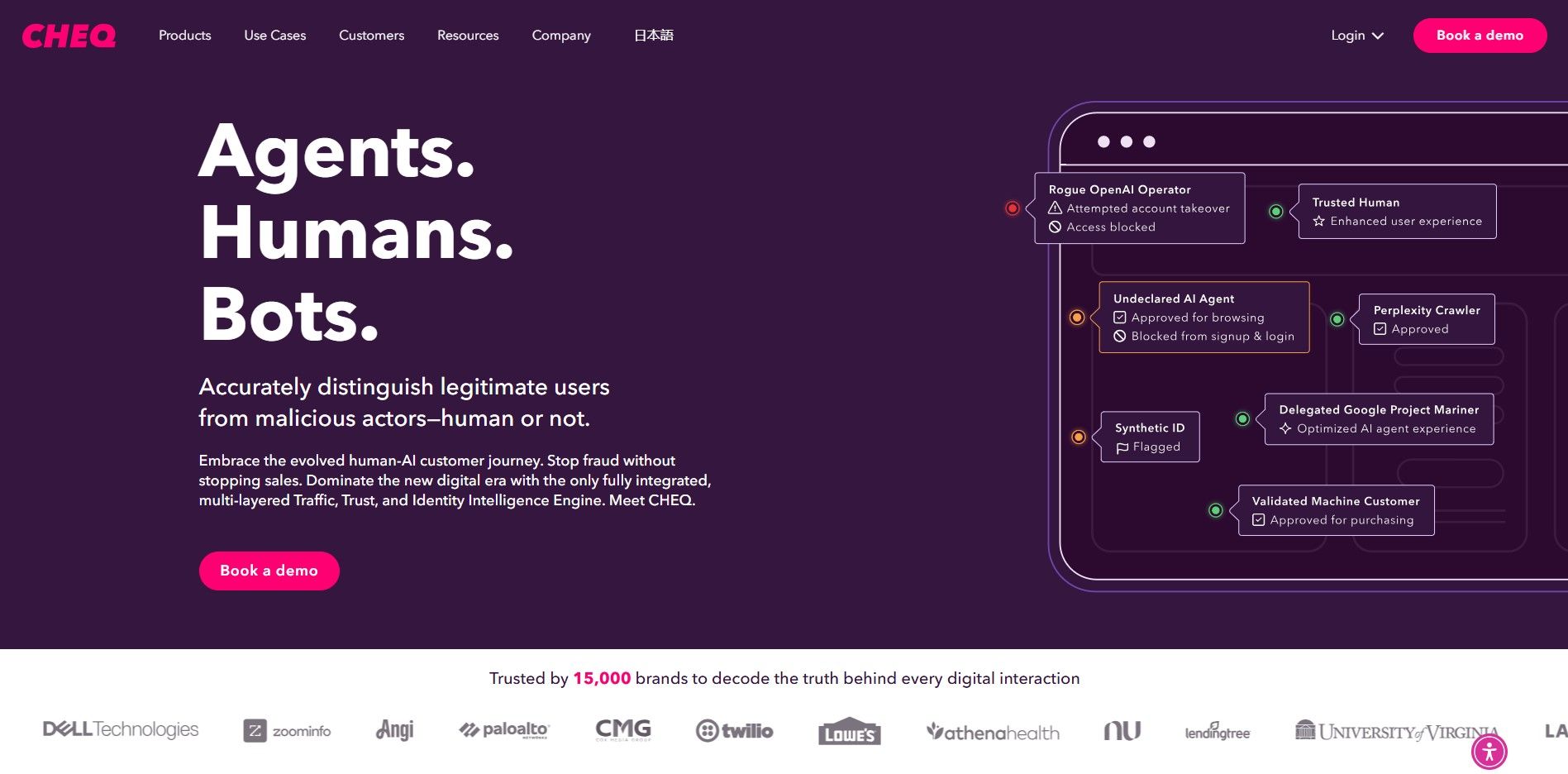
CHEQ Essentials protects your ad budget by detecting and blocking fraudulent bot clicks in real time. If you are running high-budget campaigns, this tool can save you a significant amount of wasted spend every month.
-
Supermetrics
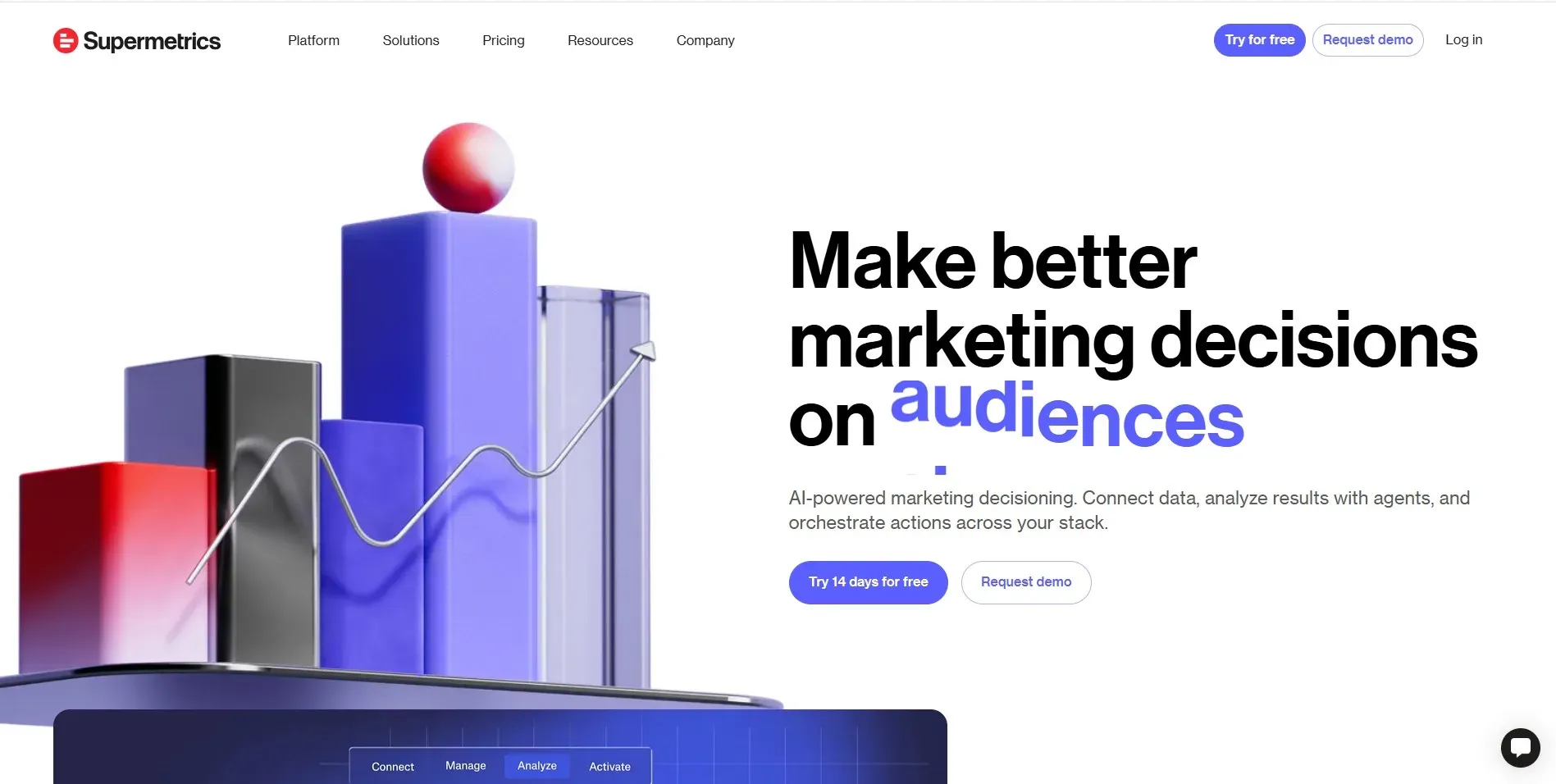
Supermetrics automates your PPC data transfer into reporting tools like Looker Studio, Google Sheets, and BI platforms. Agencies especially love this because it turns hours of manual reporting into an automated, always-updated dashboard.
How to Choose the Right AI Tool for Your Needs
With so many options, the question is, which one do you actually need? Here is how I recommend thinking through it.
-
Start by defining your business goals: Are you trying to save time, improve conversions, or reduce wasted spend? Your goal will point you toward the right category of tool.
-
Evaluate your data availability: AI tools need data to learn from. If your account is brand new, some tools may not work as well as they would on a more established account.
-
Consider your budget: Some tools, like Optmyzr or Instapage, have higher monthly costs and are better suited for agencies or large advertisers. Tools like Adzooma or WordStream are more affordable for small businesses.
-
Test before you commit: Most of these tools offer free trials. Start small, run a test campaign, and evaluate whether the tool is actually improving your results before investing long-term.
Best Practices for Using AI in Google Ads
Using AI does not mean setting it and forgetting it. Here are some habits that will help you get the most out of any AI Google Ads management tool.
- Start with small test campaigns: Do not hand over your entire budget to a new tool right away. Test with a smaller campaign first and see how the AI behaves.
- Combine AI with human oversight: AI tools are powerful, but they are not perfect. Always monitor your campaigns regularly and step in when something looks off.
- Monitor KPIs like CPA and CTR closely: These two metrics will tell you whether the AI is actually improving your results or just making changes for the sake of it.
- Prioritize data quality first: Clean conversion tracking is essential. If your data going in is messy, the AI's decisions coming out will be messy too.
Conclusion
Here is the truth. AI Google Ads management is no longer a luxury it is quickly becoming a necessity for anyone who wants to stay competitive. The advertisers who embrace these tools are saving time, spending smarter, and outperforming those who are still doing everything manually.
The best AI for Google Ads is not necessarily the most expensive one. It is the one that fits your goals, your budget, and your workflow. Whether you start with Google's own Performance Max or explore a third-party tool like Anyword or Optmyzr, the important thing is to start.
So take one tool from this list, sign up for a free trial, and run a small campaign. See the results for yourself. I promise you will not go back to doing everything manually after that. And if you want guidance in setting up AI automation for your business, you can connect with RejoiceHub for practical support.
Frequently Asked Questions
1. Are AI tools for Google Ads worth it in 2026?
Yes, AI tools for Google Ads are worth it in 2026 because competition and ad costs have increased. AI helps automate bidding, optimize targeting, and improve ad creatives, leading to better ROI and lower wasted spend.
2. What is AI bidding in Google Ads?
AI bidding, also called automated bidding, uses machine learning to adjust bids in real time based on user behavior, device, location, and likelihood of conversion. It helps maximize conversions while staying within your budget.
3. Can AI manage Google Ads automatically?
Yes, AI can manage many aspects of Google Ads automatically, including bid adjustments, keyword optimization, audience targeting, and ad testing. However, human oversight is still recommended for strategy and goal setting.
4. What is the difference between manual and AI Google Ads management?
Manual Google Ads management requires constant bid checks, keyword updates, and performance reviews. AI management automates these tasks using real-time data analysis, making campaigns more efficient and scalable.
5. Which AI tool is best for Google Ads agencies?
For agencies managing multiple accounts, tools like Optmyzr and Supermetrics are ideal. They offer automation, cross-account reporting, budget monitoring, and scalable optimization features.
6. Can AI help improve Google Ads Quality Score?
Yes, AI can help improve Quality Score by optimizing ad relevance, improving keyword targeting, and testing better-performing ad variations. Higher Quality Scores often result in lower CPC and better ad placements.
7. Do AI tools help with keyword research for Google Ads?
Yes, AI-powered tools analyze search trends, competitor data, and user intent to discover high-converting keywords. They also identify negative keywords to prevent wasted ad spend.
8. Is AI useful for Google Ads remarketing campaigns?
Yes, AI improves remarketing campaigns by segmenting audiences based on behavior and predicting which users are most likely to convert. This increases conversion rates and reduces acquisition costs.
9. How does AI prevent click fraud in Google Ads?
AI fraud detection tools monitor traffic patterns and identify suspicious or bot-generated clicks. They automatically block invalid traffic, helping protect your ad budget.
10. Can beginners use AI tools for Google Ads?
Yes, beginners can use AI tools because many platforms offer guided recommendations, simple dashboards, and automated suggestions. These tools reduce complexity and make campaign management easier.