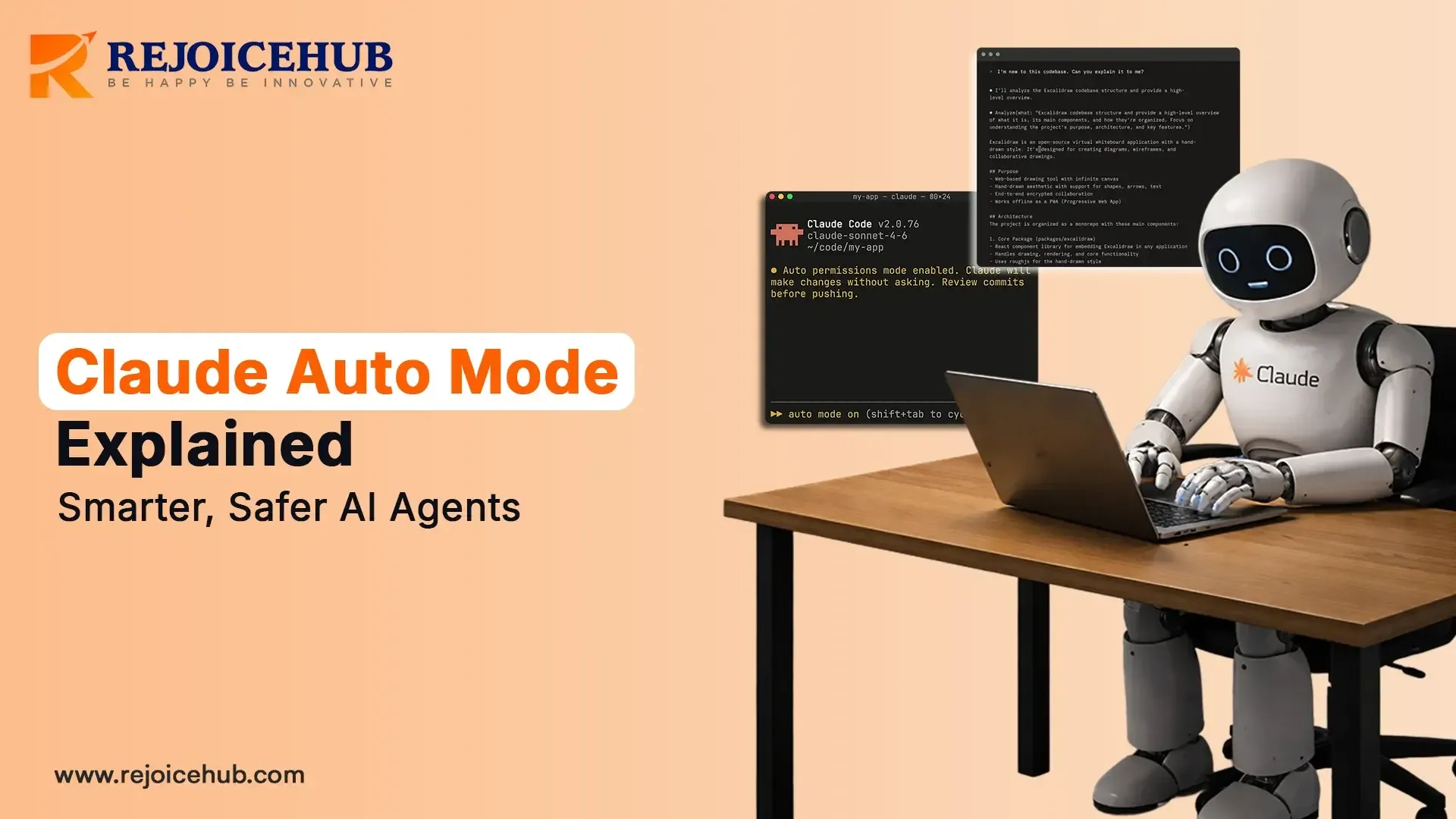
The software functions as an autonomous system that performs tasks without user intervention. In today's world, AI agents execute their duties through email management systems, code development, internet research, and appointment scheduling activities.
People believe that organizations need to control their operations through their existing technology systems. Would you hand the keys of your business to someone you've never met, with zero instructions, and just hope for the best? Of course not. Businesses during the early adoption phase of AI agent systems needed to trust the system while they awaited results from developed AI technologies.
The article targets three distinct audience groups, which include developers, business owners, and people who want to understand AI technology developments.
What Is Claude Auto Mode?
The permission-based execution system of Claude Auto Mode enables Anthropic Claude to perform multi-step tasks through its AI agents under the restrictions that users and developers establish. The system grants the AI system operational freedom, which human operators can restrict through predefined action boundaries.
They operate through a proactive mode. The system enables them to establish an objective through which they will conduct research on a particular subject before compiling their findings into a report. The challenge exists because AI agents experience higher operational risks when they gain more independent control of their functions. The AI system will cause unexpected results through its execution of tasks that you never planned.
The system operates like a hiring process which provides a capable employee with a complete job description together with a list of operational limits and a protocol for reporting to you during crucial decision-making moments.
The Anthropic permission system functions as a fundamental element of this method because it provides businesses and developers with a complete system to control which AI functions can operate and which AI functions remain inactive at all times.
How Claude Auto Mode Works in AI Agents
We will begin our examination of the system operations that govern Claude Auto Mode performance in artificial intelligence systems. The system functions through three essential principles which dictate its operations: ask before you act, follow the rules, and stay visible.
-
Permission-Based Execution
Claude Auto Mode establishes its unique decision-making process through its first operational feature. AI agents follow a "do first, explain later" operational method according to traditional standards. The system initiates its response to a user prompt by executing the requested action without evaluating its suitability or permission status.
This "ask before acting" model is what makes Claude Auto Mode fundamentally different from other AI agent automation tools on the market. It keeps humans meaningfully in the loop without making them micromanage every tiny task. The human-in-the-loop control model is one of the most important concepts in modern AI safety, and Anthropic has built it directly into how Auto Mode operates.
-
Task Automation with Guardrails
Imagine you're a developer who wants to use Anthropic Claude to automate a workflow say, monitoring a database, pulling certain records, and sending a summary email to your team every morning. In a traditional setup, you'd either write all the logic yourself (time-consuming) or trust an AI agent to automate your workflows blindly (risky).
With Claude Auto Mode, you define the rules upfront. You tell the system: "You can read from this database."
-
Real-Time Decision Control
The AI system lacks knowledge to effectively handle any unexpected situation which was not included in its training materials. This is where real-time decision control comes in.
The system automatically enables detection of these special events. The system needs to pause to identify the current situation instead of proceeding based on an unproven belief. The system will demonstrate this situation: "I have discovered a situation which exceeds my authorized access boundaries. I present you with two choices. Which choice should I execute?"
Business organizations that function within regulated sectors of finance, healthcare, and legal services require this type of AI monitoring and workflow control because they must track all activities while securing proper authorization. Development teams who seek AI automation benefits can use this tool to eliminate worries about upcoming AI actions.
Understanding Anthropic's Permission System in AI
The system that operates this entire process depends on Anthropic's AI permission framework. The technical and philosophical foundation of Claude Auto Mode requires this system to be understood because it explains why Anthropic develops AI differently from most companies.
Anthropic's permission system establishes three control levels that define its basic operation. The Role-Based Access system establishes different access levels for users and AI agents who use system resources. The system developed by Anthropic enables developers to create permission dimensions that match their specific role requirements.
The system provides Action-Level Permissions, which allow users to define permissions at their specific needs. The permission system developed by Anthropic enables users to create specific action rights that they can assign to particular conditions that require specific monitoring levels.
File access operations need no approval, while file deletion requests must receive approval from a human. External communications must be sent only to recipients who have been approved in advance.
The first layer of protection, Risk Mitigation by Design, holds supreme importance. The AI safety system developed by Anthropic teaches the model to identify dangerous behaviors and to create warnings about them while choosing to proceed carefully whenever it lacks certainty.
The "move fast and fix things later" method, which you see in technology, shows a completely different belief system from this company. The scientists at Anthropic prove that safety and capability can work together without creating conflicts.
Benefits of Claude Auto Mode for Developers and Businesses
So, why should you actually care about all of this? Let's make it real. Here are the concrete ways Claude Auto Mode delivers value for the people building with it and the businesses deploying it.
-
Safer AI Deployment is the first big win. For businesses moving into AI automation for the first time, the fear of something going wrong is real. What if the AI sends the wrong email to a client? What if it accidentally modifies important data? Claude Auto Mode's permission-based system dramatically reduces these risks. You're not trusting the AI blindly you're trusting it within a carefully defined safe zone.
-
Faster Automation is the second. Once your rules and permissions are in place, Anthropic Claude can execute tasks at machine speed far faster than any human could. Workflows that used to take hours now take minutes. Reports that required manual compilation happen automatically. The AI works around the clock without fatigue, breaks, or distraction.
-
Reduced Manual Intervention is where the efficiency really shows. One of the biggest frustrations with early AI tools was that they often created more work than they saved you'd have to constantly correct mistakes, re-run prompts, and babysit the output. Claude Auto Mode is designed to reduce that overhead. The more clearly you define your guardrails, the more confidently the AI can operate within them, and the less you have to intervene on routine tasks.
-
Scalable AI Workflows round out the picture. As your business grows, your AI workflows for business can grow with it. Adding new agents, expanding permissions, or onboarding new teams is manageable because the permission system provides a clear structure to build on. There's no chaotic sprawl just orderly expansion within a well-defined framework.
From a business ROI perspective, these benefits compound quickly. You're not just saving time today you're building a foundation for AI-powered operations that can scale sustainably, adapt to new requirements, and maintain compliance standards over the long term.
Claude Auto Mode vs Traditional AI Agents
Let's lay this out clearly, because the contrast really does tell the story.
| Feature | Traditional AI Agents | Claude Auto Mode |
|---|---|---|
| Control Model | Prompt-based, reactive | Permission-based, proactive |
| Human Oversight | Minimal or none | Human-in-the-loop by design |
| Risk Level | High unpredictable actions | Low pre-approved boundaries |
| Execution Style | Full autonomy, no checks | Guardrails at every step |
| Best For | Simple, isolated tasks | Complex, high-stakes workflows |
What this table really shows isn't just a list of features it's a difference in philosophy. Traditional AI agents vs AI assistants were designed to be impressive. Claude Auto Mode was designed to be trustworthy. And in real-world deployment, trustworthiness wins every time.
Prompt-based AI can be useful for one-off tasks where mistakes don't matter much. But when you're deploying AI inside a business touching real data, communicating with real clients, making real decisions you need more than impressive. You need reliable, auditable, and controllable. That's exactly what Claude Auto Mode delivers.
Challenges and Limitations of AI Permission Systems
The system operates at imperfect levels; therefore, we establish trust in Anthropic's AI safety method because they disclose their decision-making processes. The implementation of AI permission systems requires your organization to understand the following information about Claude Auto Mode.
Organizations must treat approval processes as essential operational aspects. AI agents introduce delays through their need to wait for human approval before they can continue their operations. The requirement for approval, regardless of its speed, creates a workflow bottleneck in processes that need quick execution. Teams must evaluate their need for control against their need for operational efficiency to determine their optimal approach.
The third challenge centers around implementation overhead expenses. Organizations find it challenging to implement Claude Auto Mode because its integration needs specialized engineering work. Your existing technology platform will determine the amount of software development needed to implement Anthropic's permission system, which will meet your operational needs. You should allocate time and resources because this task requires your attention.
Organizations face actual challenges that become manageable when they work with suitable implementation partners. The organization should acknowledge all existing challenges because this approach enables them to prepare their deployment process.
The Future of AI Agent Development with Auto Mode
The situation development leads to an exciting future. The enterprise AI agents are the future of business automation real business partners who help people achieve their corporate objectives. The project requires AI agents to handle supply chain management while they perform first-level customer service tasks and manage project operations and detect compliance violations, which require their operations to stay within predefined safety limits.
Safe autonomous workflows serve as the basic requirement for this future to become actualized. AI implementation in business environments requires Claude Auto Mode because it serves as the essential framework for AI operational scaling.
AI compliance systems are going to become a major area of investment in the coming years. The global regulatory bodies have started to catch up with AI development, and businesses will need to prove their AI systems meet all standards for auditing, control, and regulatory compliance.
The Anthropic permission system establishes an audit trail system which tracks all AI activities. The system records all activities which the AI system was permitted to conduct while showing its actual performance and human authorization procedures.
Businesses who develop AI agent automation solutions for use cases in business with strict access controls will create a competitive advantage which helps them grow during future regulatory changes. Organizations which build hazardous environments to achieve fast outcomes will need to create entirely new systems.
The deep understanding of this matter exists within Anthropic. The development of Claude Auto Mode serves as a product feature which demonstrates responsible AI development for large-scale applications.
Conclusion
The first aspect of Claude Auto Mode that stands out presents users with a powerful balance: system efficiency and protection features working in harmony. The system demonstrates to users that they can achieve both goals showing them how to reach their objective without sacrificing safety for speed.
AI agents will continue to exist in the future. They will develop into stronger systems which will become integrated into business operations that depend on them. Businesses face two decisions about AI technology.
The solution to that problem finds its expression in Claude Auto Mode together with its supporting Anthropic principles. The execution requires permission while human users maintain operational control through ongoing system monitoring that supports predefined risk management procedures. These elements function as essential components that enable organizations to implement AI systems that transform business operations on a large scale.
Claude Auto Mode provides people who hesitate to use AI agents because of potential dangers with a solution which requires their examination. The system provides the essential framework to help you control the disorderly situation which your business faces whether you are just beginning or already deep into your AI journey.
Frequently Asked Questions
1. What is Claude Auto Mode, and how is it different from regular AI tools?
Claude Auto Mode is a permission-based system built by Anthropic that lets AI agents complete multi-step tasks within limits you set. Unlike regular AI tools that act first and ask later, Claude Auto Mode checks with you before taking actions outside its approved boundaries, keeping humans in control.
2. How does Claude Auto Mode work in AI agents?
Claude Auto Mode works by following three simple rules: ask before acting, follow set rules, and stay visible. When an AI agent hits a situation outside its permissions, it pauses and asks for human approval instead of guessing. This makes AI agent automation much safer for real business use.
3. What is Anthropic's permission system in AI, and why does it matter?
Anthropic's permission system gives developers three control levels: role-based access, action-level permissions, and built-in risk mitigation. It lets you decide exactly what the AI can and cannot do. For example, the AI can read files freely but needs your go-ahead before deleting anything.
4. What are the main benefits of Claude Auto Mode for developers?
For developers, Claude Auto Mode means faster workflow automation with far less babysitting. You set the guardrails once, and the system handles routine tasks at machine speed. It also reduces errors, cuts manual intervention, and makes it easier to scale AI workflows as your project or team grows.
5. Is Claude Auto Mode safe for businesses handling sensitive data?
Yes. Anthropic Claude was built with safety as a core design principle, not an afterthought. The permission system creates an audit trail of every AI action, which is especially useful for regulated industries like finance, healthcare, and legal services, where compliance and human oversight are non-negotiable.
6. Can small businesses use Claude Auto Mode, or is it only for large enterprises?
Claude Auto Mode works for any business size, but it does require some engineering setup to integrate properly. Smaller teams may need a technical partner to get started. Once in place, though, even small businesses can automate time-consuming workflows and save hours of manual work every week.
7. How is Claude Auto Mode better than traditional AI agent automation tools?
Traditional AI agents run on full autopilot with little oversight. Claude Auto Mode adds guardrails at every step. It's permission-based, not just prompt-based. That means you get all the speed benefits of AI automation without the unpredictable risks that come with letting an AI act freely on sensitive business tasks.
8. What tasks can Anthropic Claude handle using Auto Mode?
Anthropic Claude can handle tasks like database monitoring, report generation, summary emails, research compilation, and workflow management using Auto Mode. As long as the task stays within your defined permissions, it runs automatically. Anything outside those boundaries gets flagged for your review before the AI moves forward.
9. Does Claude Auto Mode slow things down because of approval steps?
It can add small delays when human approval is needed. But for most routine tasks within set permissions, Claude Auto Mode runs at full speed without interruption. The approval step only kicks in for edge cases. Most businesses find the added safety is worth the occasional pause in complex or high-risk workflows.
10. How does Anthropic make sure Claude Auto Mode stays compliant with regulations?
Anthropic's permission system logs every action the AI takes, who approved it, and what boundaries were in place. This built-in audit trail makes it much easier to show regulators exactly how the AI is being used. As AI compliance rules tighten globally, this kind of structured oversight gives businesses a real advantage.
11. What is the future of AI agents with systems like Claude Auto Mode?
AI agents are moving toward becoming true business partners, handling supply chains, customer service, and compliance checks. Claude Auto Mode is designed to grow with that shift. Businesses that build safe, permission-based AI workflows now will be better positioned when regulations catch up and competitors are scrambling to retrofit safety into their systems.