
Let me be real with you. A couple of years ago, I was spending hours every week just writing PRDs, hunting for competitor updates, and manually sorting through user feedback. It felt endless. Then I started using AI tools for product managers, and honestly, it changed the way I work completely.
The best AI tools for product managers are not just hype. They are practical, they save real time, and they help you make smarter decisions. Let's dig in.
What is AI in Product Management
A lot of people hear "AI for PMs" and think it just means using ChatGPT to write emails. That is part of it, but the picture is much bigger. When we talk about product manager AI tools, we are really talking about two things: automating repetitive tasks and augmenting your decision-making.
Automating tasks means the boring, time-consuming stuff gets done faster. Writing meeting summaries, drafting user stories, and generating reports. AI handles the grunt work so you can think bigger.
Augmenting decision-making is where things get interesting. AI can analyze patterns in your data, flag risks in your roadmap, and surface insights you might have missed entirely. It is like having a very smart analyst available 24/7.
Traditional tools like Jira or Confluence are powerful, but they are passive they store and organize information. AI-powered tools actively help you understand and act on that information. That is a massive shift in how product work gets done.
Key Product Management Tasks That AI Improves
The most significant victories arise when people discover their weekly tasks and find AI solutions that address those specific needs. Here are the particular areas of PM work that receive the most benefit from AI technologies.
-
Market Research & Competitive Intelligence
Competitive analysis used to mean hours of Googling. Now, AI tools for product managers can scan the web for competitor updates, customer reviews, and industry trends in minutes. You get real-time signals without the manual grind. Tools like Perplexity AI are great for this just ask a research question and get sourced, synthesized answers instantly.
-
Ideation & Feature Prioritization
This is one of my favorite use cases. AI can help you brainstorm feature ideas based on user feedback themes, then score them against your strategic goals. Instead of a messy whiteboard session, you walk in with AI-clustered insights already organized. That makes conversations with your team sharper and more focused.
-
Documentation & Workflow Automation
PRDs, user stories, and release notes documentation is necessary but slow. With the best product manager tools powered by AI, you can generate a solid first draft in seconds. Tools like Notion AI and ClickUp AI do this really well. Even if you edit the output heavily, starting from a draft still cuts writing time in half.
-
Roadmapping & Strategy
AI can analyze your backlog and suggest prioritization based on business impact, user demand, and effort. It can also flag when your roadmap is misaligned with company objectives something that is easy to miss when you are heads-down in sprint planning.
-
Analytics & Insights
Most PMs are not data scientists. AI-powered analytics tools bridge that gap beautifully. You can ask plain-English questions like "which feature drove the most retention last quarter?" and get an answer without writing a single SQL query. Amplitude AI and Mixpanel Spark are built exactly for this kind of use case.
-
Cross-Functional Collaboration
Maintaining consistent understanding among engineering, design, marketing, and leadership teams is one of the most challenging aspects of product work. AI tools generate automatic meeting summaries, create shared context documents, and detect when different teams are pursuing conflicting objectives.
Best AI Tools for Product Managers (2026 Guide)
Here is a practical breakdown of the top AI tools for product managers right now, grouped by use case so you can find what fits your workflow quickly.
1. Generative & Conversational AI
-
ChatGPT
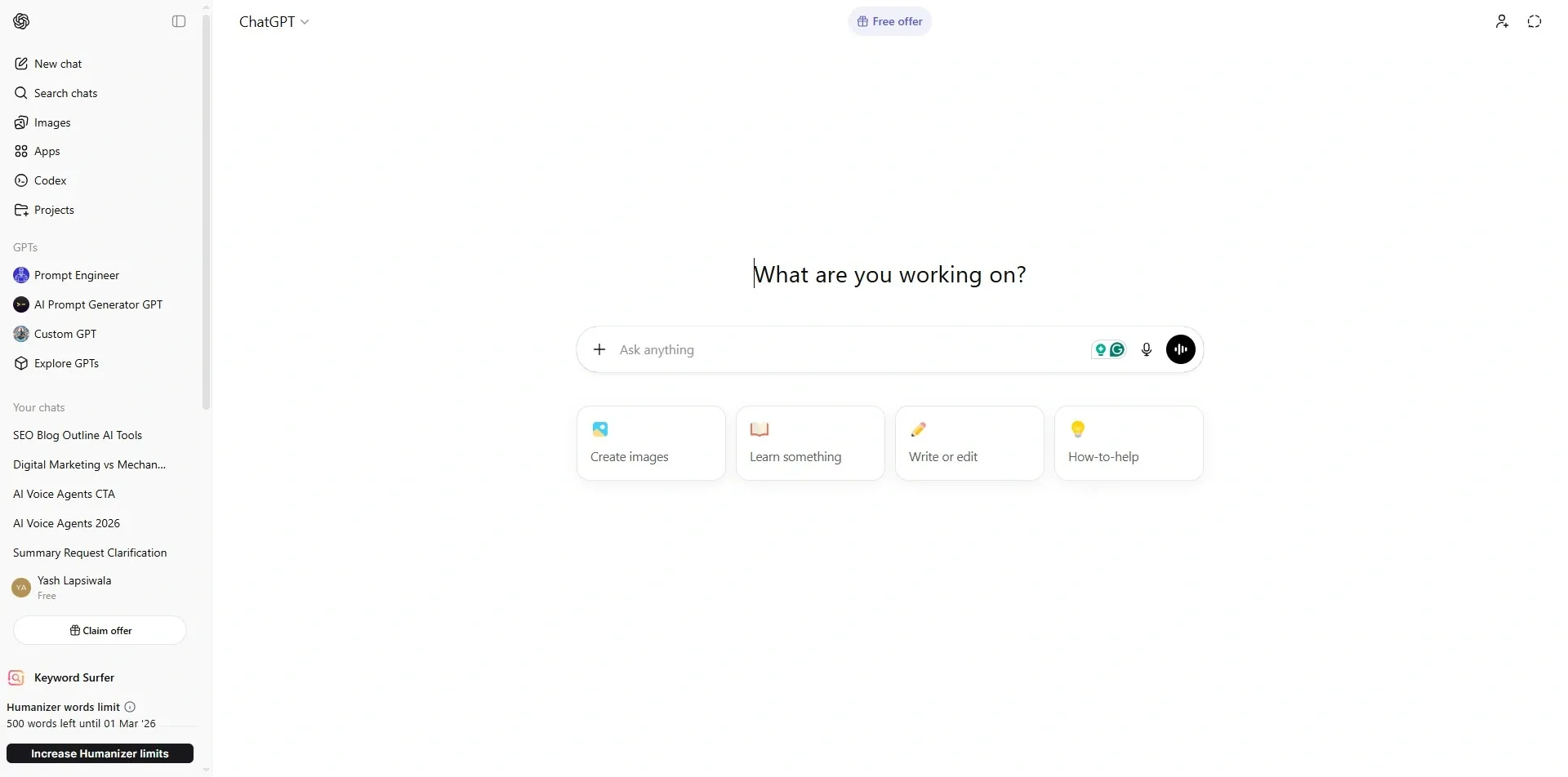
is still the Swiss army knife of AI. Use it for ideation, drafting PRDs, summarizing research, or writing prompt templates for your team. The GPT-4o model is particularly strong for nuanced product thinking. Most PMs have this open in a browser tab all day.
-
Google Gemini
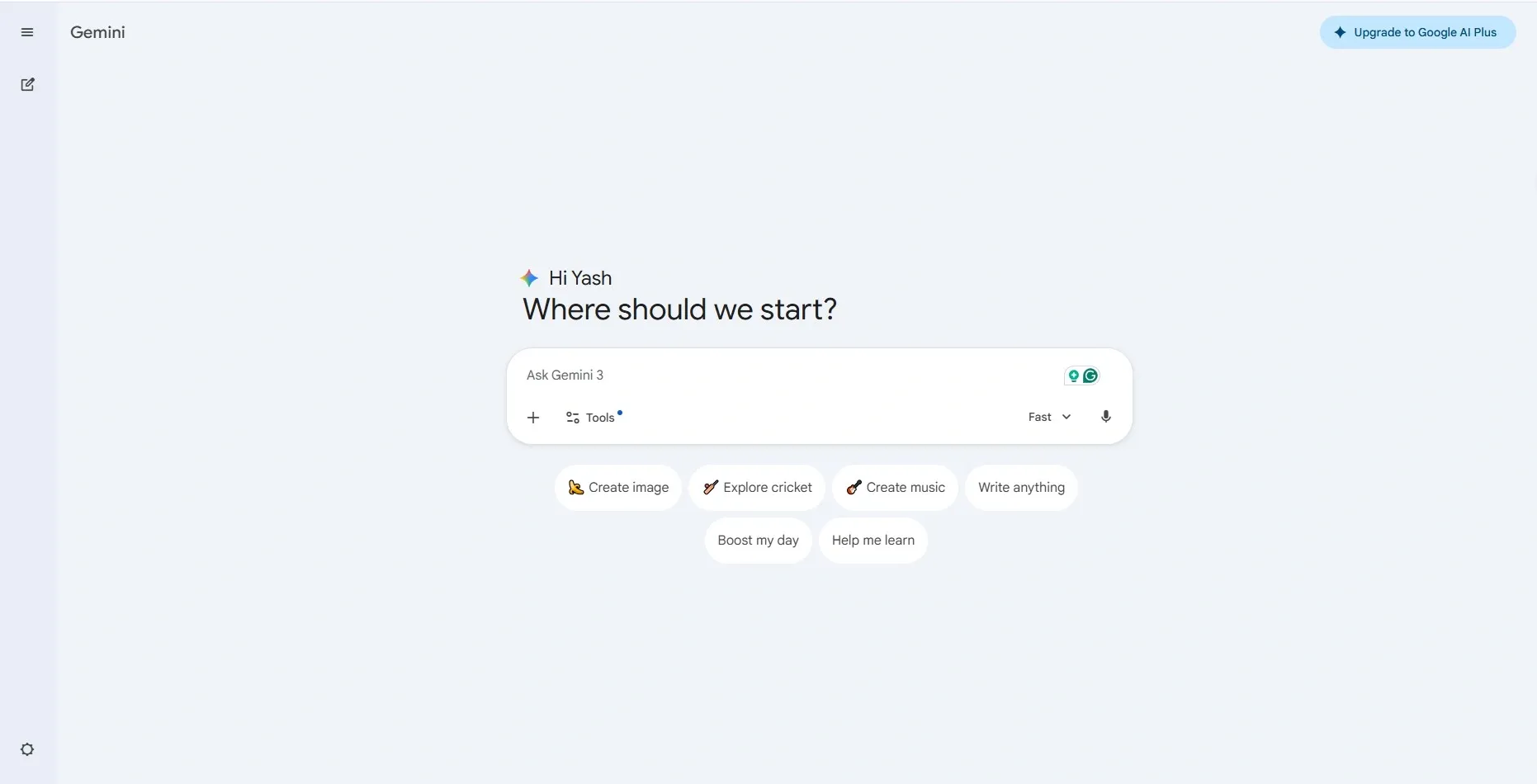
Google Gemini excels at research synthesis. If you are pulling together competitive analysis or market landscape summaries, Gemini's ability to process large amounts of information and organize it clearly is a real advantage. It also integrates well with Google Workspace, which many teams already use.
-
Anthropic AI
Anthropic AI is known for producing long, well-structured documents with a natural tone. It is particularly strong for writing, reasoning through complex trade-offs, and creating polished content like strategy docs or executive summaries.
2. Knowledge & Research Assistants
-
NotebookLM
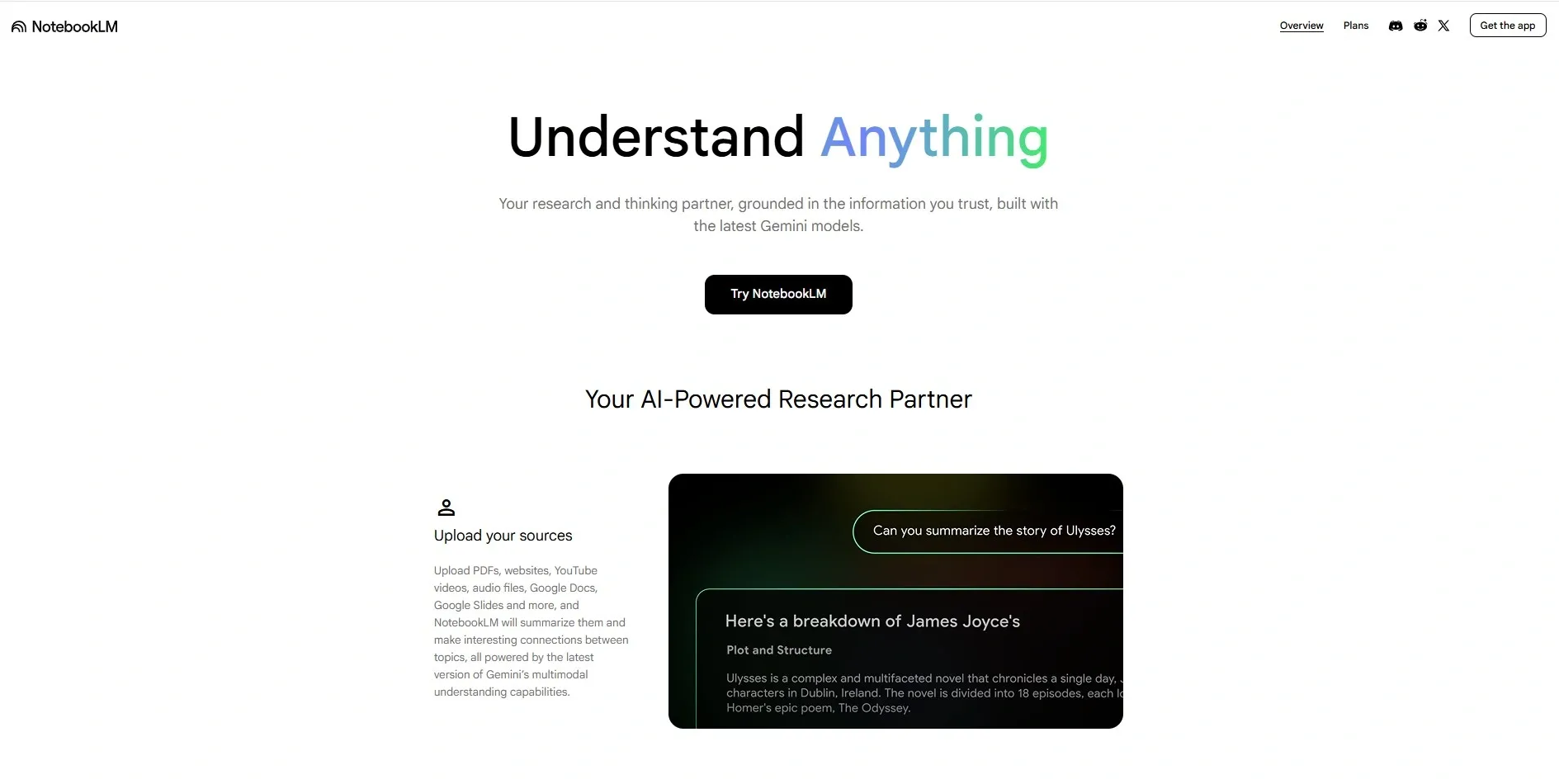
NotebookLM built by Google, lets you upload your own documents and then ask questions about them. It is perfect for analyzing user interview transcripts, survey results, or long research reports. Think of it as a smart AI that reads your files and helps you pull out the important insights.
-
Perplexity AI
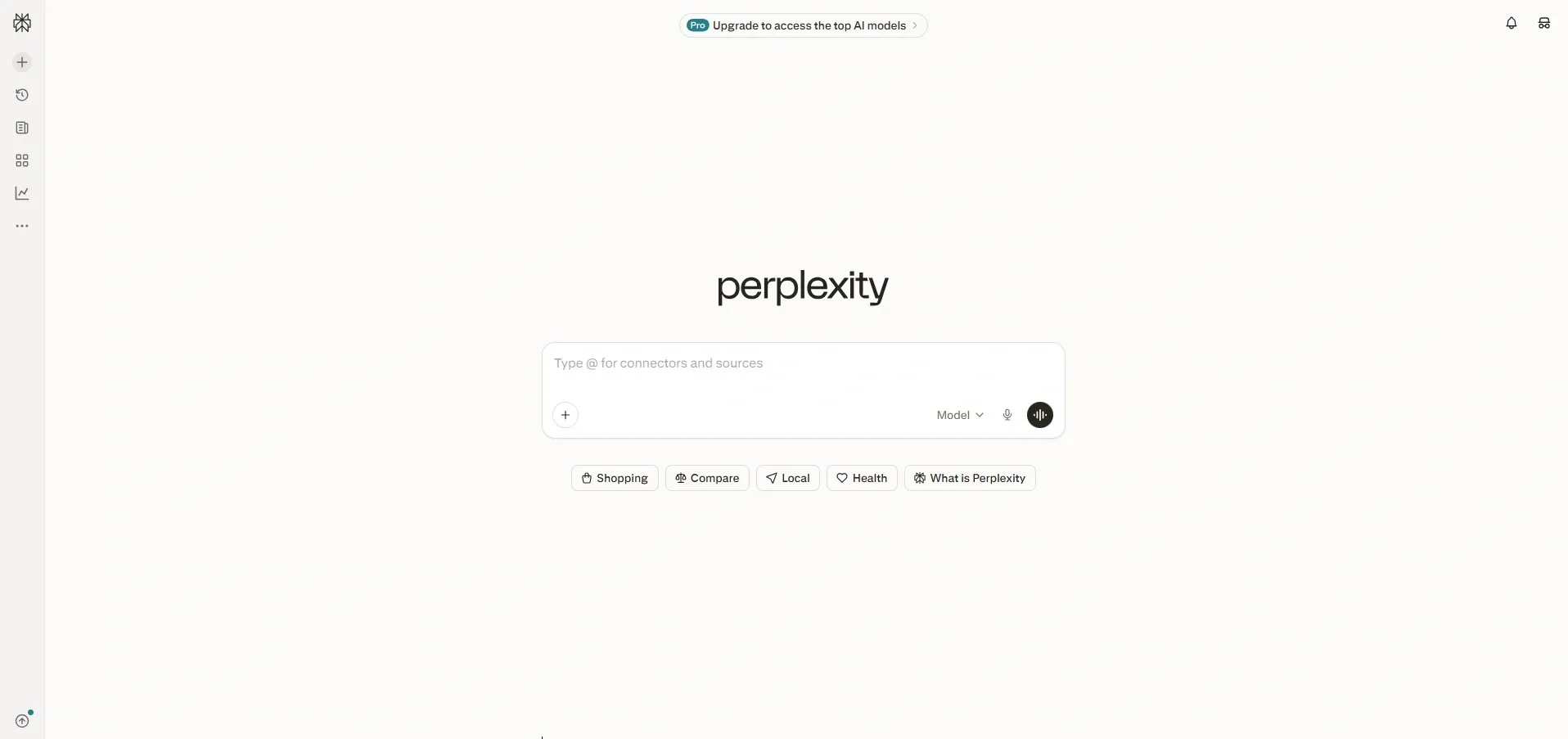
Perplexity AI is one of the best AI tools for product managers who need fast, sourced answers. It works like a search engine with AI reasoning on top. Ask it about market trends, competitor features, or industry data, and it gives you cited answers in real time far more useful than a standard Google search for product research.
-
Notion AI
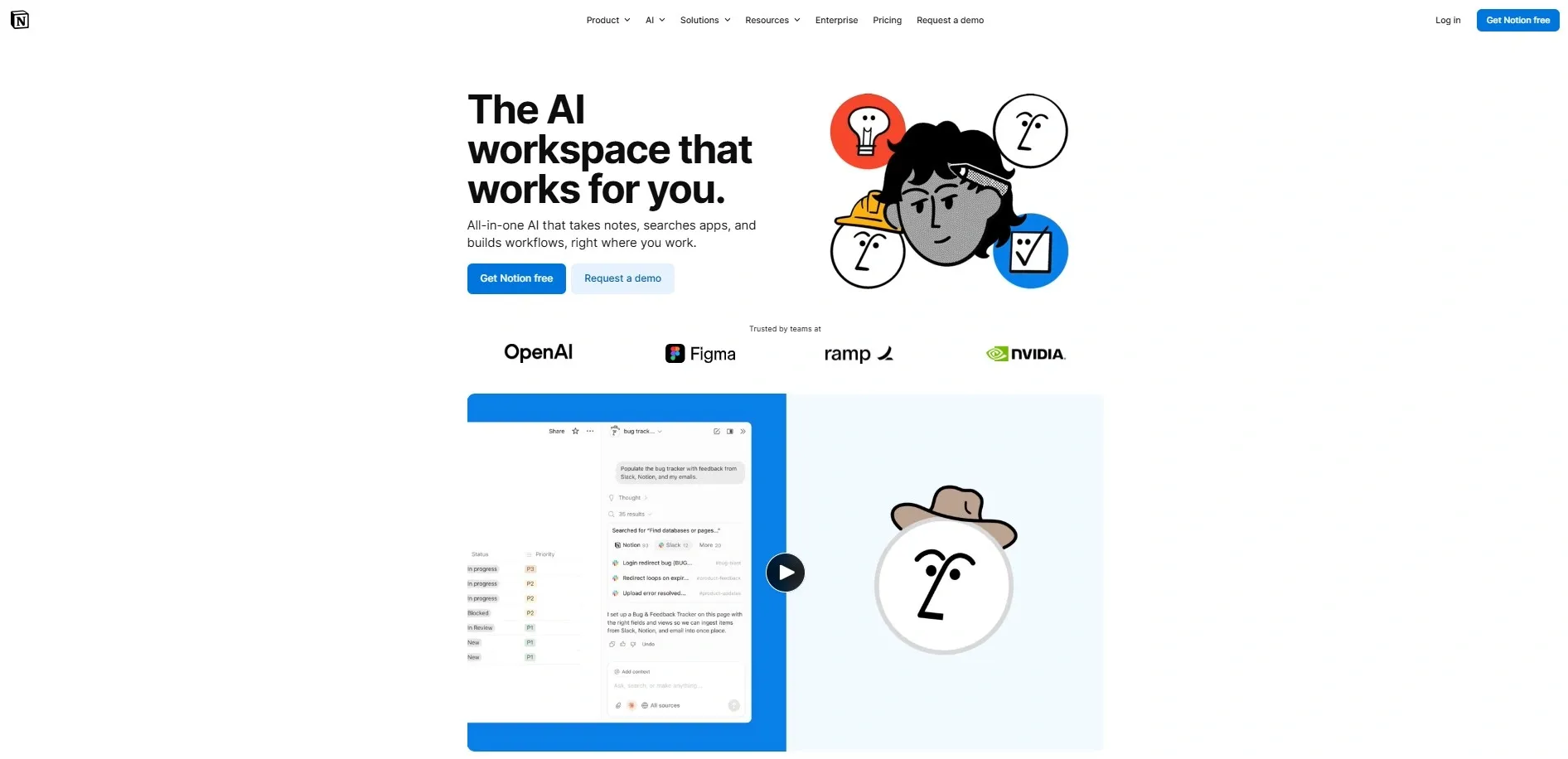
Notion AI if your team already lives in Notion, is a no-brainer. It helps you write, summarize, and organize directly inside your workspace. You can turn meeting notes into action items, expand a rough idea into a full brief, or auto-generate templates — all without leaving Notion.
3. Product Planning & Roadmapping
-
Productboard AI
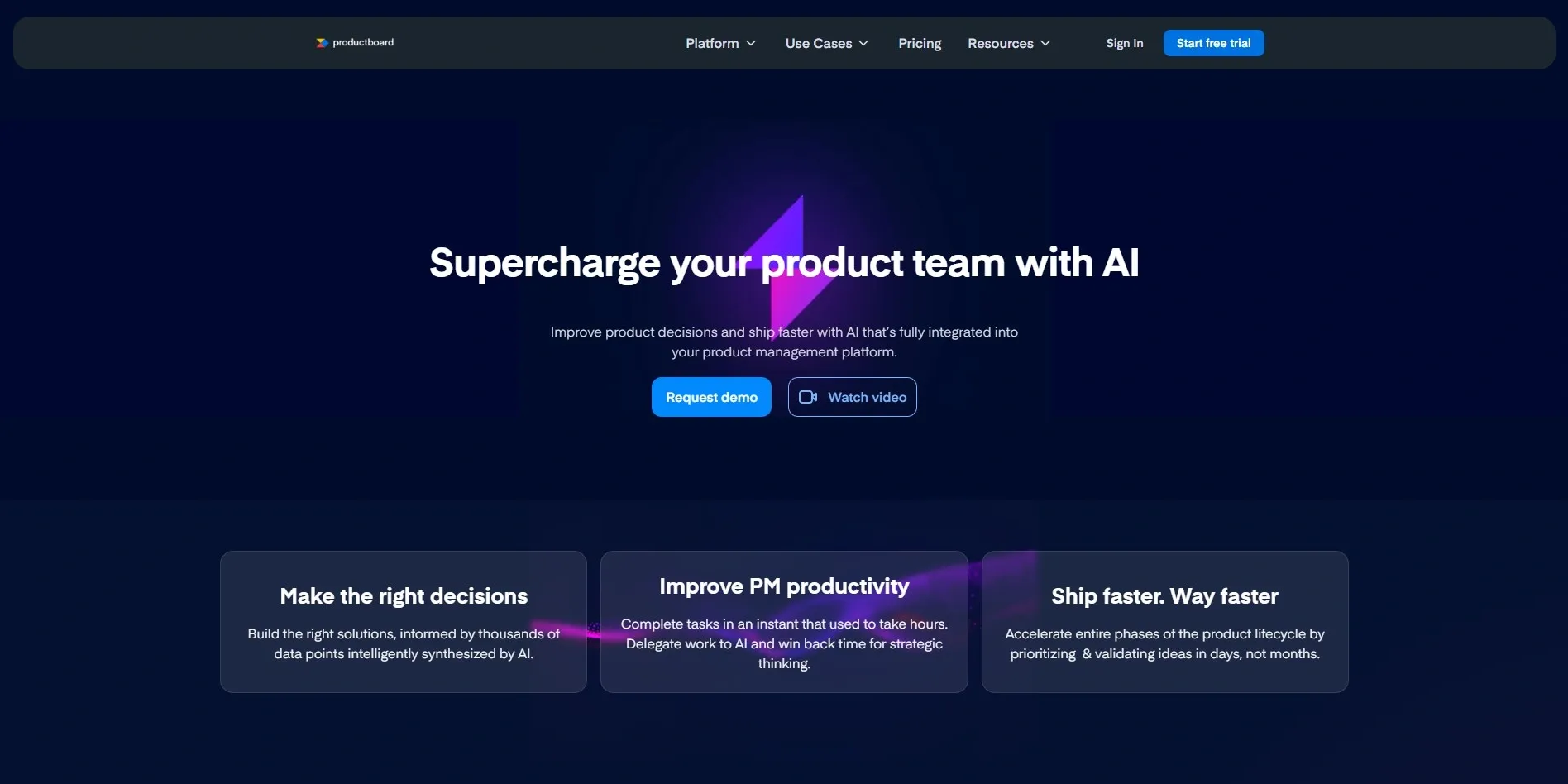
Productboard AI has long been a favorite for roadmapping, and its AI layer now clusters customer feedback automatically. You can see patterns across hundreds of feature requests without reading each one individually. It also helps align your roadmap with product strategy using AI-scored prioritization.
-
airfocus
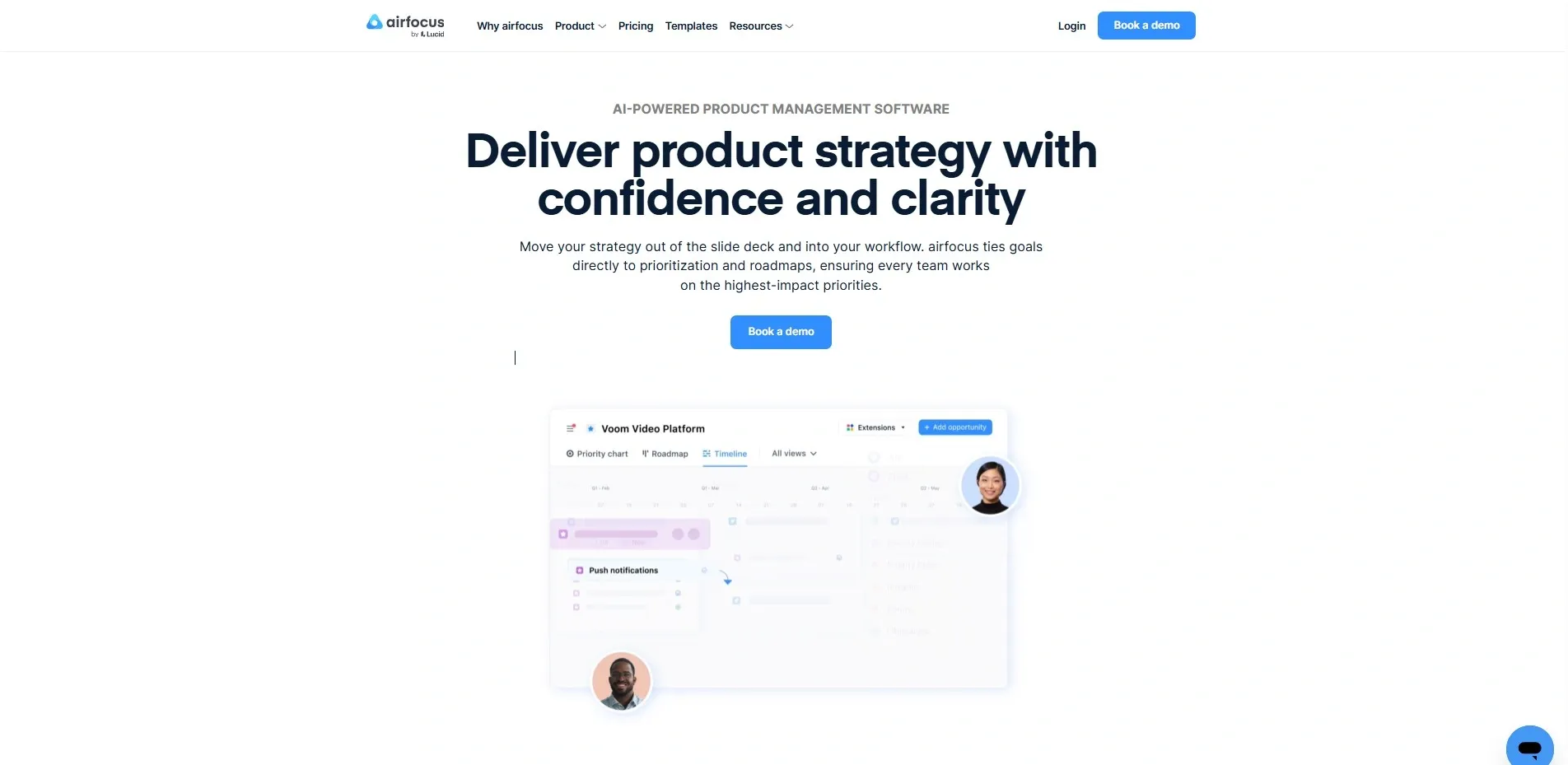
airfocus AI-powered scoring to feature prioritization. You set your criteria business value, user demand, complexity and the AI helps rank your backlog accordingly. Zeda.io goes a step further with market signal analysis, pulling in external data to inform priorities.
-
Chisel
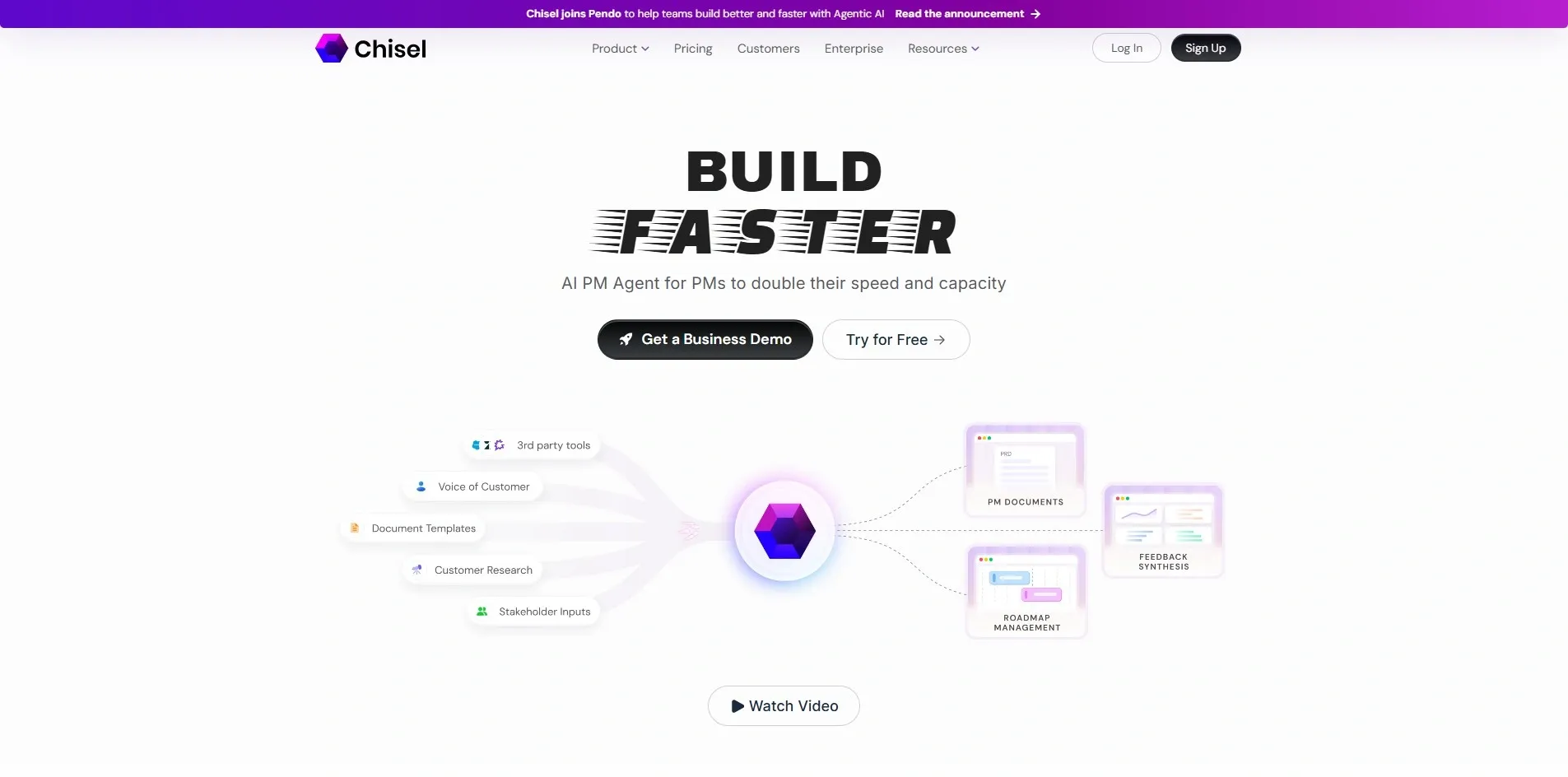
is an all-in-one PM workspace with AI built in. It handles roadmapping, team alignment, and user feedback in one place. If you are tired of juggling multiple tools, Chisel is worth a look as a consolidated option.
4. Analytics & Data Tools
-
Mixpanel Spark AI
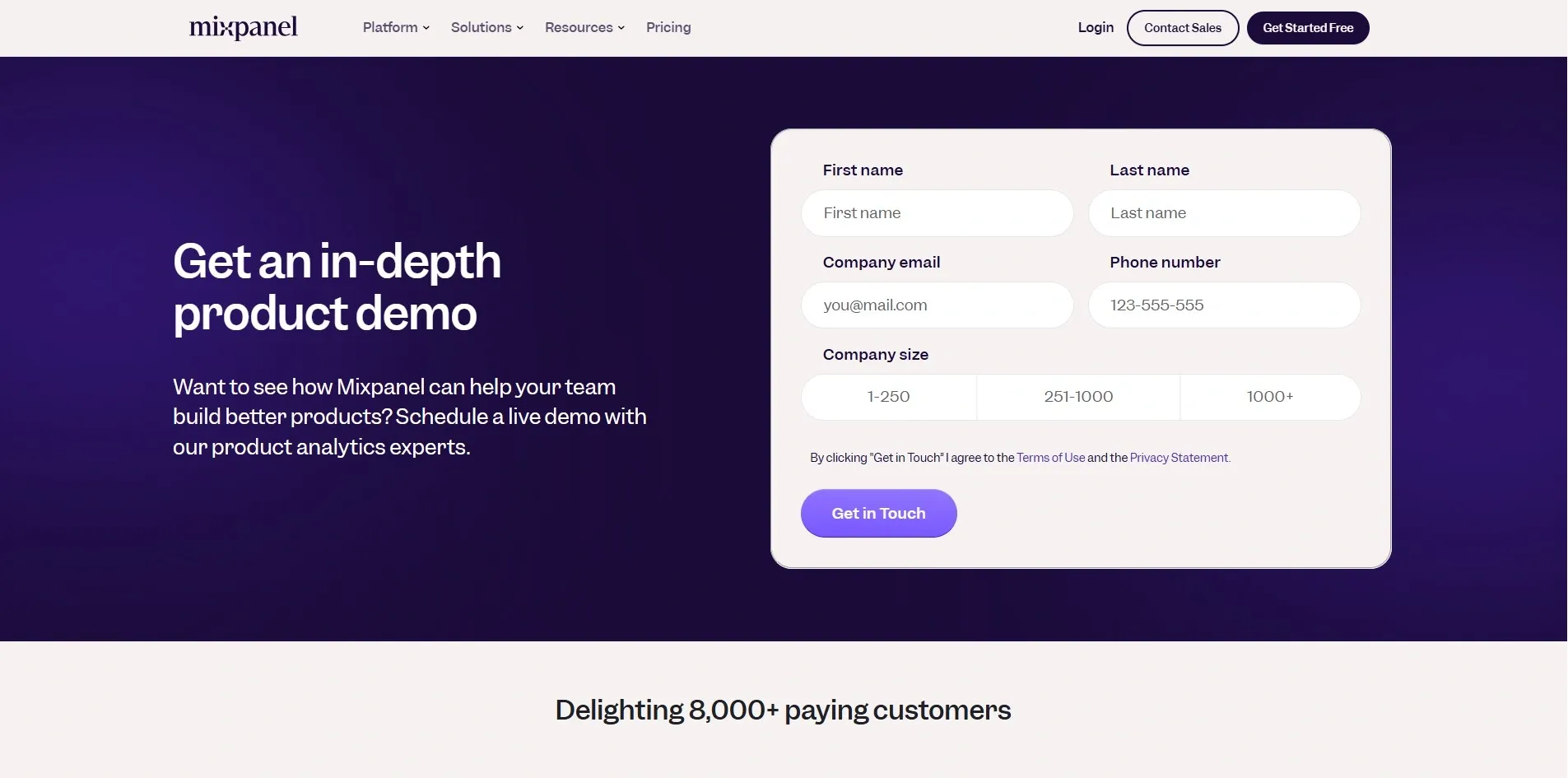
Mixpanel Spark AI lets you query your product analytics in plain English — no SQL required. Just ask what you want to know, and Spark surfaces the answer. It is a game-changer for PMs who want data-driven decisions without depending on a data team for every question.
-
Amplitude AI
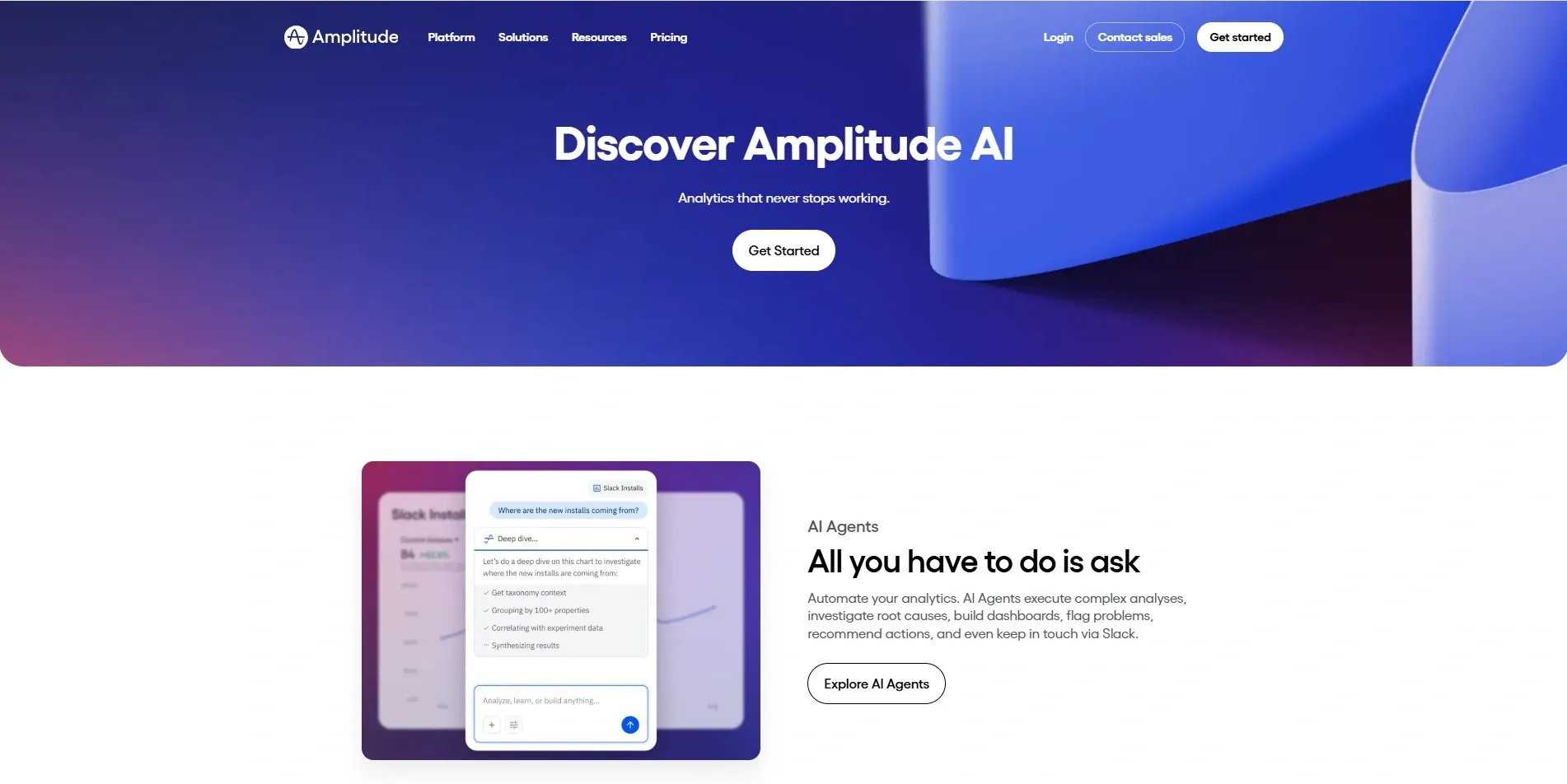
Amplitude AI offers deeper behavioral analysis features. It can predict user churn, identify power users, and surface anomalies in your metrics automatically. This is especially useful for teams with complex user journeys who need to understand behavior patterns across many steps.
-
H2O.ai
H2O.ai brings machine learning prediction engines to your product data for more advanced work. It is more technical than the others, but powerful for teams that want to build predictive models around user behavior, churn, or feature adoption.
5. Documentation & Collaboration
-
ClickUp AI
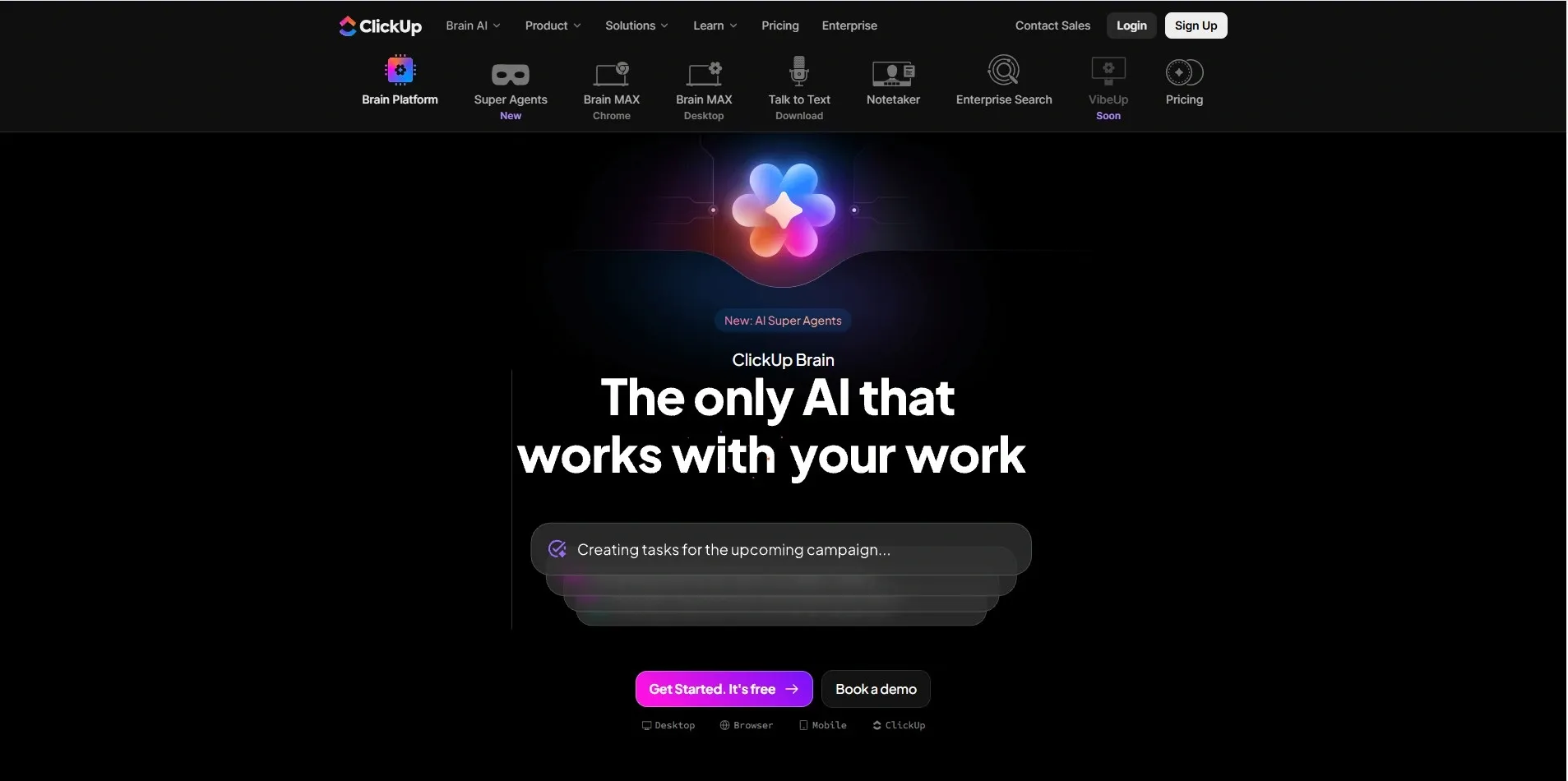
ClickUp AI integrates directly into your task management workflow. It can auto-generate task titles, write subtask descriptions, summarize project updates, and even draft sprint retrospectives. If you use ClickUp for project management, turning on the AI features is one of the easiest wins on this list.
-
tldv
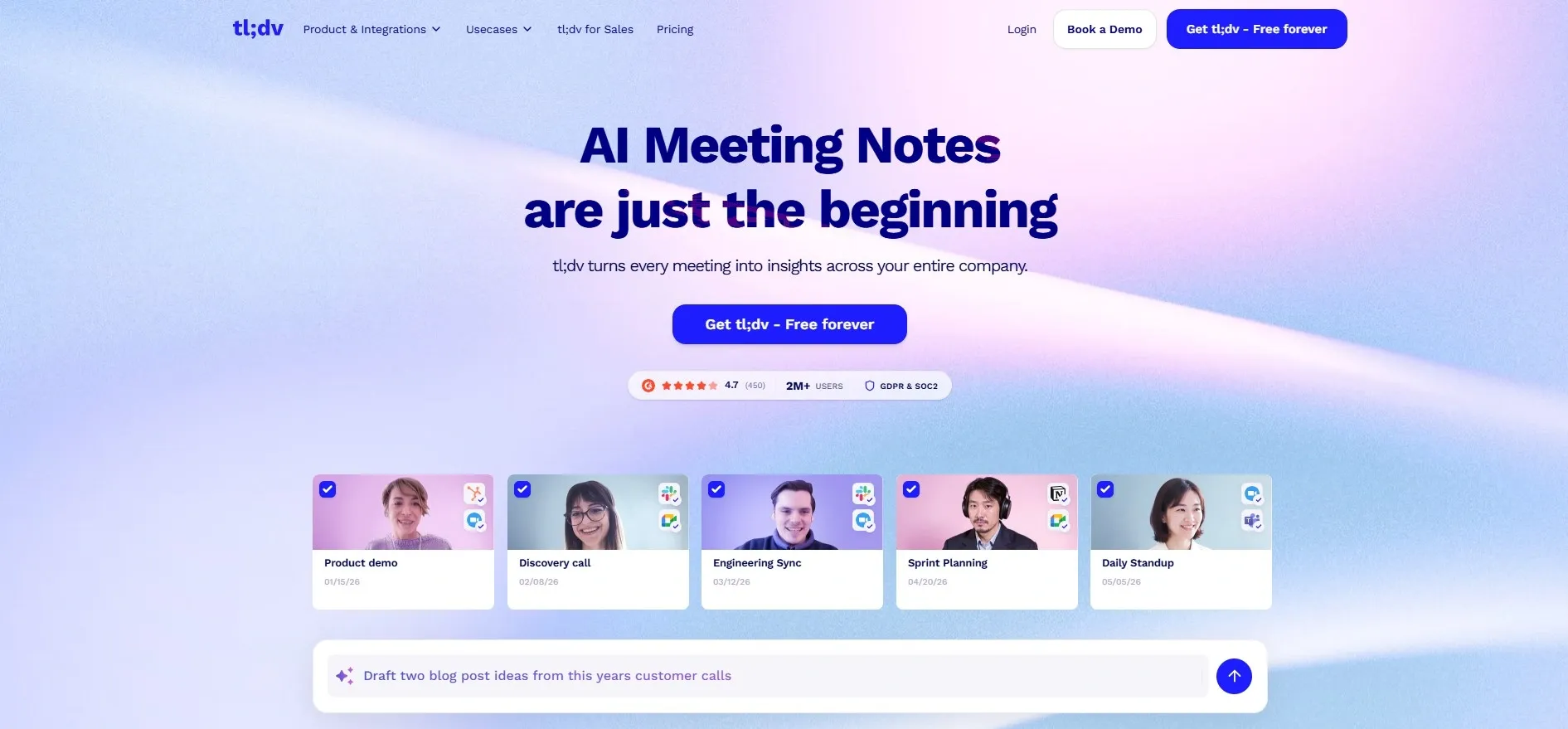
tl;dv automatically transcribes and summarizes your meetings, pulling out key decisions and action items. It even lets you clip specific moments to share with stakeholders who missed the call solving the problem of 90-minute Zoom recordings nobody wants to watch.
-
Figma AI Plugins
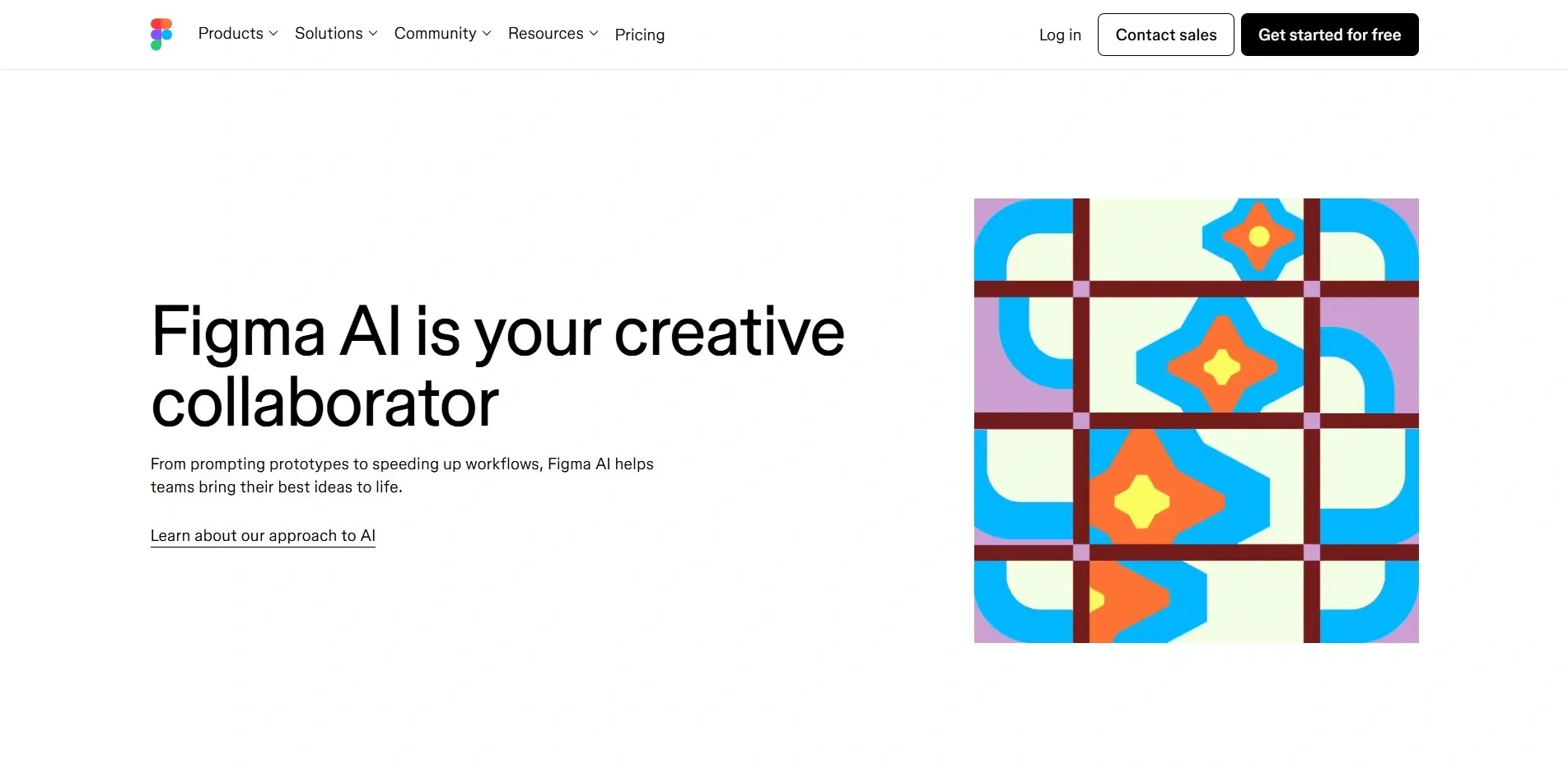
Figma AI Plugins help PMs who work closely with design teams with UI ideation, auto-layout suggestions, and rapid prototyping. You can describe a feature in plain English and get a rough wireframe as a starting point, making collaboration with designers much faster.
How to Choose the Right AI Tools
Not every tool is right for every team. Here is how to think about choosing from all the AI tools for product managers available today.
Start by matching tools to your actual job function. A solo PM at an early-stage startup needs different tools than a PM director managing multiple product lines. Think about the tasks that eat up the most of your time each week that is where to start.
Integration matters enormously. The best tool is one your team will actually use. If your engineering team runs on Jira and your documentation lives in Confluence, look for AI tools that connect with both rather than requiring everyone to change their workflow.
Assess costs against benefits carefully. The free tiers of most these tools offer real, practical value. Start there, prove out the value, and then invest in upgrades. Most teams only need essential features during their initial rollout.
Security and data privacy should not be an afterthought, especially when working with sensitive product data or customer information. Check each tool's data handling policies before sharing anything confidential.
Challenges & Best Practices with AI Tools
AI is powerful but not perfect. Hallucinations where AI confidently states something that is wrong are a real issue. Always verify important facts, especially anything going into a strategy doc or stakeholder presentation.
Bias in AI outputs is another thing to watch for. If your prompts reflect particular assumptions, the AI will too. Always sanity-check AI recommendations against your own judgment and diverse team perspectives.
Know when not to use AI. Some decisions require human judgment especially anything involving sensitive user data, ethical trade-offs, or high-stakes strategic calls. AI is a thinking partner, not a replacement for experienced product judgment.
Make it a habit to monitor AI outcomes. Track whether the features that AI helped you prioritize actually performed as expected. Over time, this feedback loop helps you use these tools more effectively.
The Future of AI in Product Management
Looking ahead, the top AI tools for product managers are going to get even more capable. We are moving toward AI that can simulate user behavior before you build a feature essentially letting you test ideas in a virtual environment. Prediction and simulation are going to change how PMs approach discovery entirely.
The other big shift is AI as a true collaborator. At present, AI functions as a tool that responds to input. The next wave will be AI that proactively identifies problems, recommends changes based on live data, and keeps teams synchronized in real time.
Adoption is accelerating fast. Teams that build strong AI workflows now will have a significant competitive advantage in 2027 and beyond. The PMs who figure out how to use these tools well are going to be the ones leading the biggest product teams.
Conclusion
Here is what to take away from this guide. AI tools for product managers are not a replacement for good product thinking they are a way to do more of it, faster, and with better data behind you.
If you are just getting started, pick one area: maybe documentation or research. Try NotebookLM for user research analysis, or Notion AI for writing faster. Get comfortable with one tool before adding more.
If you are a senior PM or PM leader, look at product manager AI tools that create leverage across your whole team. Productboard AI, Amplitude, and tl;dv can multiply the output of multiple people, not just yourself.
The best product manager tools in 2026 are the ones you actually use consistently. Start small, build habits, and watch how much more you can accomplish. The future of product management is here, and it is genuinely exciting.
If you want to implement AI workflows tailored specifically to your product team, RejoiceHub can help. From AI strategy consulting to custom AI agent development for product research, analytics, and automation, our team helps product-led companies scale smarter and faster.
Frequently Asked Questions
1. What are the best AI tools for product managers in 2026?
The best AI tools for product managers in 2026 include ChatGPT, Claude, Notion AI, Productboard AI, Amplitude AI, Mixpanel Spark, Perplexity AI, and tl;dv. Each tool serves a different purpose, from roadmapping and analytics to documentation and research.
2. How can AI tools help product managers save time?
AI tools help product managers save time by automating repetitive tasks like writing PRDs, generating user stories, summarizing meetings, and sorting through user feedback, freeing up more time for strategic thinking and decision-making.
3. Are AI tools for product managers suitable for early-stage startups?
Yes. Many AI tools for product managers offer free tiers or affordable plans that are well-suited for early-stage startups. Tools like Notion AI, ChatGPT, and Perplexity AI are great starting points with low to no upfront cost.
4. What is the best AI tool for product roadmapping?
Productboard AI is widely regarded as one of the best AI tools for product roadmapping. It automatically clusters customer feedback, scores feature priorities, and helps align your roadmap with overall business strategy.
5. Can AI tools replace product managers?
No. AI tools are designed to assist product managers, not replace them. High-stakes decisions involving ethics, user sensitivity, and strategic direction still require experienced human judgment. AI acts as a thinking partner, not a decision-maker.
6. What AI tools are best for product analytics?
Amplitude AI and Mixpanel Spark AI are the top choices for product analytics. Both allow product managers to query data in plain English without SQL knowledge, and Amplitude AI can even predict user churn and identify behavioral patterns automatically.
7. How do AI tools improve cross-functional collaboration for PMs?
AI tools improve cross-functional collaboration by automatically generating meeting summaries, creating shared context documents, and flagging when different teams are working toward conflicting objectives — keeping everyone aligned without manual effort.
8. What is the best AI tool for writing PRDs and product documentation?
Claude by Anthropic and Notion AI are both excellent for writing PRDs and product documentation. Claude produces long, well-structured documents with a natural tone, while Notion AI works seamlessly inside your existing workspace.
9. How should a product manager get started with AI tools?
Start by identifying the tasks that consume the most time in your weekly workflow. Pick one AI tool that addresses that specific need, such as Notion AI for documentation or NotebookLM for user research and get comfortable with it before adding more tools.
10. Are AI-generated product documents reliable?
AI-generated documents are a strong starting point, but should always be reviewed and edited. AI can occasionally produce inaccurate information, known as hallucinations, so it is important to verify key facts before using any AI output in strategy documents or stakeholder presentations.
11. What AI tools help with competitive intelligence for product managers?
Perplexity AI and Google Gemini are excellent for competitive intelligence. Perplexity AI delivers sourced, real-time answers to research questions, while Gemini excels at synthesizing large amounts of market and competitor information quickly.
12. How do I choose the right AI tool for my product management workflow?
Choose based on your specific job function, existing tech stack, and the tasks that take up the most time. Prioritize tools that integrate with platforms you already use like Jira or Confluence and always check data privacy policies before sharing sensitive product information.
13. What is the future of AI in product management?
The future of AI in product management includes user behavior simulation before features are built, proactive AI that flags risks and recommends roadmap changes in real time, and deeper team collaboration features. PMs who build strong AI workflows today will have a significant competitive advantage in the years ahead.