Let me be honest with you. When I first heard that 70% of marketers were using AI tools for email marketing, I was so confused. I thought it was just another trend that would scare me away. But after spending months testing different AI email marketing tools, I realized something important: the right tools can completely transform how you connect with your audience.
The biggest problem most of us face is simple. Email marketing takes too much time, and personalizing messages for hundreds or thousands of people feels impossible. I have been there, staring at a blank email template at 11 PM, trying to figure out what to write. That is exactly why AI for email automation has become such a game-changer.
In this guide, I am going to share everything I have learned about the best AI tools for email marketing. No design, no sales pitch. Just real experience and practical advice that you can use today.
What is AI Email Marketing?
You know what is interesting? Most people think AI email marketing tools are just fancy software that writes emails for you. But it is so much more than that.
Traditional email marketing means you write one message and send it to everyone. Maybe you segment your list into a few groups. But AI changes everything. It learns from your data, predicts what your audience wants, and personalizes content in ways we could never do manually.
I have noticed four main ways AI helps with email marketing, and each one solves a different problem:
-
Generative AI
This is the type everyone talks about. It writes your email copy, creates subject lines, and personalizes content based on who is reading. In my experience, this saves about 80% of the time I used to spend writing emails. The AI does not just copy templates. It actually understands your brand voice and adapts to different audiences.
-
Predictive AI
This is where things get really smart. The email marketing AI tools analyze when your subscribers are most likely to open emails. They predict who will engage and who might unsubscribe. I used to send all my emails at 9 AM because that is what some blogs told me to do. Now AI tells me that some of my subscribers prefer 2 PM on Thursdays. The difference in open rates is huge.
-
Automation AI
This handles the workflows. When someone signs up, downloads something, or clicks a link, AI triggers the right sequence. It handles objections automatically and knows when to pause or speed up communication. Most people struggle with this, so let me explain simply: imagine having a smart assistant who knows exactly what to send and when, based on how each person behaves. That is automation AI.
-
Deliverability AI
This is the unsung hero. What good is a perfect email if it lands in spam? AI warms up your email domain, detects spam triggers before you send, and optimizes for inbox placement. I learned this the hard way when my emails started going to spam folders. Deliverability AI fixed that problem within weeks.
Benefits of AI Email Marketing Tools
Here is what nobody tells you about email marketing: it is not just time-consuming. It is mentally draining. Every decision you make affects your results, and there are hundreds of decisions to make.
The best AI tools for email marketing solve five major problems that I see people struggling with every single day:
First, they save massive amounts of time. Creating one good email campaign used to take me 3-4 hours. Now it takes 30 minutes. That is not an exaggeration. AI handles the writing, suggests improvements, and even creates variations for different segments.
Second, personalization becomes real. You can customize content for each subscriber based on their behavior, preferences, and engagement history.
Third, your emails actually reach inboxes. AI-powered warmup pools gradually build your sender reputation. They detect words that trigger spam filters. They monitor your domain health constantly. Before I understood this, I was losing 30% of my emails to spam folders without even knowing it.
Fourth, engagement rates go up. When you send emails at the perfect time with the perfect message, people respond. AI figures out these patterns way better than we ever could. The tools run thousands of A/B tests automatically and optimize everything continuously.
Finally, you can scale without hiring a team. Whether you have 100 subscribers or 100,000, the AI for email works the same. This is huge for small businesses and solo entrepreneurs.
The 11 Best AI Email Marketing Tools I Have Tested
I spent months testing these tools. Some impressed me, some disappointed me, and a few completely changed how I think about email marketing. Let me walk you through each one.
1. Instantly.ai - Best for Cold Email Automation
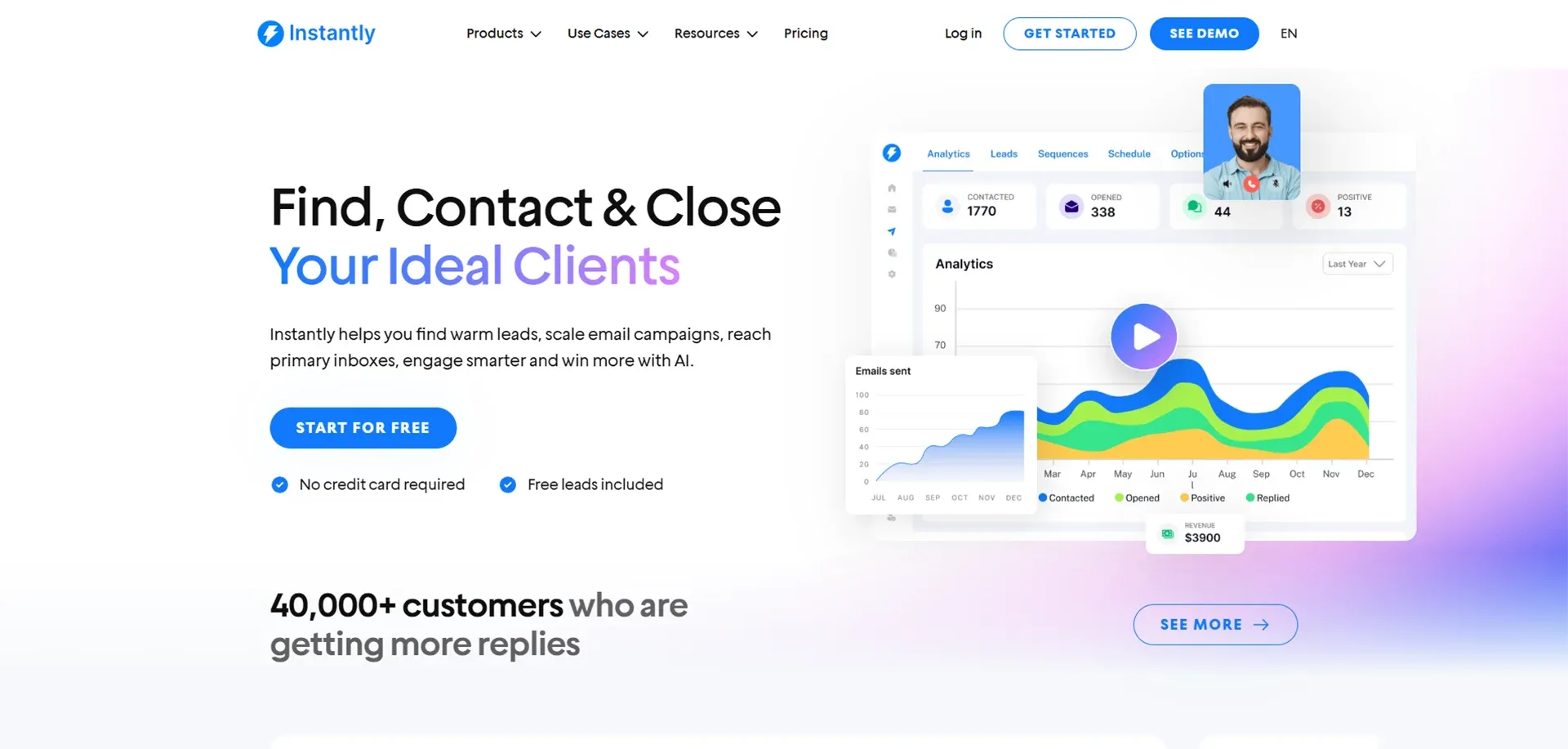
If you are doing cold outreach, Instantly.ai is probably the tool you need. It has a 4.8 rating on G2 from over 3,800 reviews, which tells you something.
What makes it special? The AI Reply Agent responds to emails automatically. The SuperSearch feature uses AI to find leads. The Sequence Writer creates entire email campaigns.
The unlimited warmup feature is what sold me. Your email domain builds credibility gradually, so your messages land in inboxes instead of spam. Pricing starts at just $37 per month for the Growth plan.
In my experience, this tool is perfect for B2B sales teams and anyone doing lead generation through cold email.
2. Encharge - Best for SaaS Companies
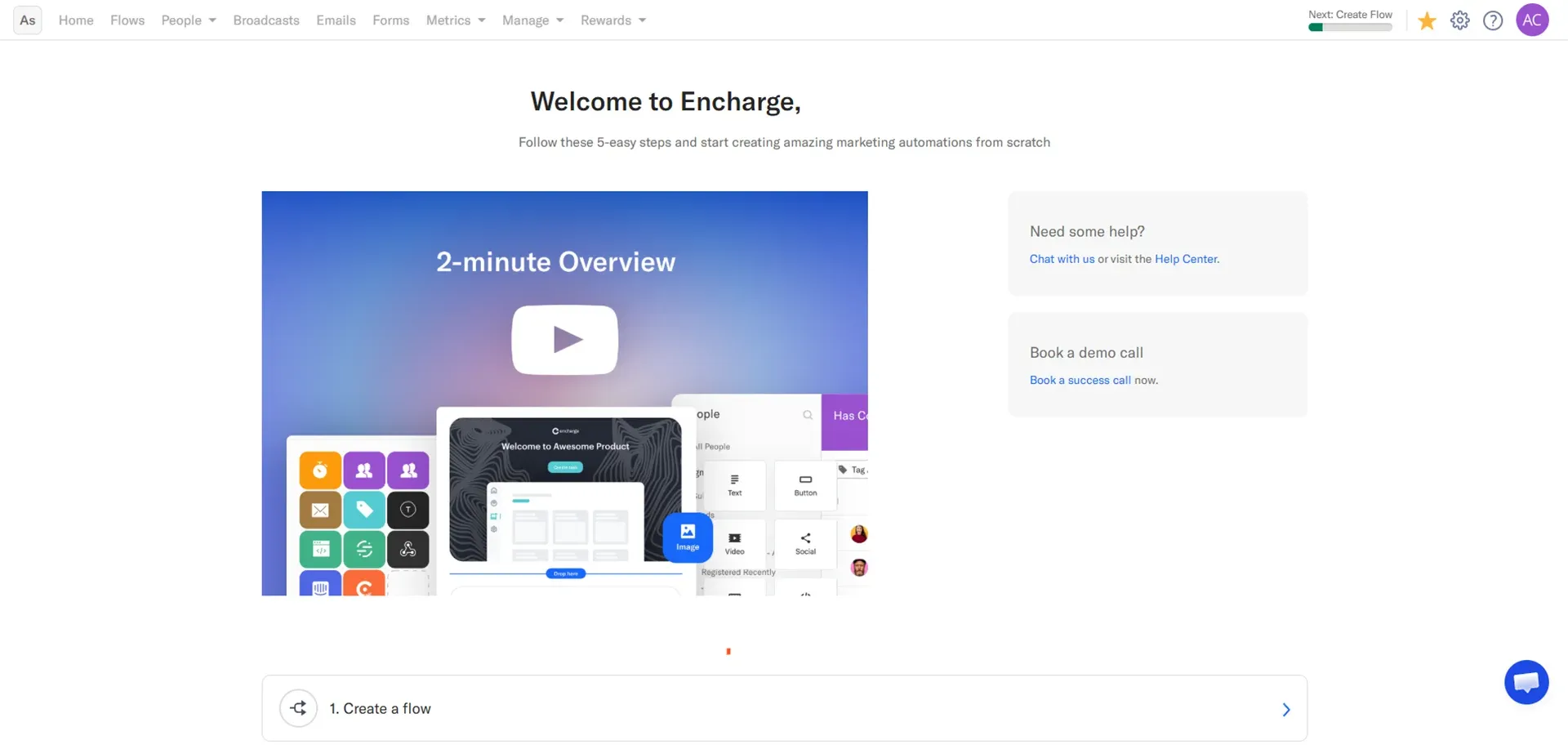
Encharge focuses on behavior-based automation, which is exactly what SaaS companies need. It has a 4.7 G2 rating with 353 reviews.
The AI-powered journey builder creates flows based on how users interact with your product. Predictive sending figures out when each person is most likely to engage. Smart segmentation groups users automatically based on behavior patterns.
I have noticed that product-led companies get the most value here. If you are running free trials or freemium models, Encharge helps convert users by sending the right message at the right moment in their journey.
3. ActiveCampaign - Best for Advanced Automation
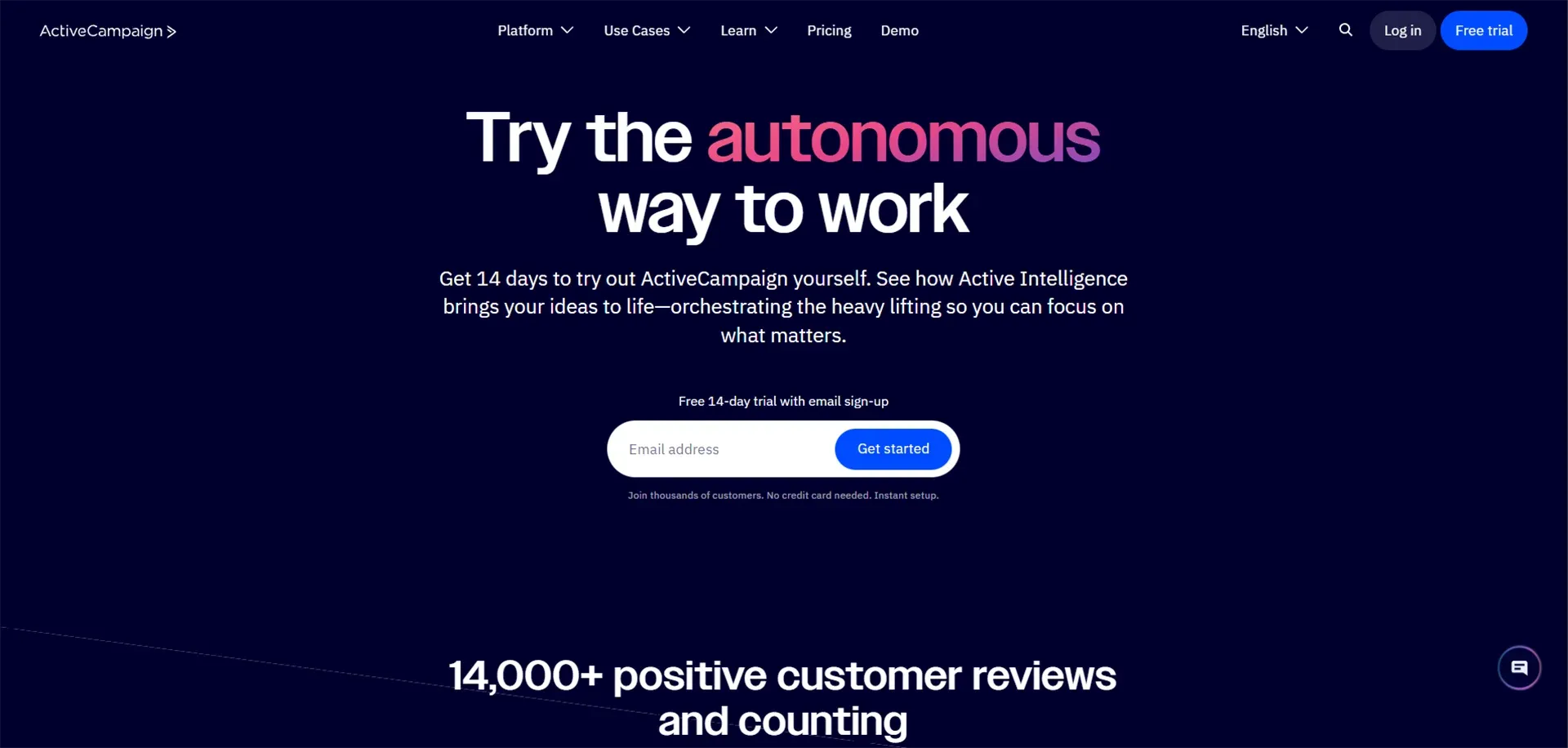
ActiveCampaign combines email marketing with CRM, which makes it powerful for businesses that need both. The 4.6 G2 rating reflects its robust features.
The predictive sending analyzes 18 months of data to find optimal send times. AI lead scoring ranks your contacts automatically. Smart content recommendations suggest what to write based on what works.
Pricing starts at $15 per month for the Starter plan, but you will likely need the Professional plan at $79 to access the best AI features. Most people struggle with the learning curve at first, but the results are worth it.
4. Klaviyo - Best for E-commerce
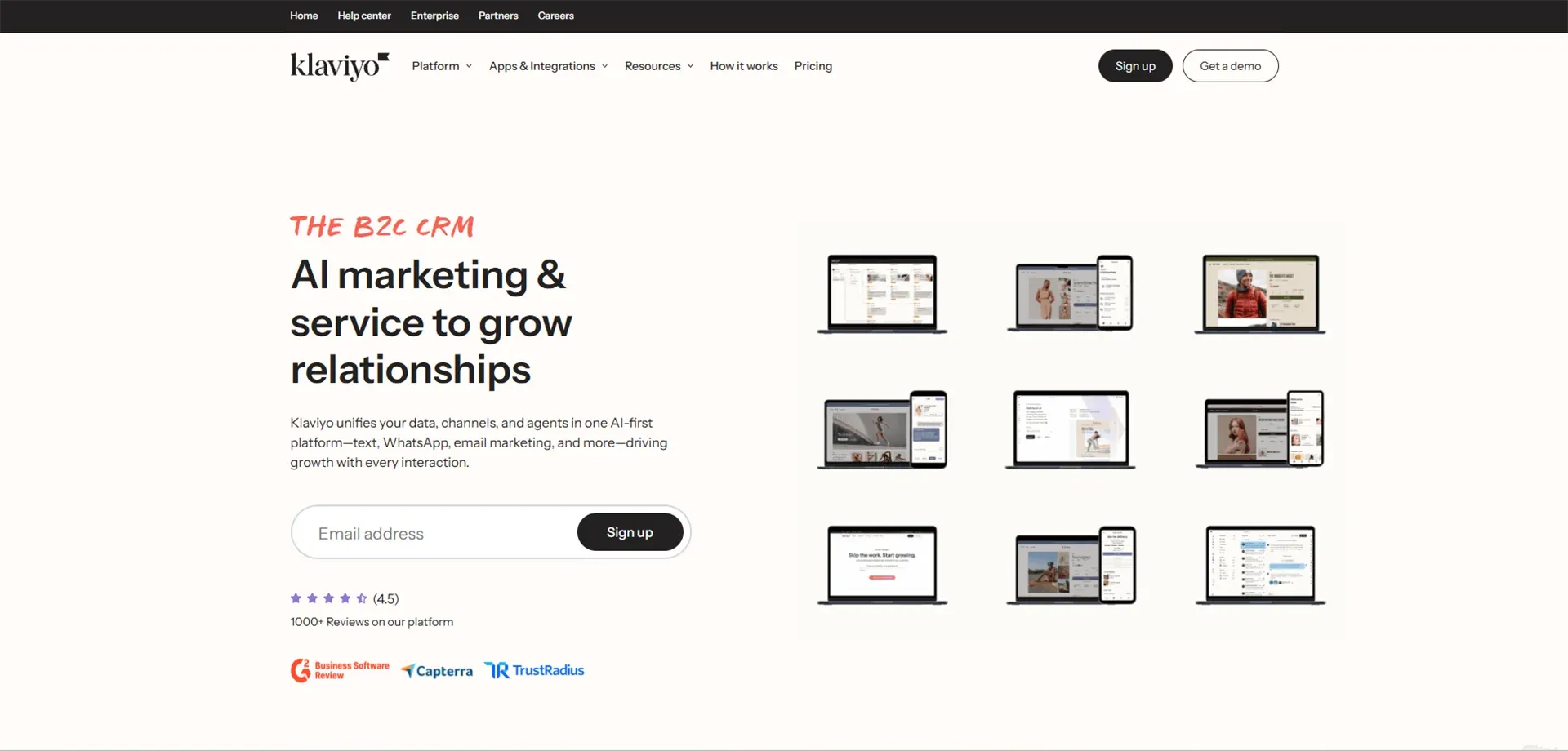
If you run an online store, Klaviyo is probably the best AI tool for email marketing you can find. It specializes in e-commerce with a 4.6 G2 rating.
Predictive lifetime value tells you which customers will spend the most. AI product recommendations show each person items they actually want. Purchase behavior segmentation groups customers by buying patterns.
The free plan works up to 250 contacts. After that, the Email plan starts at $45 per month. I have seen e-commerce businesses recover 25% more abandoned carts just by using Klaviyo properly.
5. Brevo - Best for Multi-Channel Marketing
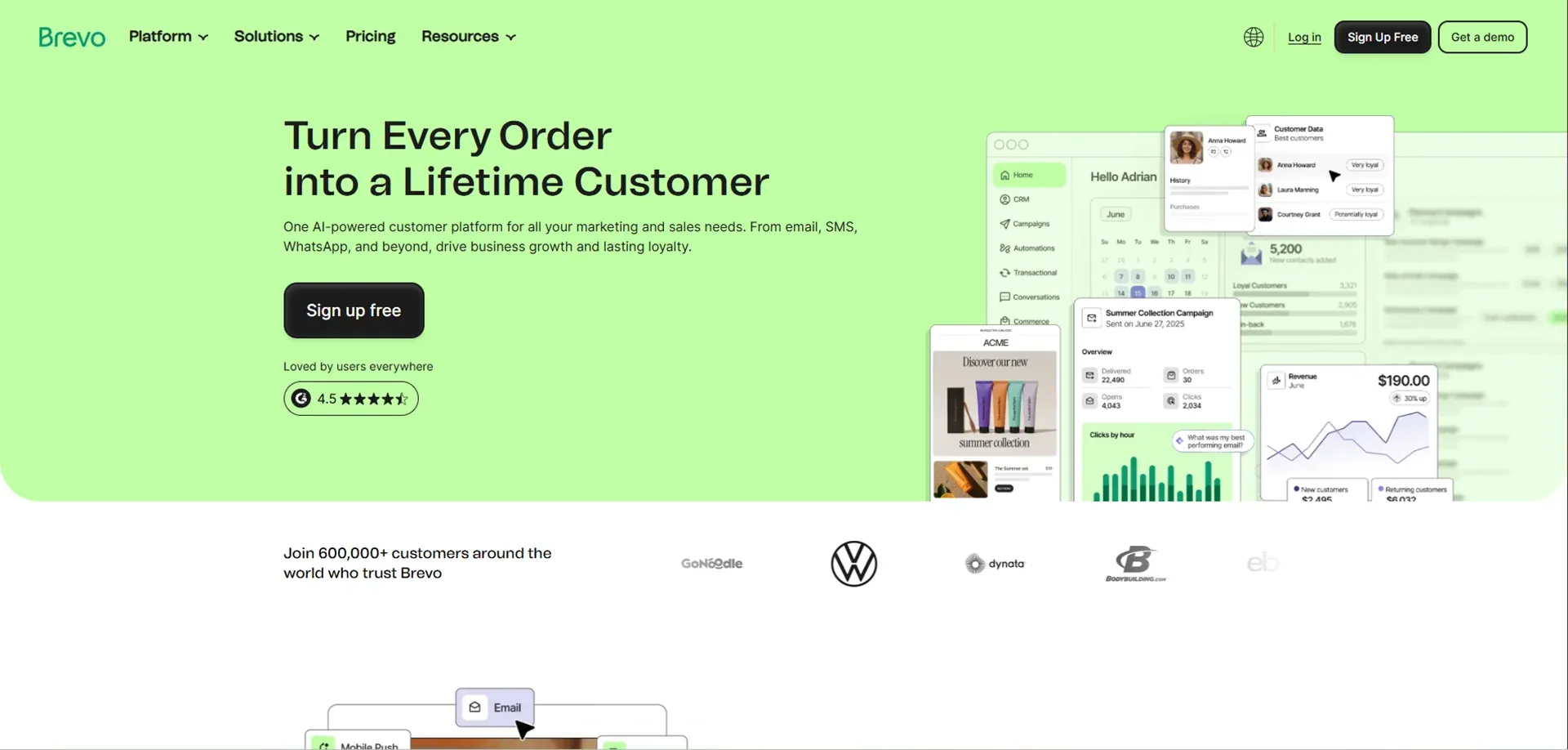
Brevo used to be called Sendinblue. It handles email, SMS, and WhatsApp all in one platform.
The AI subject line analyzer scores your subject lines before you send. Predictive send-time optimization finds the best sending windows. Smart segmentation divides your audience intelligently.
They offer a free tier, which is rare for tools this good. The Business plan starts at $16.17 per month. If you need to coordinate campaigns across multiple channels, this tool makes it simple.
Also read: Top 8 AI Tools for Sales in 2026:That Actually Work
6. HubSpot Marketing Hub - Best for Enterprise
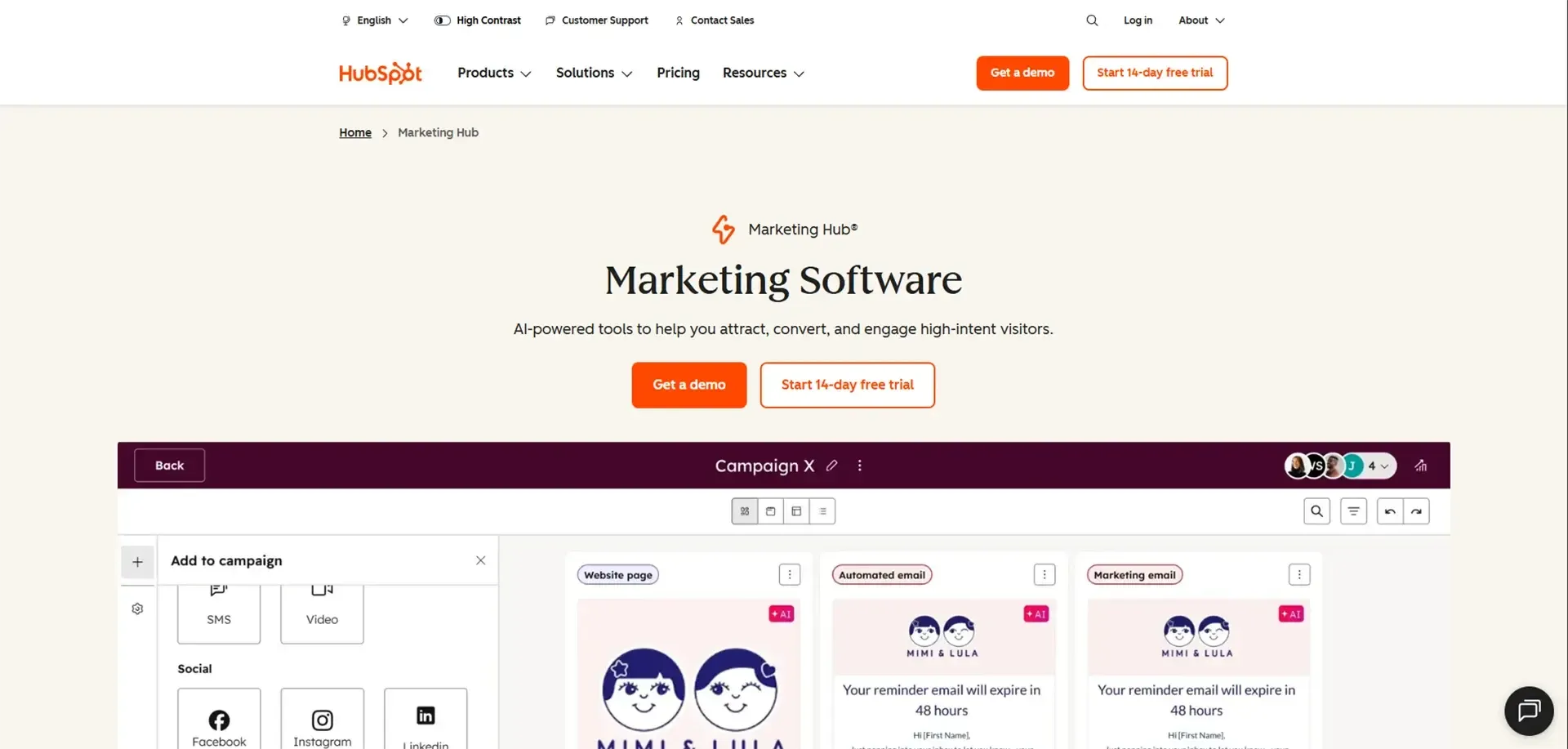
HubSpot is the enterprise solution that does everything. AI content generation, CRM-based personalization, and advanced lead scoring all come built in.
The Starter plan costs $20 per month, but serious businesses will need the Professional plan at $890. Yes, it is expensive. But if you are managing complex sales funnels with multiple touchpoints, HubSpot makes sense.
In my experience, smaller businesses should start elsewhere. HubSpot shines when you have a team and need everything integrated.
7. Seventh Sense - Best for Send-Time Optimization
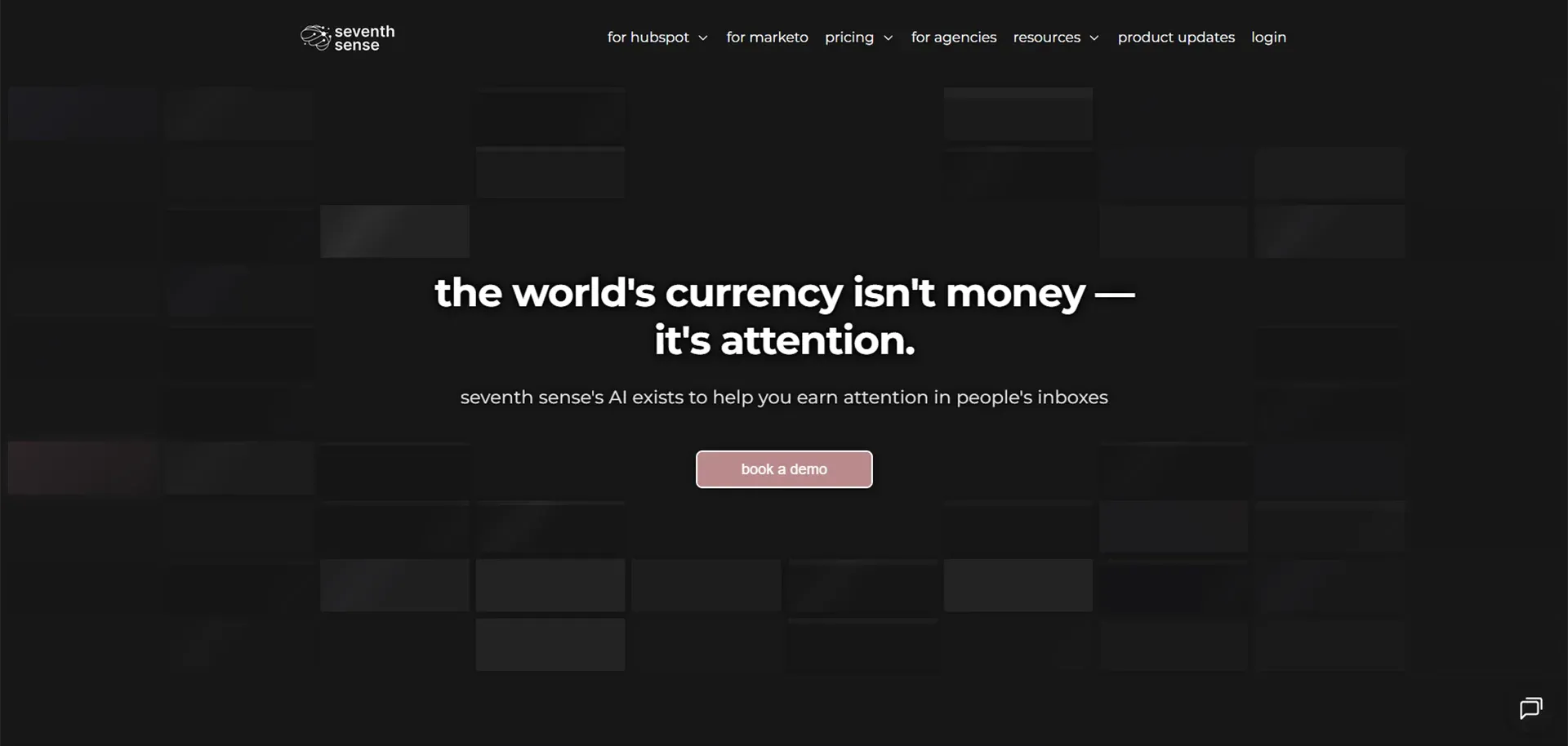
Seventh Sense specializes in one thing: figuring out when to send emails. It integrates with HubSpot and Marketo and has a 4.8 G2 rating.
Email frequency optimization prevents you from annoying subscribers. Dynamic segment suppression holds back emails when engagement drops. Pricing is custom based on your contact count. This tool is specialized, but it does its job incredibly well.
8. Clay - Best for Lead Enrichment
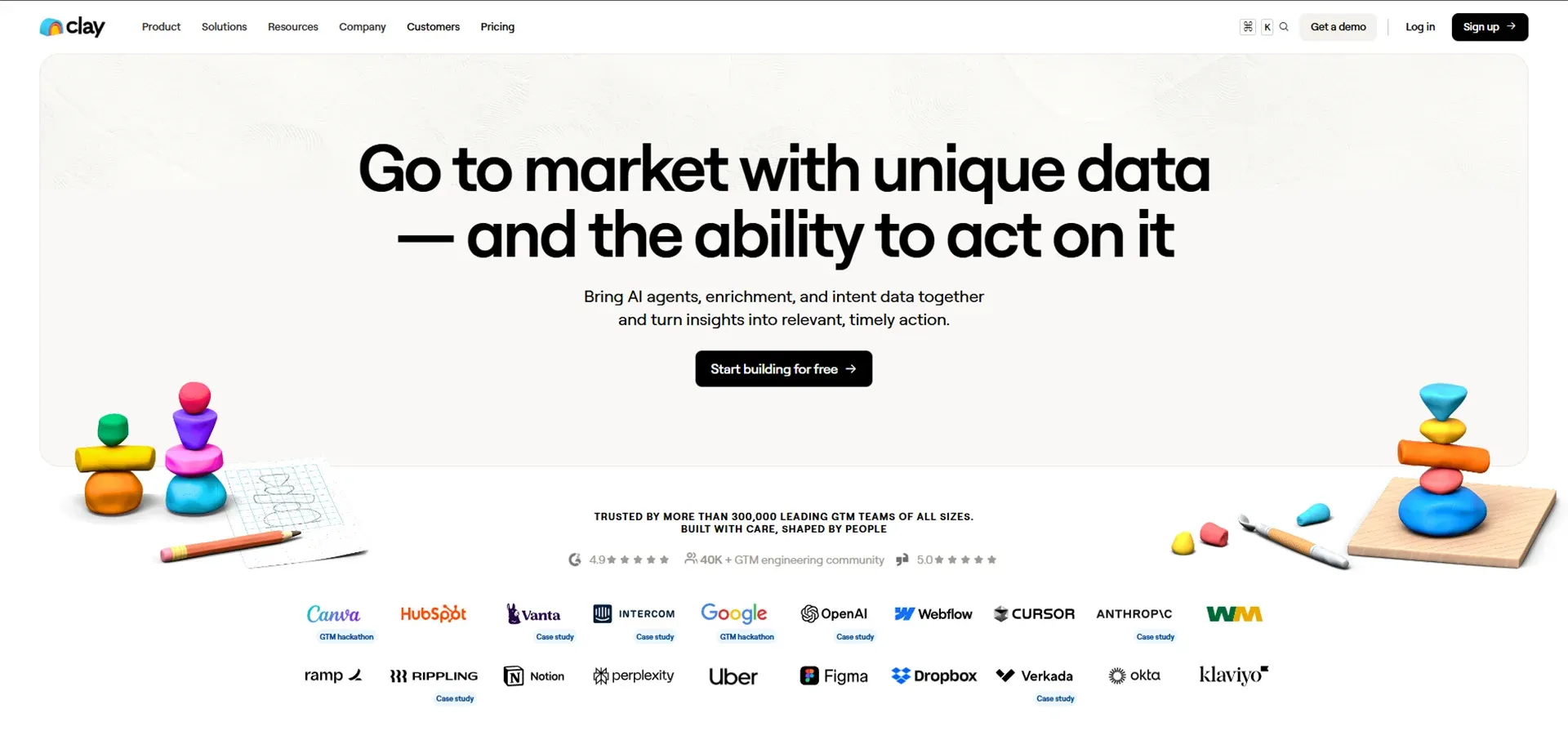
Clay is not exactly an AI email marketing tool in the traditional sense. It enriches lead data, which makes your email campaigns way more effective. The 4.8 G2 rating shows people love it.
Waterfall enrichment pulls data from over 50 sources until it finds what you need. The AI Research Agent gathers information automatically. This means you can personalize emails based on real, current data about each prospect.
They offer a free plan with 100 credits. The Starter plan gives you more. I use Clay to research leads before sending cold emails, and it has dramatically improved response rates.
9. Sender - Best Budget Option
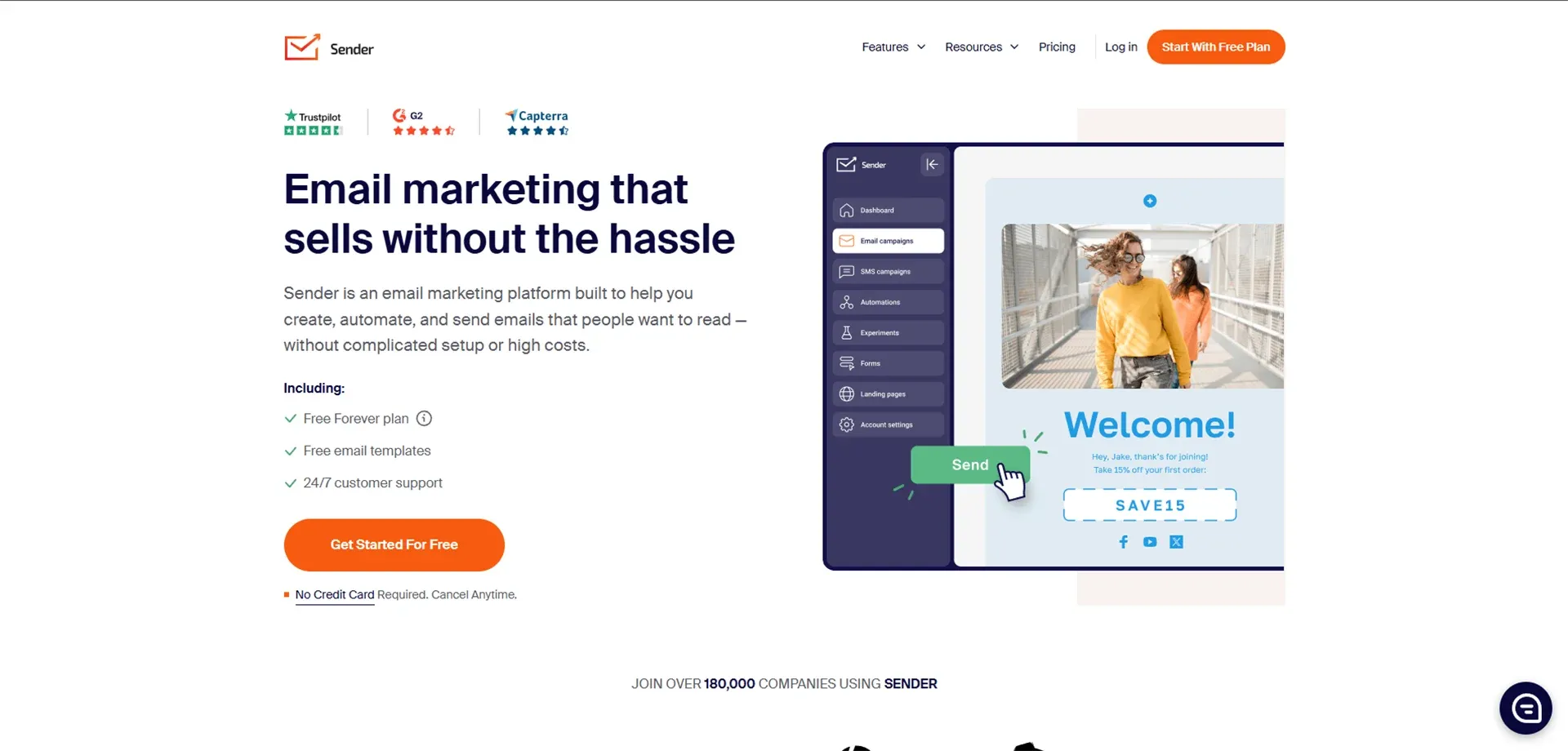
Sender gives you AI features without breaking the bank. The 4.7 G2 rating proves you do not need to spend thousands to get good results.
The free forever plan actually works for small lists. Paid plans start at just $10 per month. If you are starting out or running a small business, this is where I would begin.
10. Ortto - Best for Lead Prioritization
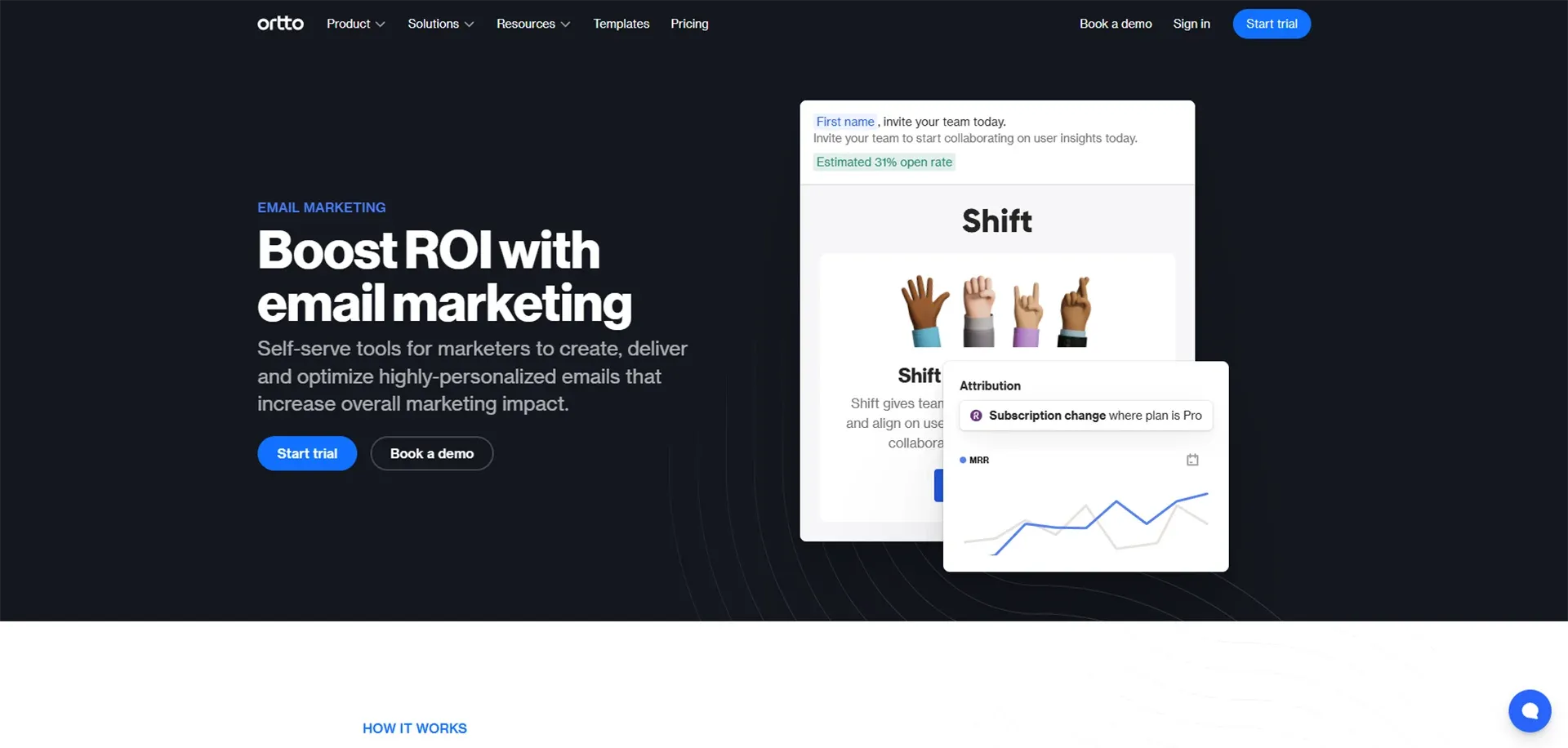
Ortto uses AI to tell you which leads matter most. It has a 4.4 G2 rating.
AI Filters let you segment using natural language. Just type what you want, and it creates the segment. Predictive engagement scoring ranks leads by likelihood to convert. Subject line optimization improves open rates.
Pricing starts at $199 per month for 5,000 contacts. It is not cheap, but the lead scoring alone can justify the cost if you are in B2B sales.
11. Drip - Best for E-commerce Automation
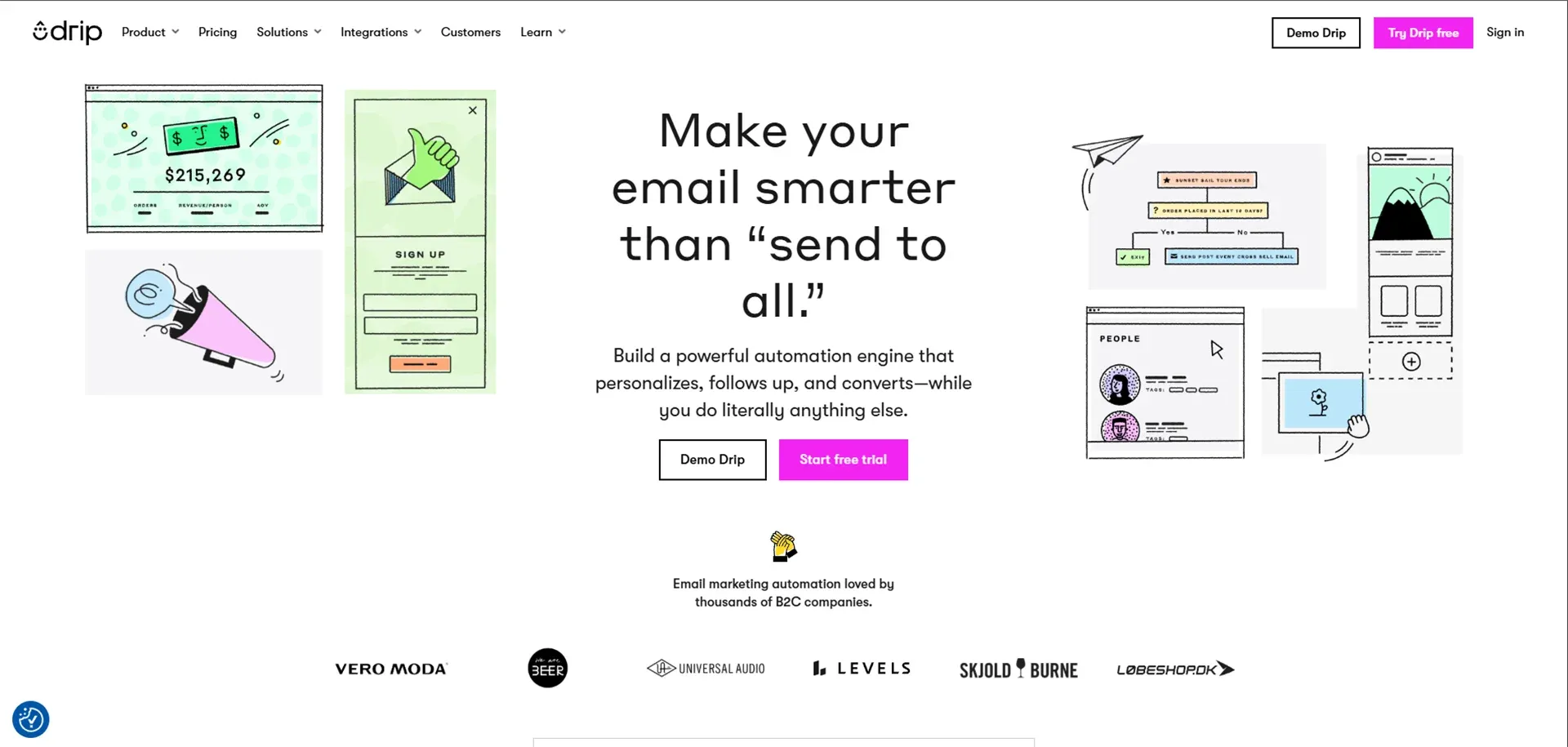
Drip is another e-commerce specialist. AI product recommendations show customers what they want. Cart abandonment triggers recover lost sales automatically. Behavioral tracking follows every interaction.
Pricing starts at $39 per month. If you are choosing between Drip and Klaviyo for e-commerce, both are excellent. I slightly prefer Klaviyo for larger stores and Drip for smaller ones.
How to Choose the Right Tool
Most people struggle with this decision. They see all these AI tools for email marketing and feel overwhelmed. Let me make it simple.
Start by asking yourself what problem you are trying to solve. Are you doing cold outreach to generate leads? Go with Instantly.ai. Running a SaaS product? Encharge makes more sense. Selling physical products online? Choose Klaviyo or Drip.
Check what integrations you need. Does the tool connect with your CRM? Your e-commerce platform? Your other marketing tools? Integration problems cause more headaches than anything else.
Finally, think about scale. Some tools charge based on contacts, some on emails sent. Make sure the pricing makes sense as you grow. I learned this lesson when my contact list grew and my costs tripled overnight.
Real Results from Real Businesses
Let me share some results I have seen from businesses using these email marketing AI tools.
A SaaS company I worked with used Encharge for onboarding emails. They saw a 10% increase in trial activation rates within two months. The AI figured out exactly when to send tutorials and feature highlights based on user behavior.
A B2B company used Instantly.ai for lead generation. They went from 5 qualified meetings per month to 15. The AI sequence writer created personalized outreach at scale, and the warmup feature ensured inbox placement.
These are not special cases. This is what happens when you use the right AI for email for your specific situation.
Future of AI in Email Marketing
The future of AI email marketing tools is getting really interesting. We are moving toward hyper-personalization, where every single email is uniquely crafted for each recipient based on hundreds of data points.
Multi-channel AI planning will coordinate email with SMS, social media, and other channels automatically. The AI will know which channel works best for each person and optimize accordingly.
Predictive customer lifetime value will get more accurate. Tools will tell you not just who might buy, but how much they will spend over their entire relationship with your business.
In my opinion, we will see more sophisticated AI agents that handle entire customer journeys with minimal human input. Better deliverability algorithms will ensure emails reach inboxes despite increasingly strict spam filters. And privacy compliance features will become even more important as regulations evolve.
Conclusion
Here is what I want you to remember. The best AI tools for email marketing are not the most expensive ones or the ones with the most features. They are the tools that solve your specific problems.
If I had to pick just three to recommend, it would be Instantly.ai for cold outreach, Klaviyo for e-commerce, and ActiveCampaign for everything else. But your choice should depend on your business type, budget, and goals.
Start with one tool. Learn it well. Get results. Then expand if needed. Too many people buy multiple tools and use none of them effectively.
The most important thing is to actually start. Pick a tool from this list, sign up for the free trial, and send your first AI-powered campaign this week. You will be amazed at how much time it saves and how much better your results become.
Email marketing with AI is not perfect, but it is incredibly powerful when done right. I hope this guide helps you find the perfect AI email marketing tools for your business.
Frequently Asked Questions
1. What are AI tools for email marketing and how do they work?
AI tools for email marketing use smart software to help write emails, pick the best time to send them, and group contacts based on behavior. They learn from past campaigns to improve open rates, clicks, and replies without needing manual work every time.
2. Are AI email marketing tools good for small businesses?
Yes, AI email marketing tools are great for small businesses because they save time and reduce guesswork. Even with a small team, you can send personalized emails, set up automation, and track results easily without hiring a full marketing department.
3. What is the difference between email marketing AI tools and regular tools?
Regular tools mostly help you send emails. Email marketing AI tools go further by suggesting subject lines, writing content, choosing the best send time, and learning what each subscriber likes, which helps improve results with less manual effort.
4. Which are the best AI tools for email marketing in 2026?
Some of the best AI tools for email marketing in 2026 include Instantly.ai for cold emails, Klaviyo for e-commerce, ActiveCampaign for automation, and Encharge for SaaS. Each tool fits a different business type and marketing goal.
5. Can AI for email really improve open rates?
Yes, AI for email can improve open rates by testing different subject lines, tracking when users usually open emails, and sending messages at the right time. This makes your emails feel more relevant instead of random or badly timed.
6. Are AI email marketing tools safe to use with customer data?
Most trusted AI email marketing tools follow strong security rules and data protection laws. They usually offer encryption and privacy settings, but it is always smart to read their data policy and choose platforms that follow GDPR and other privacy standards.
7. How much do AI tools for email marketing usually cost?
The cost of AI tools for email marketing can range from free plans to several hundred dollars per month. Pricing often depends on how many contacts you have and which features you need, such as automation, analytics, or advanced personalization.
8. Can I use AI email marketing tools for cold outreach?
Yes, some AI email marketing tools like Instantly.ai are built for cold outreach. They help find leads, warm up email domains, write personalized messages, and follow up automatically, which can improve reply rates without sounding spammy.
9. Do AI email marketing tools write emails by themselves?
AI email marketing tools can write drafts, subject lines, and short messages for you. You still have control to edit and adjust the tone, but the AI helps save time by giving you a strong starting point instead of a blank screen.
10. What businesses benefit most from email marketing AI tools?
Online stores, SaaS companies, service providers, and B2B businesses benefit the most from email marketing AI tools. Any business that sends regular emails can use AI to improve timing, personalization, and follow-ups without increasing workload.
11. Can AI tools for email marketing help avoid spam folders?
Yes, many AI tools for email marketing track spam triggers, warm up sending domains, and test deliverability. This helps your emails land in inboxes instead of junk folders, which can make a big difference in open and reply rates.
12. Is it hard to learn how to use AI email marketing tools?
Most AI email marketing tools are designed for beginners. They offer templates, guides, and simple dashboards. While advanced features may take time to learn, basic email campaigns and automation can usually be set up in a few hours.
13. Can AI for email personalize messages for each user?
Yes, AI for email can personalize messages using names, past actions, purchases, or browsing behavior. This makes emails feel more natural and relevant, which often leads to higher clicks, replies, and sales over time.
14. What should I look for before choosing an AI email marketing tool?
Before choosing a tool, check if it works with your CRM, website, or store. Look at pricing as your list grows, ease of use, and features like automation, analytics, and personalization that match your business needs.
15. Are free AI email marketing tools worth using?
Free AI email marketing tools are worth using if you are just starting. They let you test features like automation and basic personalization. As your business grows, you can move to paid plans for better insights and more advanced tools.