Let me be honest with you, when I first heard about AI tools for stock trading, I was skeptical. I thought it was just another tech gimmick that would fade away. But after spending months testing these platforms and watching how they've transformed the way people trade, I've completely changed my mind.
The truth is, artificial intelligence has genuinely revolutionized stock trading in 2026. These aren't your grandfather's trading tools anymore. We're talking about systems that can scan thousands of stocks in seconds, detect patterns the human eye would miss, and help you make smarter decisions without the emotional baggage that usually comes with trading.
In this guide, I'm going to walk you through everything you need to know about AI trading tools.
What Are AI Trading Tools?
Before we dive into specific tools, let me explain what these AI tools for stock trading actually do. In simple terms, they use artificial intelligence to analyze market data and help you make better trading decisions.
Think about it this way: imagine having a super-smart assistant who never sleeps, never gets tired, and can process millions of data points while you're having your morning coffee. That's essentially what AI trading software does.
These tools use technologies like machine learning, natural language processing, and pattern recognition. But don't let the technical jargon scare you. What matters is this: they help you spot opportunities and avoid mistakes that emotional trading often causes.
In my experience, the biggest difference between traditional trading software and AI trading tools is the learning ability.
How AI Trading Actually Works?
Most people get confused about how these tools function, so let me break it down simply. The process usually involves four main steps:
First, the AI collects massive amounts of data, such as stock prices, news articles, social media sentiment, economic indicators, and more. We're talking about information from thousands of sources being processed simultaneously.
Second, it analyzes this data using complex algorithms. It looks for patterns, correlations, and anomalies that might indicate a trading opportunity. The speed here is remarkable. What would take you days to analyze happens in seconds.
Third, it generates signals or recommendations. Some best AI trading tools will tell you exactly when to buy or sell. Others provide insights that help you make your own decisions.
The Best AI Tools for Stock Trading in 2026
After testing dozens of platforms, I've narrowed down the list to the ones that actually deliver value. Here are my top picks for different types of traders:
1. TradeEasy AI — Best for News-Driven Trading
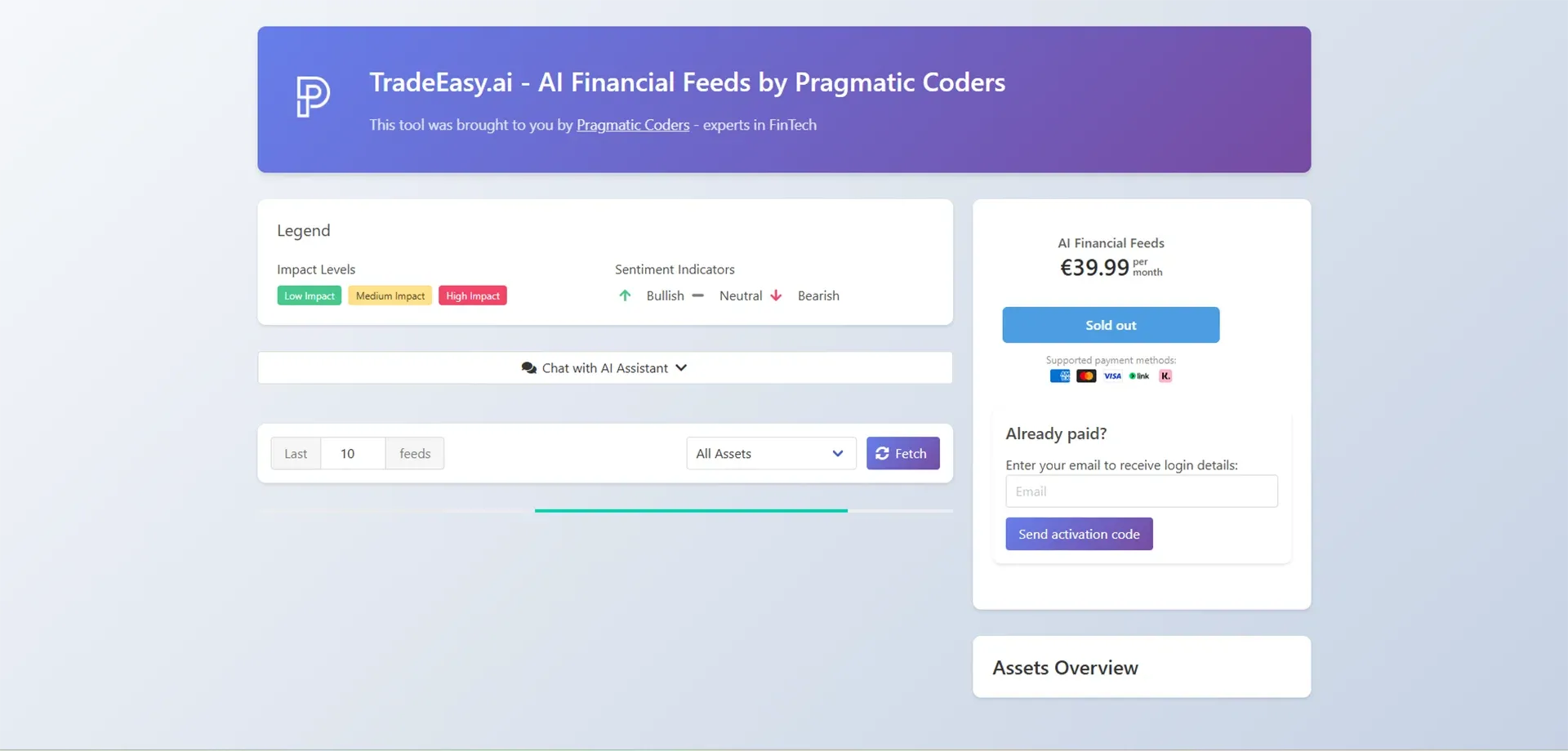
I love TradeEasy AI because it's completely free and focuses on something most traders overlook: news sentiment. This tool scans financial news from multiple sources and tells you whether the sentiment is bullish, neutral, or bearish.
What makes it special is the conversational AI assistant. You can literally ask questions like 'What's happening with tech stocks today?' and get intelligent answers backed by real data. It covers stocks, crypto, forex, and commodities.
The best part? It doesn't push you to make trades. It's purely a research tool, which I find refreshing.
2. Agent Factory — Best for Customization
If you want to build your own AI trading tools without coding, Agent Factory is fantastic. It's a no-code platform from monday.com that lets you create custom AI assistants for specific trading tasks.
I've used it to create agents that monitor specific sectors, track earnings announcements, and scan for technical patterns. The free plan gives you one agent with 200 credits, which is enough to experiment. For serious traders, the $49 per month plan offers 10 agents.
3. TrendSpider — Best for Technical Traders
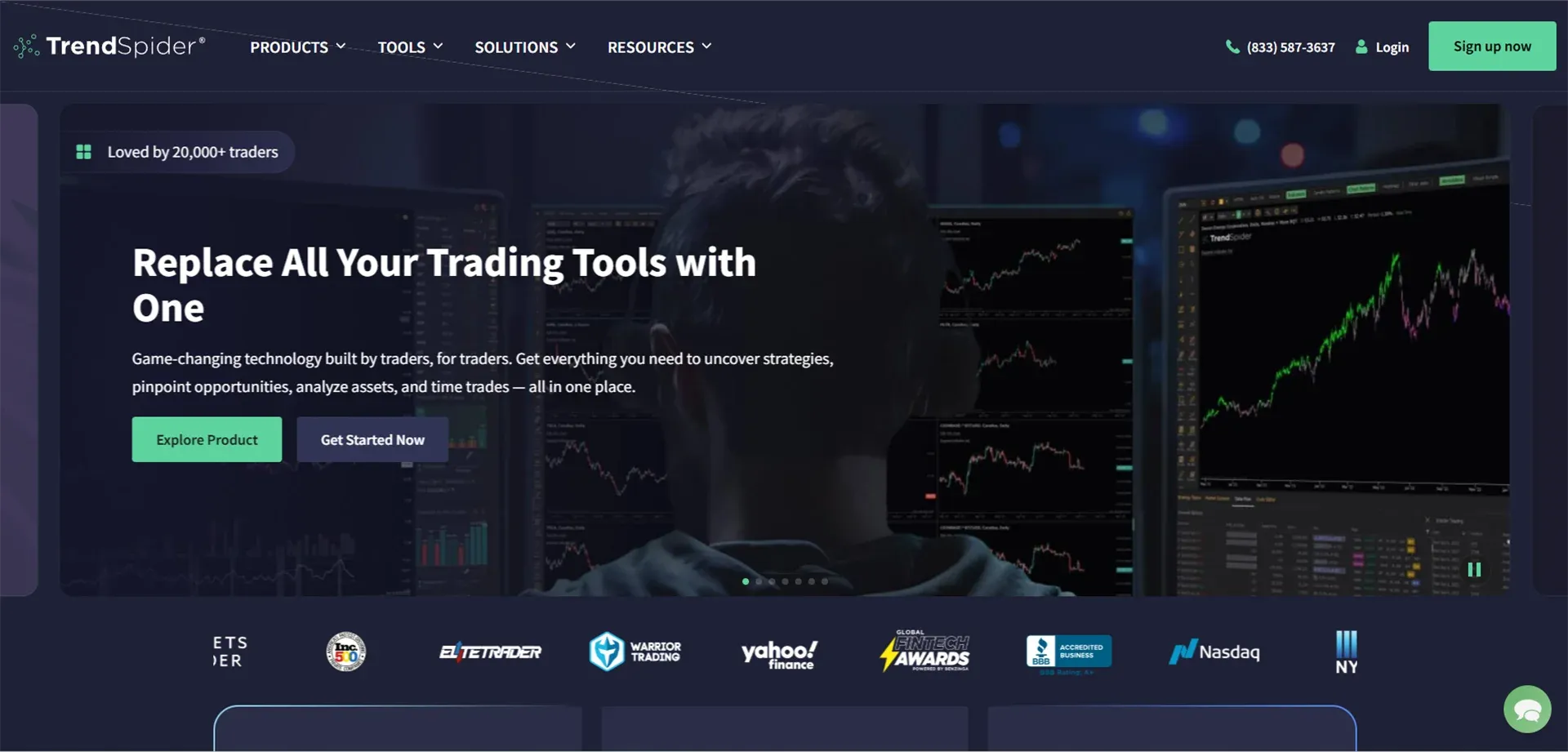
TrendSpider is one of the most impressive AI tools for stock trading I've encountered. It automatically draws trendlines, detects over 150 candlestick patterns, and analyzes multiple timeframes simultaneously.
The Sidekick AI assistant, powered by Claude 4.5 and GPT-5, can generate trading scans and scripts based on simple requests. I once asked it to 'find stocks with bullish divergence on the RSI,' and it created the scan in seconds.
4. Trade Ideas — Best for Day Traders
Trade Ideas built its reputation on the Holly AI engine, which generates specific trade signals with entry and exit points. This isn't just pattern recognition — Holly runs millions of backtests every night to find high-probability setups.
The premium plan costs $254 per month, or about $178 if paid annually. For active day traders who want automated execution, the Money Machine feature is impressive. It can execute trades based on Holly's signals without you clicking a button.
However, I always recommend starting with their manual mode to understand how the AI thinks.
Also Read: What Is AI Trading and How Does It Transform the Market?
5. QuantConnect — Best for Developers
QuantConnect is for traders who can code. It's an institutional-grade platform that supports Python and C# for building algorithmic trading strategies.
The cloud-based research terminal uses Jupyter notebooks, and you get access to terabytes of historical data. The free tier is generous enough for development and learning. The Researcher plan at $60 per month unlocks more computing power and live trading with over 20 broker integrations.
What sets QuantConnect apart is the Model Context Protocol support, which lets AI agents interact with your strategies.
6. TradingView — Best Overall Platform
TradingView is the world's most popular charting platform for good reason. It combines professional-grade charts with a massive community of traders. The AI pattern recognition can detect over 220 chart patterns automatically.
I use TradingView daily, and the Pine Script language with AI assistance makes creating custom indicators surprisingly easy. The free version is ad-supported but functional. Paid plans range from $15 to $349 per month, depending on features.
The community aspect is invaluable. You can access over 100,000 community-built indicators and learn from other traders' analyses.
Why AI Tools Are a Game-Changer for Stock Traders
After using these tools for months, I've experienced benefits that genuinely improved my trading results. Let me share what I've noticed:
Speed and efficiency are game-changing. The best AI trading tools can scan thousands of stocks in the time it takes you to check your email. I used to spend hours manually screening stocks. Now, AI does it in seconds while I focus on analysis and strategy.
The biggest benefit for me has been emotional control. Trading based on data instead of feelings has saved me from many impulsive decisions. When I see a stock dropping, my instinct might be to panic sell. But if the AI shows me the pattern is normal volatility within a larger uptrend, I stay calm.
Backtesting has become so much easier. Before using AI tools for stock trading, I would manually test strategies against historical charts.
Limitations of AI Trading Tools
I need to be straight with you, AI trading tools are not magic money machines. Anyone who tells you otherwise is lying.
The biggest limitation is simple: AI cannot predict the future. Markets are influenced by countless factors, including unexpected events that no algorithm can foresee. A sudden geopolitical crisis or unexpected company announcement can invalidate any AI prediction instantly.
I've also learned that over-reliance is dangerous. Some traders treat AI signals as gospel truth and stop thinking critically. That's a mistake. These tools should support your decisions, not replace your judgment entirely.
Cost is another consideration. While some excellent free options exist, the truly powerful best AI tools for stock trading often cost $100 to $300 monthly.
How to Choose Your AI Trading Tool
Based on my experience, choosing the right tool depends entirely on your trading style and goals. Let me help you figure out what works for you.
If you're a day trader, you need speed and real-time signals. Trade Ideas and TrendSpider are your best bets. They provide instant alerts and can handle the fast-paced nature of intraday trading.
For swing traders, I recommend TrendSpider or Tickeron. These platforms excel at identifying multi-day patterns and trends. You don't need split-second execution, so you can focus on thorough analysis.
Long-term investors should look at VectorVest or Composer. These tools focus on fundamental analysis and long-term value assessment rather than short-term price movements.
Technical skills matter too. Non-coders should stick with Agent Factory, StockHero, or VectorVest.
What's Coming Next in AI Trading
The evolution of AI tools for trading shows no signs of slowing down. I'm watching several trends that will likely shape the industry in 2026 and beyond.
Natural language interfaces are getting remarkably good. Soon, you'll be able to have full conversations with your trading AI, asking complex questions and getting nuanced answers. The integration of large language models like GPT-5 and Claude 4.5 is making this possible.
I also expect prices to become more accessible. As competition increases, we're seeing more platforms offer free tiers or lower-priced options.
Conclusion
After all my testing and real-world trading with these platforms, here's what I want you to remember:
AI trading tools are powerful assistants, not magic solutions. They excel at processing data, identifying patterns, and removing emotional bias from your decisions. But they work best when combined with human judgment, solid strategy, and proper risk management.
If you're just starting, I recommend beginning with free tools like TradeEasy AI and TradingView. Learn how AI can enhance your trading without financial commitment. Test different approaches using paper trading before risking real money.
Start small, learn thoroughly, and gradually incorporate AI tools for stock trading into your strategy. The technology is here to help you succeed, but ultimately, you're still the one making the final decisions. Use these tools wisely, and they can genuinely transform your trading journey.
At RejoiceHub, we help businesses integrate AI-powered solutions from automation tools to custom AI agents designed to improve efficiency, decision-making, and scalability. Whether you're in fintech, SaaS, or enterprise services, the right AI implementation can be a game-changer.
Frequently Asked Questions
1. What are the best AI tools for stock trading in 2026?
The best AI tools for stock trading in 2026 include platforms like TradingView, TrendSpider, Trade Ideas, and QuantConnect. These tools help traders scan markets, find patterns, and get trading signals faster. They are useful for beginners and experienced traders who want better data-driven decisions.
2. How do AI trading tools actually work?
AI trading tools collect large amounts of market data like prices, news, and trends. They analyze this data using smart algorithms to find patterns and signals. The system then shows you possible buy or sell ideas, helping you make choices based on facts instead of emotions.
3. Are AI stock trading tools safe to use?
Most trusted AI trading platforms use strong security to protect user data and accounts. Still, traders should use two-factor authentication, strong passwords, and avoid sharing account access. It’s also smart to test tools with paper trading before using real money.
4. Can beginners use AI tools for stock trading?
Yes, many AI tools are designed for beginners with simple dashboards and guided features. Platforms like TradingView and TradeEasy AI offer easy-to-read charts and clear signals. These tools help new traders learn market behavior without needing advanced technical or coding knowledge.
5. Do AI trading tools guarantee profits?
No, AI trading tools do not guarantee profits. They help analyze data and highlight possible opportunities, but the market can change quickly. Unexpected news or global events can affect prices. Traders should always use risk management and not rely fully on AI signals alone.
6. What is the best free AI tool for stock trading?
TradingView and TradeEasy AI are two popular free options for stock traders. They offer charting, pattern detection, and news sentiment tools. While paid plans unlock more features, the free versions are good for learning and testing AI-based trading strategies.
7. Which AI tools are best for day trading stocks?
Trade Ideas and TrendSpider are great for day traders. They provide fast alerts, real-time scans, and pattern detection. These tools help traders react quickly to price movements and market changes, which is important for short-term and intraday trading strategies.
8. Can AI tools help with long-term investing?
Yes, some AI tools focus on long-term investing by analyzing company fundamentals and market trends. Platforms like VectorVest and Composer help investors spot strong stocks for long-term growth. They focus more on value and stability instead of quick price movements.
9. Do I need coding skills to use AI trading tools?
Most AI trading tools do not require coding skills. Many platforms offer no-code features and simple setups. However, tools like QuantConnect are better for users who can code, as they allow you to build custom trading strategies using Python or C#.
10. How much do AI tools for stock trading cost?
AI trading tools range from free to over $300 per month. Free plans usually offer basic features, while paid plans include advanced signals, automation, and deeper analysis. Traders should start with free versions and upgrade only if the tool fits their trading style.
11. Can AI tools trade automatically for me?
Some AI tools offer automated trading features that can place trades based on set rules or signals. Trade Ideas and QuantConnect support this option. However, it’s safer to monitor automated trades closely and understand the strategy before allowing full automation.
12. What data do AI trading tools analyze?
AI trading tools analyze stock prices, trading volume, financial news, social media sentiment, and economic data. By combining all this information, they try to spot trends and patterns that humans might miss. This helps traders get a clearer picture of market behavior.
13. Are AI trading tools worth it for small traders?
Yes, AI tools can be helpful for small traders by saving time and improving decision-making. Even free or low-cost tools offer strong features like chart analysis and alerts. They help small traders compete better without spending hours manually checking the market.