 The current recruiting process requires multiple hours of resume evaluation to locate suitable candidates for positions. The process required too much effort because I lacked time to evaluate all applications, which led to my exclusion of potential top candidates.
Now, AI Tools for Recruiting have experienced a transformation because organizations now use artificial intelligence tools for their hiring needs. The current content informs readers about the effectiveness of these tools, which exist beyond their status as a temporary technology. The author presents his experience from both perspectives to explain all the knowledge he acquired.
The article will guide readers through all the essential information about the best AI tools for recruiting. We will investigate their actual functions and the reasons businesses choose to implement them, and which software solutions will provide the best results for your particular requirements. The best AI tools for recruiting present actual difficulties that people will encounter, together with methods to solve those problems.
What are AI Recruiting Tools?
When someone mentions AI Tools for Recruiting, what are they actually talking about? Let me explain this in simple terms.
AI recruiting software uses artificial intelligence to help companies find, screen, and hire candidates faster and more effectively. The system functions as an intelligent assistant that operates without extreme tiredness to analyze multiple resumes within minutes while understanding your hiring choices.
How It's Different from Traditional Systems
The Applicant Tracking System or ATS serves as an applicant management tool that enables organizations to handle job applications while monitoring candidate progress throughout their best ai tools for recruiting. The system provides basic functions that maintain its value for users.
AI-driven recruiting tools take things several steps further. They not only store data but also conduct data analysis. The system can predict candidate success rates while it matches their skills with job needs and uses chatbots to communicate with applicants.
Why Companies Are Switching to AI for Recruiting
I have seen a complete transformation in corporate hiring practices during the last three years. I will explain the reasons behind the increasing use of leading AI recruitment tools.
-
Speed and Quality Combined
The main benefit I have observed from my work is that work moves faster while maintaining its original quality. Traditional screening might take weeks. Through AI technology, users can evaluate numerous candidates within a few hours.
-
Reducing Bias in Hiring
This particular matter holds substantial personal importance for me. All human beings possess hidden biases that they refuse to acknowledge. I have noticed that I make quick assessments about candidates based on their names, educational institutions, and resume presentation.
-
Better Candidate Experience
The common public does not consider this aspect of candidate experience, yet it exists. Have you ever applied for a job and heard nothing back for weeks? The experience brings painful emotions.
-
Making Data-Driven Decisions
The AI system provides you with data about effective hiring sources, successful interview questions, and candidate retention. The predictive ability of this system helps companies achieve significant reductions in employee turnover rates.
Key Features You Should Look for in AI Recruiting Software
When organizations assess their optimal top ai tools for recruiting, specific features emerge as critical evaluation criteria. I will explain which elements are most important for our work.
-
Smart Resume Parsing and Matching
This feature automatically reads resumes and extracts relevant information like skills, experience, education, and certifications. The AI then matches these against your job requirements and ranks candidates accordingly.
-
Automated Scheduling
Anyone who's ever tried to coordinate interview times with multiple people knows the headache. AI scheduling tools check everyone's calendars and automatically book interview slots. It sounds simple, but it eliminates so much back-and-forth email.
-
Predictive Analytics
This is where things get really interesting. The AI analyzes your successful hires from the past and identifies patterns. It can then predict which current candidates share those success indicators. Some tools can even forecast future hiring needs based on business growth patterns.
-
Candidate Engagement Chatbots
These top ai tools for recruiting can answer candidate questions 24/7, guide them through the application process, and even conduct initial screening conversations. In my experience, this improves candidate satisfaction significantly because people get immediate responses.
-
Diversity and Bias Detection
Good AI recruiting tools include features that flag potentially biased job descriptions, monitor diversity in your hiring funnel, and ensure fair evaluation criteria. This helps you build more diverse teams while staying compliant with regulations.
-
Integration Capabilities
Your AI tool needs to work with your existing systems. Look for integration with your ATS, HRIS, calendar systems, and communication platforms. Disconnected tools just create more work.
Top AI Recruiting Tools You Should Consider in 2026
Currently available top AI tools for recruiting, which I found through my personal experience and research work, represent the best solutions, which I have categorized according to company size and their specific recruiting requirements.
1. Best Overall AI Recruiting Software
-
HireEZ
This platform has impressed me with its sourcing capabilities. HireEZ uses AI to find passive candidates across multiple platforms and automatically builds talent pools.
The key features include AI-powered candidate matching, automated outreach campaigns, and diversity insights. It's best for companies that need to build talent pipelines for specialized roles.
-
Eightfold.ai
If you want comprehensive talent intelligence, Eightfold is hard to beat. It doesn't just help with recruiting; it covers the entire talent lifecycle, including internal mobility and retention.
What makes it special is the deep learning algorithm that understands skills at a granular level. It can identify transferable skills and suggest candidates you might never have considered.
2. Best AI Hiring Tools for Small Teams and Startups
-
Paradox.ai (formerly Wade & Wendy)
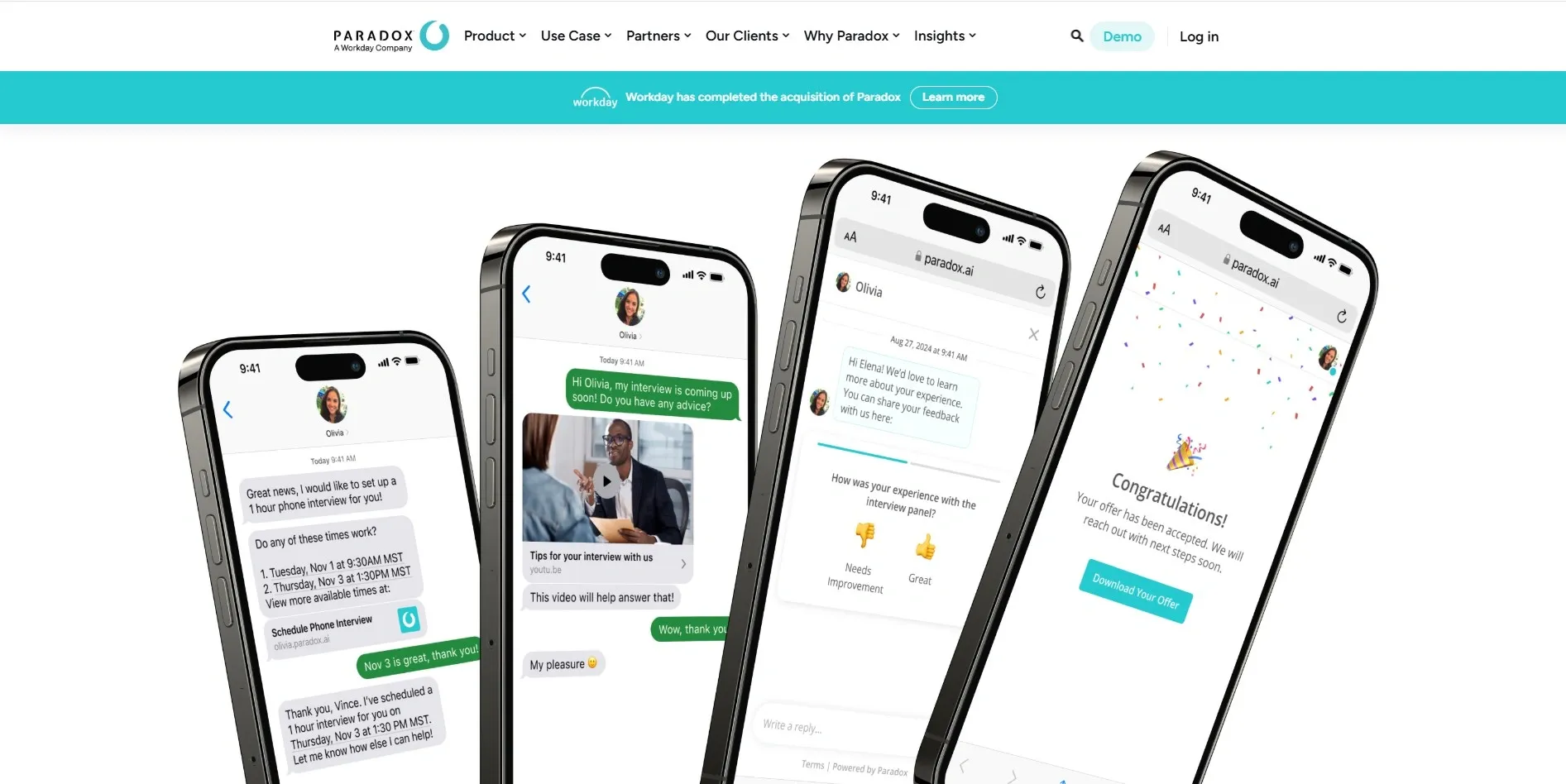
For smaller teams with limited resources, Paradox offers an excellent AI assistant named Olivia. This chatbot handles screening, scheduling, and candidate communication automatically.
I've seen small companies reduce their recruiting coordinator workload by 80% using this tool. It's particularly good for high-volume hourly hiring.
-
Jobvite
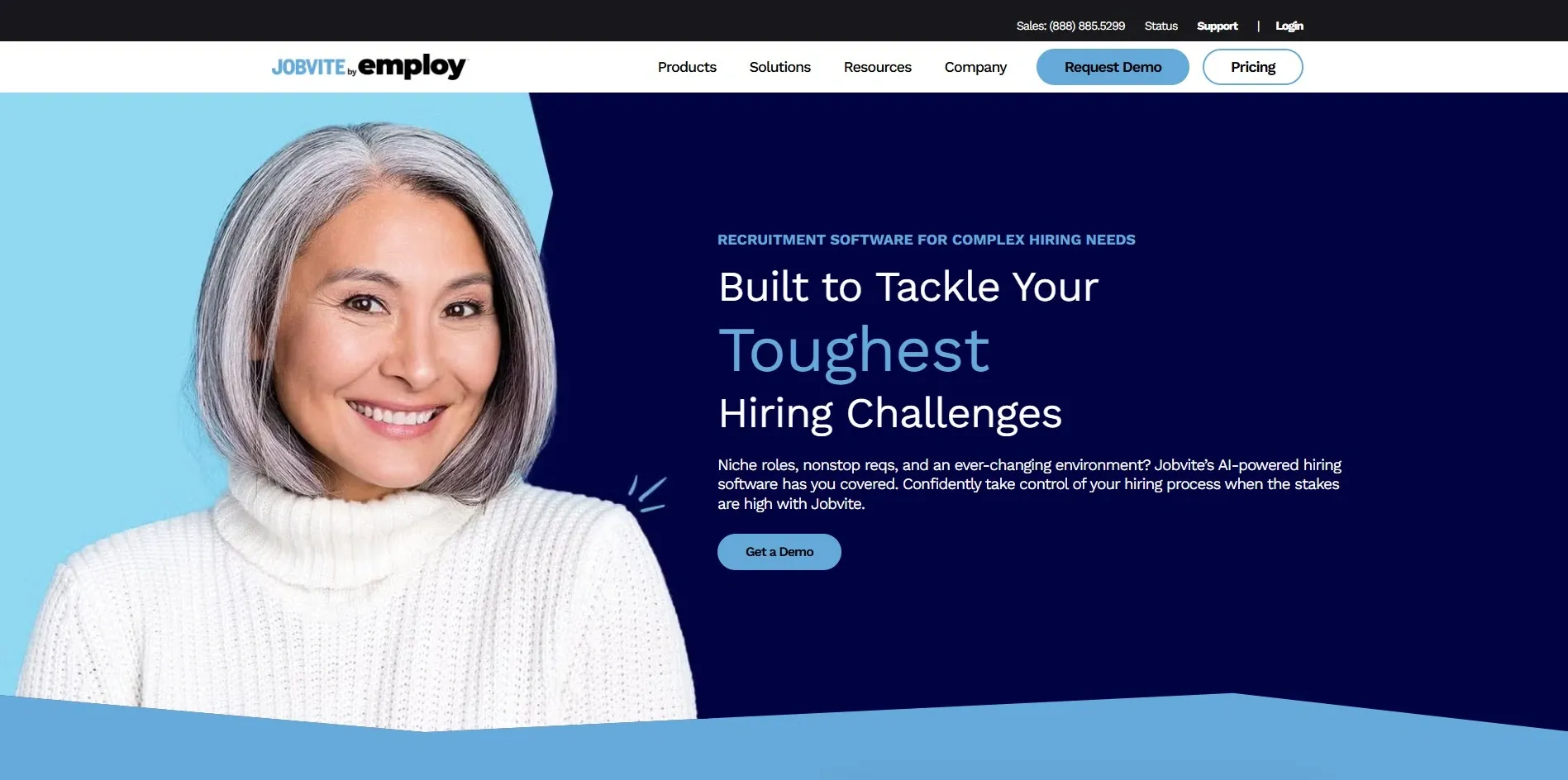
Jobvite combines AI recruiting with social recruiting capabilities. It's particularly strong at leveraging employee referrals and social networks to find candidates.
For startups building their employer brand, the social recruiting features are invaluable. The AI handles screening and matching while you focus on building relationships with top candidates.
Also read: Best AI Tools for HR in 2026: Smart Hiring and Automation
3. Best AI Recruiting Tools for Enterprise HR
-
iCIMS Talent Cloud
The enterprise requirements of large organizations find fulfillment through iCIMS, which provides enterprise-grade solutions. The system provides artificial intelligence capabilities that enable users to perform predictive analytics, advanced matching, and compliance management across multiple regions.
The scalability of iCIMS software solutions represents my main reason for selecting this platform. The system operates efficiently whether you need to recruit 100 or 10,000 new employees. The solution provides advanced reporting and analytics features that enable executives to make informed decisions.
-
SmartRecruiters
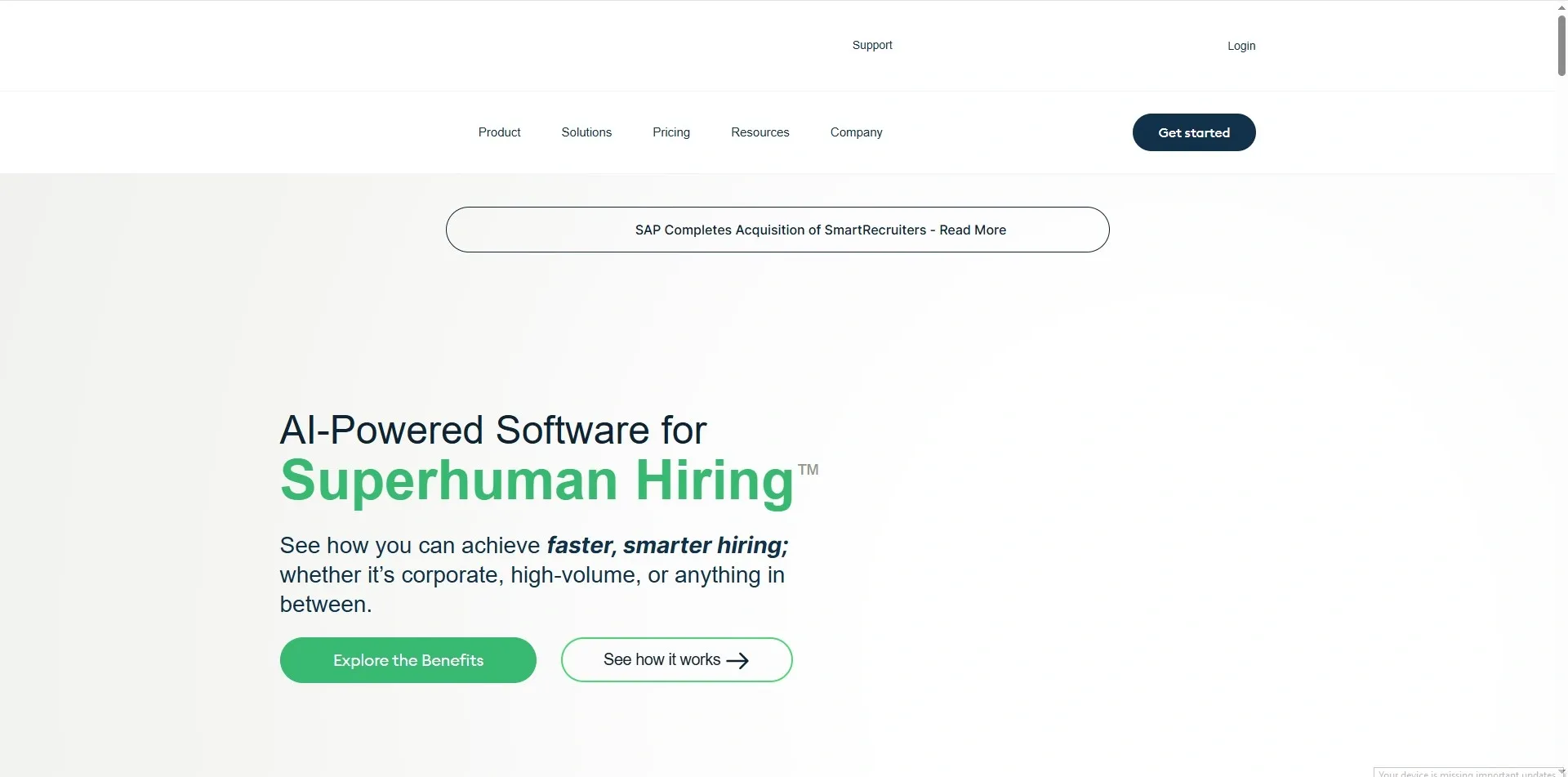
SmartRecruiters offers an enterprise-focused platform with strong AI matching and excellent user experience. What sets it apart is the marketplace of integrated apps and services.
For global companies, the multilingual support and compliance features across different countries are essential. The AI helps maintain consistency in hiring standards across regions.
How AI Recruiting Actually Works: A Simple Walkthrough
Let me walk you through what happens behind the scenes when you use AI recruiting tools. Understanding this helps you use them more effectively.
Step 1: Resume Ingestion and Parsing
The AI system processes candidate applications through its automatic handling of their submitted resumes and application documents. The system retrieves essential details from the documents, which include work experience details, information about skills and educational background, and certification records.
Step 2: Skill Analysis and Match Scoring
The AI compares the candidate's profile against your job requirements. But here's where it gets sophisticated: it doesn't just look for exact matches. It understands related skills, transferable experience, and potential. Each candidate gets a match score.
Step 3: Automated Engagement
Based on the match score, the AI can automatically send personalized messages. High-match candidates might get interview invitations. Others might receive acknowledgments or suggestions for different roles.
Step 4: Continuous Learning
As you hire people and see who succeeds, the AI learns from these outcomes. It adjusts its matching algorithms to better predict success in future hiring.
Best Practices for Implementing AI Recruiting Tools
Starting with the best AI tools for recruiting can feel overwhelming. Here's what I've learned works best.
-
Start with Clear Goals
Before choosing any tool, identify your specific pain points. Are you drowning in applications? Struggling to find diverse candidates? Taking too long to hire? Different recruiting tools solve different problems.
-
Begin with a Pilot Program
Don't roll out an AI recruiting solution company-wide immediately. Start with one department or job type. This lets you learn, adjust, and prove ROI before expanding.
I've seen companies try to do everything at once and end up with confused teams and poor adoption. Pilot programs prevent this.
-
Integrate with Existing Systems
Your AI tool should enhance your current workflow, not replace everything. Make sure it connects smoothly with your ATS, HRIS, and communication tools. Most people struggle with disconnected systems, so let me explain simply: integration is not optional, it's essential.
-
Train Your Team Properly
AI doesn't replace human judgment; it augments it. Your recruiters need training on interpreting AI recommendations, understanding match scores, and knowing when to override automated decisions.
-
Monitor Performance Regularly
Track metrics like time-to-hire, quality-of-hire, candidate satisfaction, and diversity metrics. Adjust your AI settings based on results. The tool should improve these metrics, not just move them sideways.
Challenges and Limitations of AI Recruiting Tools
Let me be transparent about the limitations and challenges you might face with AI recruiting tools.
-
Data Quality Issues
AI is only as good as the data it learns from. If your historical hiring data contains biases or errors, the AI will perpetuate them. You need to audit your data regularly and ensure the AI is trained on quality information.
-
Privacy and Compliance Concerns
Different regions have different regulations about AI in hiring. GDPR in Europe, EEOC guidelines in the United States, and other laws globally all impact how you can use AI. Make sure your chosen tool complies with relevant regulations.
I have noticed that companies sometimes overlook this aspect and face legal challenges later. Always consult legal counsel when implementing AI recruiting.
-
Over-Reliance on Automation
Here's something critical: AI should assist decisions, not make them alone. Completely automated hiring can miss context, nuance, and potential that only humans can recognize. Balance is key.
-
Candidate Perception
Some candidates feel uncomfortable with AI screening. They worry about fairness and transparency. Being open about using AI in your process and explaining how it works helps build trust.
Return on Investment and the Future of AI in Hiring
The question everyone asks: Is it worth the investment?
-
Calculating ROI
Companies typically see ROI through faster hiring, reduced recruiting costs, and better quality hires who stay longer. One study found that AI recruiting reduces cost-per-hire by an average of 35% while improving quality-of-hire scores.
For a mid-size company making 50 hires per year, this could mean savings of $50,000–$100,000 annually, plus the value of better hires.
-
What's Coming Next
The future of AI tools for recruiting is exciting. Generative AI is already writing job descriptions optimized for different candidate pools. Video interview analysis tools assess communication skills and cultural fit. Voice AI conducts initial phone screenings.
In my experience, we're moving toward a future where AI handles all administrative recruiting tasks, freeing humans to focus on relationship-building, strategic decisions, and candidate experience.
Conclusion
After exploring AI recruiting tools thoroughly, here's what matters most: these tools are powerful assistants, not replacements for human recruiters.
The best AI tools for recruiting speed up mundane tasks, reduce bias, and provide valuable insights. They help you focus on what humans do best: building relationships, understanding cultural fit, and making nuanced decisions.
If you're considering implementing AI in your recruiting process, start small, choose tools that match your specific needs, and always keep the human element central to your hiring decisions.
Most people struggle with change, so let me explain simply: AI recruiting isn't about replacing your HR team. It's about making them more effective, helping them find better candidates faster, and creating a better experience for everyone involved.
Whether you're a small startup hiring your first employee or an enterprise managing thousands of hires, there's an AI recruiting solution that can help you succeed. The key is finding the right fit for your unique situation and implementing it thoughtfully.
And if you're looking for a smart, ready-to-implement solution, RejoiceHub provides advanced HR Agent solutions powered by AI. Our AI-driven HR agents help businesses automate candidate screening, streamline communication, and improve hiring speed without losing the human touch. Whether you're a startup hiring your first employee or a growing enterprise scaling fast, RejoiceHub’s HR Agent solution can help you hire smarter and grow confidently.
Frequently Asked Questions
1. How do AI recruiting tools work?
AI recruiting tools scan resumes, extract skills and experience, and compare them with job requirements. The system gives each candidate a match score based on relevance. Some tools also send automated messages, schedule interviews, and learn from past hiring data to improve future recommendations.
2. What are the best AI recruiting tools in 2026?
Some of the top AI recruiting tools in 2026 include HireEZ, Eightfold.ai, Paradox, Jobvite, iCIMS Talent Cloud, and SmartRecruiters. Each platform serves different business needs, from startup hiring to enterprise-level recruiting with advanced analytics and automation features.
3. Are AI hiring tools better than traditional ATS?
Traditional ATS systems mainly store and track applications. AI hiring tools go further by analyzing data, ranking candidates, predicting success rates, and automating communication. While ATS manages applications, AI recruiting software actively supports smarter and faster hiring decisions.
4. Can AI recruiting tools reduce hiring bias?
Yes, AI recruiting tools can help reduce bias when properly configured. They focus on skills, experience, and job-related data instead of personal details. However, companies must regularly review and clean their data to prevent hidden bias from affecting AI decisions.
5. Are AI recruiting tools suitable for small businesses?
Yes, many AI hiring tools are designed for small teams and startups. Tools like Paradox and Jobvite offer automation for screening and scheduling without needing a large HR team. This helps small businesses hire efficiently without increasing recruitment costs.
6. How much do AI recruiting tools cost?
The cost of AI recruiting tools depends on company size and features. Small business plans may start with monthly subscriptions, while enterprise platforms charge higher fees for advanced analytics and integrations. Most companies see savings through reduced hiring time and lower cost-per-hire.
7. Do AI recruiting tools improve candidate experience?
AI recruiting software improves candidate experience by sending instant updates, answering questions through chatbots, and reducing long waiting periods. Candidates receive faster responses, interview confirmations, and status updates, which creates a smoother and more professional hiring process.
8. Can AI recruiting software integrate with existing HR systems?
Most top AI recruiting tools integrate with ATS, HRIS, calendar systems, and communication platforms. Integration ensures smooth workflow without disrupting existing processes. Before choosing a tool, businesses should confirm compatibility with their current HR software stack.
9. Is AI recruiting safe and compliant with hiring laws?
AI recruiting tools must follow regulations like GDPR and EEOC guidelines. Reputable vendors build compliance features into their systems. However, companies should consult legal advisors and regularly audit their AI processes to ensure fair and lawful hiring practices.
10. What is the future of AI tools for recruiting?
The future of AI tools for recruiting includes smarter skill matching, predictive hiring analytics, video interview analysis, and voice-based screening. AI will handle repetitive tasks while recruiters focus on strategy, relationship-building, and improving overall hiring quality.