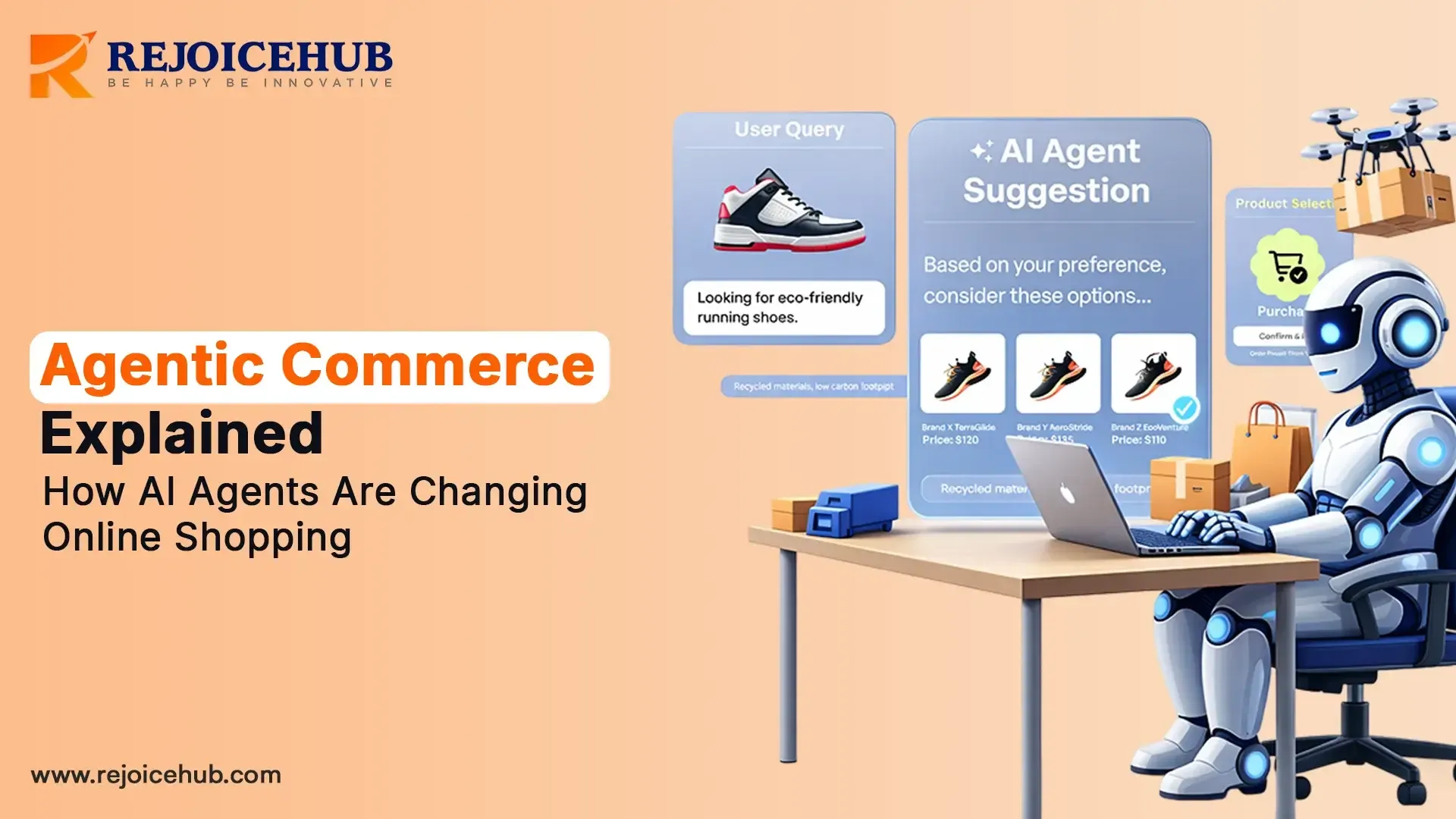
The last online purchase you made should be your first point of consideration. Did you open Google and search for the best product? Instead of asking an AI assistant, you used its suggestions to make your decision. The second option you selected makes you part of the current online shopping revolution, which exists at this moment.
Most businesses face an unexpected challenge. Shoppers have started to avoid using search engines, which exist as their primary method of finding products. Instead of using traditional methods of searching through blue links, people now use AI shopping assistants who perform research tasks while finding products to buy.
Your brand will lose customers when your AI-driven recommendations fail to show your brand to potential customers. The exact purpose of this guide is to fulfill this objective. The term agentic commerce requires explanation through basic English, which should detail its definition and significance, while showing how AI agents take over searching methods for shopping needs and displaying current business competitiveness, which companies must maintain through visible market presence.
What Is Agentic Commerce?
Let me explain this simply. Agentic commerce is a new way of buying and selling online, which enables artificial intelligence agents to buy products for customers. The AI system handles all required tasks without requiring user interaction.
The term "agentic" describes an agent who performs tasks independently to achieve an established objective. The objective for this case involves shopping activities. The AI systems identify your shopping needs, determine your spending limits, explore available products, evaluate their reviews, and complete your purchases within seconds.
AI systems become active participants in the purchasing process through agentic commerce, which provides the basic definition of this system. The system operates independently of your instructions to execute its functions. The system demonstrates motivation to initiate its operations.
To understand the impact of agentic commerce on the United States ecommerce, you need to examine the total market size. Every single day, millions of Americans shop online. The retail industry will experience massive effects if even a small portion of those shoppers begin using AI agents for their purchases.
Difference Between Traditional Search & Agentic Commerce
-
AI Agent Workflows
The majority of people who learn about the advanced capabilities of AI systems that substitute search engines for shopping purposes are astonished. The system functions as more than just a chatbot that provides answers to user inquiries. The system provides complete workflows that closely replicate personal shopper activities while enhancing their performance.
The standard operation process for an AI shopping assistant begins with its initial step. The system starts processing your request, which includes your birthday gift requirement for your mother at a maximum budget of 80 dollars. The system examines your previous choices and buying patterns whenever such information exists. The system conducts simultaneous searches across various retail stores and product databases.
Understanding what agentic AI workflows look like in practice helps clarify how these agents improve over time. The system creates a personalized experience that traditional search engines have not yet achieved.
-
Benefits for Consumers
From a shopper's perspective, the appeal of AI shopping agents is obvious. The process creates two advantages, which save time and build relief for customers. The AI system generates better results through its extensive data sources than basic Google search results.
The consistency that the AI system delivers to consumers provides them with benefits. The AI system maintains its focus because it does not experience fatigue, and it does not get distracted by irrelevant results and flashy ads. The system maintains its focus on your specific request. The system creates major advantages for busy parents, working professionals, and consumers who need rapid and safe shopping solutions.
Trust has started to increase in this situation. Shoppers are starting to trust AI recommendations the same way they used to trust a favorite store associate. The current process establishes a relationship that leads customers to prefer AI-created experiences over traditional search results.
Real-World Examples of Agentic Commerce
The present situation no longer qualifies as a future concept. The present time shows both agentic commerce trends 2026, whereas major US retail companies already participate in the trends.
Amazon leads the market with its AI shopping assistant features, which allow customers to reorder products and find discounts, and receive customized voice or chat-based product suggestions through Alexa. The company has also been quietly integrating agentic capabilities into its checkout flow, allowing certain purchases to be completed with minimal human input.
Walmart has introduced artificial intelligence shopping tools that enable customers to create complete shopping lists based on their recipes and personal preferences and budget restrictions, while the AI handles product selection and delivery scheduling. The application of agentic commerce shows that it has now achieved widespread acceptance in the market.
Google itself, ironically, is also adapting. Its AI Overviews and Shopping Graph tools are being developed to surface AI-curated product recommendations directly in search results essentially turning Google into a more agentic experience to compete with dedicated AI shopping agents.
A 2025 industry report discovered that 40 percent of US online shoppers had used AI-assisted purchasing during the previous year. The figure shows a projected increase that will continue until 2026. The agentic commerce trends remain active because they continue to operate at their current speed.
Impact on Businesses and Retail
SEO & Discoverability Implications
The text presents its crucial point, which becomes essential for business operations and online store management. Google search engine optimization today depends on Google search algorithm functionality for its current operational approach. The way AI agents now take over shopping requires customers to change their shopping behavior because they need to adjust to new operating methods.
When a shopper uses an agent commerce system, they see a list of results, and they choose. Your SEO work requires you to achieve placement on the first page of search results. The AI agent performs shopping tasks without showing the user product options. The system selects two or three items and shows these as the solution. The higher level of difficulties created by this situation demands that your product information needs complete optimization for AI systems to achieve success.
The current situation creates a discoverability crisis for brands that choose to ignore it. Current search methods show declining results, which affects various retail businesses. The unprepared brands will experience declining sales to AI agents because their customers will switch to AI agents without any clear reason.
How Brands Can Optimize Product Data for AI Agents
You can begin progress at this moment. The businesses destined for success in the upcoming era of agentic commerce will succeed through their dedication to protecting product data.
Every product on your website needs to maintain clean and complete metadata, which includes accurate titles and descriptions, pricing and availability, and reviews and specifications. AI agents require this information to evaluate products more effectively when the data is presented in a clearer format.
Invest in schema markup. The use of rich structured data through schema.org tags enables AI systems to comprehend your products within their contextual framework. This is the AI's native language and learning how to use AI in your ecommerce business starts with getting this foundation right.
Focus on authenticity and reviews. AI systems developed to identify reliable products rely on customer reviews as a fundamental proof of trustworthiness. The organization must motivate customers to write authentic product reviews while also addressing customer feedback because these factors determine how AI systems will evaluate their business.
The organization must maintain accurate product feeds for all platforms, which include Google Shopping and Amazon, and any industry-wide aggregators that are utilized. AI agents establish trustworthiness through their ability to access multiple data sources at once, while consistent information across those sources enhances their credibility.
Preparing for the Future of Agentic Commerce
The year 2026 will become a crucial moment for agentic commerce because multiple trends will emerge simultaneously, providing businesses with an opportunity to gain advantages through early implementation of these trends.
The retail industry experiences its greatest transformation through conversational commerce. Shoppers now use natural language to talk to AI tools through both typing and speaking. Your brand requires discovery through both keywords and the specific dialogues people use with AI assistants. Understanding how AI agents help automate workflows is increasingly essential for brands looking to stay ahead.
Agentic commerce engines have reached advanced development and now function as integral components of common software. These engines operate across various platforms, including messaging applications and smart home systems, to control which products users are allowed to view. Website operators must now design their systems to meet these requirements.
Brands should follow best practices by conducting product data quality audits, creating conversational content for their websites, establishing partnerships with AI-friendly platforms, and tracking how major AI assistants learn to suggest products. Today's brands that take this matter seriously will establish themselves as tomorrow's leaders.
Conclusion
The team has accomplished many tasks during our work, which have created a better understanding of agentic commerce for operational implementation. The short version is this: shoppers are moving away from traditional search, AI-powered shopping agents are stepping in to fill that role, and businesses that adapt their product data and digital strategy now will be the ones that stay visible and profitable.
The trend requires active participation instead of passive observation. Your competitors will establish their advantage during every month of your delay, which has already begun as a current business transformation.
The resources at Rejoicehub contain AI strategy information about e-commerce automation and business transformation that I recommend for deeper exploration. The site offers outstanding guides that show you how to implement these concepts in your unique business situation.
Frequently Asked Questions
1. What is agentic commerce?
Agentic commerce is when AI agents shop on your behalf. Instead of you searching for products, the AI does it for you. It finds items, checks prices, reads reviews, and can even complete the purchase. It's like having a personal shopper that works around the clock without complaining.
2. How are AI agents replacing traditional search in shopping?
Instead of typing into Google and clicking through links, people now ask AI assistants to find products for them. The AI skips the search page entirely, picks the best options, and presents them directly. Traditional search is no longer the first stop for many online shoppers today.
3. What does agentic commerce mean for e-commerce in the USA?
For US ecommerce, it's a big shift. Millions of Americans shop online daily, and a growing number now use AI tools to do it. Brands that aren't optimized for AI discovery risk losing sales quietly, without ever knowing why their traffic or conversions dropped so suddenly.
4. How do AI shopping agents actually work?
You give the AI a request like "find me a birthday gift under $80." It checks your past purchases, searches multiple stores at once, filters by price and reviews, then gives you a shortlist or buys directly. Over time, it learns your preferences and gets sharper with every use.
5. What is the difference between agentic commerce and regular online shopping?
Regular shopping means you search, scroll, compare, and decide. Agentic commerce flips that. The AI handles every step for you. You just describe what you need, and it takes over. It's faster, less frustrating, and removes the decision fatigue that comes with browsing dozens of product pages alone.
6. Which companies are already using agentic commerce?
Amazon and Walmart are leading the way. Amazon uses Alexa and AI checkout features to let users reorder and get recommendations with minimal effort. Walmart's AI builds shopping lists based on recipes and budgets. Even Google is updating its tools to stay competitive with dedicated AI shopping agents.
7. What are the biggest agentic commerce trends in 2026?
In 2026, conversational shopping is growing fast. People speak or type naturally to AI tools instead of using keywords. AI engines are also built into apps, smart devices, and messaging platforms. Brands that show up in those AI-driven conversations will have a clear advantage over those that don't.
8. How can small businesses prepare for AI-powered shopping agents?
Start with clean product data. Make sure your titles, descriptions, prices, and specs are accurate and complete everywhere your products appear. Add schema markup so AI systems can read your listings easily. Also, collect genuine customer reviews, since AI agents treat them as trust signals when making recommendations.
9. Why is product data optimization important for agentic commerce?
AI agents pick products based on the data available to them. If your product listings are incomplete, outdated, or inconsistent across platforms, the AI may skip your brand entirely. Clean, structured, and well-tagged product data gives you a much better shot at being recommended by AI systems.
10. Will agentic commerce replace Google search completely?
Not completely, at least not yet. But it's already cutting into Google's role in product discovery. Google itself is building AI-powered shopping tools to adapt. Still, a big portion of product searches are now happening inside AI assistants, not on traditional search engine results pages.
11. How does agentic commerce affect SEO strategies for online stores?
Old SEO focused on ranking on page one of Google. With agentic commerce, the AI doesn't show users a results page. It picks for them. That means your SEO effort now needs to make your products readable and trustworthy to AI systems, not just visible to human searchers browsing search results.
12. What role do customer reviews play in AI shopping recommendations?
Customer reviews are one of the main signals AI agents use to judge whether a product is worth recommending. More genuine, detailed reviews make your product appear more trustworthy to the AI. Encourage real feedback, respond to it, and never fake it since AI systems are getting better at spotting that.
13. Is agentic commerce safe for consumers?
For most everyday purchases, yes. AI shopping agents work within set preferences, budgets, and approved platforms. The main concern is data privacy, since these systems learn from your behavior. Choosing reputable AI tools and reviewing their privacy policies before use is a smart habit worth building now.
14. How does schema markup help brands get found by AI agents?
Schema markup is structured code that helps AI systems understand what your product is, what it costs, and how it's rated. Without it, AI agents have to guess, and they often skip uncertain listings. Adding schema.org tags to your product pages is one of the most practical things you can do today.
15. What does agentic commerce mean for the future of online retail?
It means the buying process is becoming more automated and personalized. Shoppers will rely more on AI to handle routine purchases, while brands will compete to stay visible inside AI systems rather than just on search pages. The businesses that adapt their data and content strategies now will win later.